
Catalogue Search | MBRL


Are you sure you want to remove the book from the shelf?

{{itemTitle}}
28
result(s) for
"Authors, Urdu"
Sort by:

Remembrances
Remembrances recounts Mir's ancestry, his father's spiritual quest, and his own struggles to find education and patronage both in his native Agra and in Delhi. While the work may offer few glimpses into the author's private life or professional literary activity, it presents a vivid picture of political events and intrigues between 1760 and 1789, when north India witnessed extensive warfare. The Persian text, presented here in the Naskh script, includes all the author's additions and alterations properly identified and chronologically arranged, along with a newly revised English translation. Mir concludes his autobiography with a series of jokes and witty anecdotes, some of them quite risqué, that are printed here for the first time.-- Provided by publisher
Book

The pity of partition
Saadat Hasan Manto (1912-1955) was an established Urdu short story writer and a rising screenwriter in Bombay at the time of India's partition in 1947, and he is perhaps best known for the short stories he wrote following his migration to Lahore in newly formed Pakistan. Today Manto is an acknowledged master of twentieth-century Urdu literature, and his fiction serves as a lens through which the tragedy of partition is brought sharply into focus. InThe Pity of Partition, Manto's life and work serve as a prism to capture the human dimension of sectarian conflict in the final decades and immediate aftermath of the British raj.
Ayesha Jalal draws on Manto's stories, sketches, and essays, as well as a trove of his private letters, to present an intimate history of partition and its devastating toll. Probing the creative tension between literature and history, she charts a new way of reconnecting the histories of individuals, families, and communities in the throes of cataclysmic change. Jalal brings to life the people, locales, and events that inspired Manto's fiction, which is characterized by an eye for detail, a measure of wit and irreverence, and elements of suspense and surprise. In turn, she mines these writings for fresh insights into everyday cosmopolitanism in Bombay and Lahore, the experience and causes of partition, the postcolonial transition, and the advent of the Cold War in South Asia.
The first in-depth look in English at this influential literary figure,The Pity of Partitiondemonstrates the revelatory power of art in times of great historical rupture.
eBook
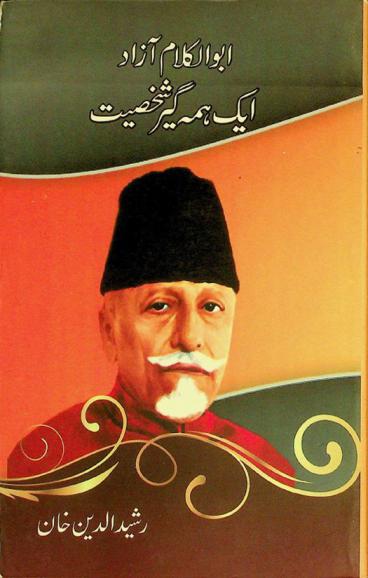
Abūlkalām Āzād : ek hamahgīr shak̲h̲ṣiyat = Abul Kalam Azad : ek hamageer shakhsiat
Comprises articles on the life and work of Abūlkalām Āzād, 1888-1958, Indian statesman and Urdu author.
Book

Gender, Sexuality and Feminism in Pakistani Urdu Writing
As the first study of its kind, this book offers a new understanding of progressive women’s poetry in Urdu and the legacy of postcolonial politics. It underlines Urdu’s linguistic hybridities, the context of the zenana, reform and rekhti to illustrate how the modernising impulse under colonial rule impacted women as subjects in textual form. It argues that canonical texts for sharif women from Mirat-ul Arus to Umrao Jaan Ada need to be looked at alongside women’s diaries and autobiographies so that we have an overall picture of gendered lives from imaginative fiction, memoirs and biographies.
Despite the disintegration of the Progressive Writers Movement and the official closure of the Left in Pakistan, the author argues that an exceptional legacy can be found in the voices of distinctive women poets including Ada Jafri, Zehra Nigah, Sara Shagufta, Parvin Shakir, Fahmida Riaz and Kishwar Naheed. Their poems offer new metaphors and symbols borrowing from feminist thought and a hybrid Islamicate culture.
eBook


Author profiling from Romanized Urdu text using transfer learning models
This research concentrates on author profiling using transfer learning models for classifying age and gender. The investigation encompassed a diverse set of transfer learning techniques, including Roberta, BERT, ALBERT, Distil BERT, Distil Roberta, ELECTRA, and XLNet. Through meticulous evaluation using metrics such as the Matthews Correlation Coefficient, Accuracy, Precision, Recall, and F1 Score, the study examined the efficacy of these models. The curated dataset was divided for gender and age tasks, resulting in robust gender prediction with the XLNet model and age prediction with the BERT model. Notably, the XLNet model achieved the highest MCC (0.7946), Accuracy (0.8957), Precision (0.8992), Recall (0.8957), and F1 Score (0.8958) values in gender classification, while the BERT model excelled in age prediction with an MCC of (0.7338), Accuracy of (0.8220), Precision of (0.8324), Recall of (0.8220), and F1 Score of (0.8243). Visualized outcomes provide valuable insights into the model’s performance nuances, paving the way for their practical implementation. This research offers novel contributions to author profiling tasks, bridging the gap between theory and real-world applications.
Journal Article

A Study of Autobiographies: Confessions, Facts, Fiction and Hypothesis
Since ancient times, man has attempted to express his inner feelings, covetousness and inclination to the world through various mediums e.g. poetry, drama, story, etc. Literature is one of the outcomes of the man’s efforts to reveal his aspirations to the world. Literature has avalanche of the widespread genre which is always subject to precisely apprehend and assimilate. Biography and autobiography are the two different genres of literature. The life of an individual is full of sweet and bitter experiences. There are incidences in an individual’s life which he or she never wants to share with anybody. Politicians, Rulers, Socialites, Movie Stars and other public personalities are also normal human beings. They too have their personal share of problems in their lives and in an attempt to resolve those issues they sometimes commit mistakes and even crimes which they never want anyone to know. Sometimes they commit these mistakes, misdemeanours, felonies or crimes because of their lustful desires or inclinations. The present paper is a result of interest and curiosity to know if individuals share such information in their autobiographies.
Journal Article

Predicting Age and Gender in Author Profiling: A Multi-Feature Exploration
Author Profiling (AP) is a subsection of digital forensics that focuses on the detection of the author’s personal information, such as age, gender, occupation, and education, based on various linguistic features, e.g., stylistic, semantic, and syntactic. The importance of AP lies in various fields, including forensics, security, medicine, and marketing. In previous studies, many works have been done using different languages, e.g., English, Arabic, French, etc. However, the research on Roman Urdu is not up to the mark. Hence, this study focuses on detecting the author’s age and gender based on Roman Urdu text messages. The dataset used in this study is Fire’18-MaponSMS. This study proposed an ensemble model based on AdaBoostM1 and Random Forest (AMBRF) for AP using multiple linguistic features that are stylistic, character-based, word-based, and sentence-based. The proposed model is contrasted with several of the well-known models from the literature, including J48-Decision Tree (J48), Naïve Bays (NB), K Nearest Neighbor (KNN), and Composite Hypercube on Random Projection (CHIRP), NB-Updatable, RF, and AdaboostM1. The overall outcome shows the better performance of the proposed AdaboostM1 with Random Forest (ABMRF) with an accuracy of 54.2857% for age prediction and 71.1429% for gender prediction calculated on stylistic features. Regarding word-based features, age and gender were considered in 50.5714% and 60%, respectively. On the other hand, KNN and CHIRP show the weakest performance using all the linguistic features for age and gender prediction.
Journal Article

Writing Self, Writing Resistance: Women's Life Writing in India
Published in 1868, Amar Jiban records the long and difficult struggle of Rasasundari Debi to acquire literacy in a society that prohibited women’s learning and education. Amar Jiban is the first autobiography written by a woman in Bengali language, perhaps the first in any Indian language. To achieve this impossible feat “at least in a dream” sets Rasasundari on an effort where she steadily and stealthily learns to read the alphabet, becomes a ‘jitaakshara’ (winner of letters) and goes on to write her autobiography. A landmark text to explore the key concerns of women’s life writing in India, it is fortuitous to begin with an exploration of Rasasundari Debi’s account as it outlines not only how women’s life writing serves as an archival source of their lived experience but also how life narratives have impacted feminist research, scholarship and given a vocabulary to women’s activism. Forbidden to read and write as it would bring widowhood, Rasasundari’s life is confined within the ideologies of domesticity and femininity. As she writes about her experiences of being a wife and mother there is an emergence of voice that hesitates to question the societal norms, yet her account demystifies the figure of the mother and housewife and presents domestic duties as laborious and unfulfilling. Rasasundari’s act of learning to read is an act of transgression against established social norms and by publishing her autobiography she also enters the public domain that was forbidden for women in her time. Feminist historians like Tanika Sarkar have examined in detail how Rasasundari acquires means of self-representation by using the tropes of spiritual autobiography and legitimising her desire to learn the alphabet by dreaming of Chaitanya Bhagwat. Women’s life writing thus offers a crucial site to examine questions of subjectivity and agency as it makes visible the oftenneglected world of women’s experience and their complex negotiations to become a ‘speaking subject’. Rasasundari’s lament that “Wasn’t it a matter to be regretted, that I had to go through all this humiliation just because I was a woman?” marks one such moment when exclusion and neglect are foregrounded as part of women’s everyday experience.
Journal Article