
Catalogue Search | MBRL


Are you sure you want to remove the book from the shelf?

{{itemTitle}}
1,080
result(s) for
"Authors of Jewish histories"
Sort by:

The Colors of Zion
This comparative study focuses on three groups often seen as antagonistic—Blacks, Jews, and Irish. Resolutely aware of past tensions, Bornstein argues that the pendulum has swung too far in that direction and that it is time to recover the history of lost connections and cooperation among the groups. The chronological range stretches from Frederick Douglass’s tour of Ireland during the Great Famine of the 1840s through the 1940s with the catastrophe of World War II. The study ends with the concept of the Righteous Gentile commemorated at the Israeli Holocaust Memorial, Yad Vashem--non-Jews who during the Holocaust risked their own lives to rescue Jews from the horror of the Holocaust. Bornstein expands the term here to include all those Irish, Jewish, or African American figures who fought against narrow identification only with their own group and instead championed a wider and more humane vision of a shared humanity that sees hybridity rather than purity and love rather than resentment. The identity politics and culture wars of recent decades often made recognizing those positive qualities problematic. But with the election of a mixed-race president who himself embodies mixture and mutual respect (and who famously described himself as a “mutt\"), the shallow and arbitrary nature of narrow identity politics become evident. This study recuperates strong voices from the past of all three groups in order to let them speak for themselves.
eBook
Reinventing Tradition
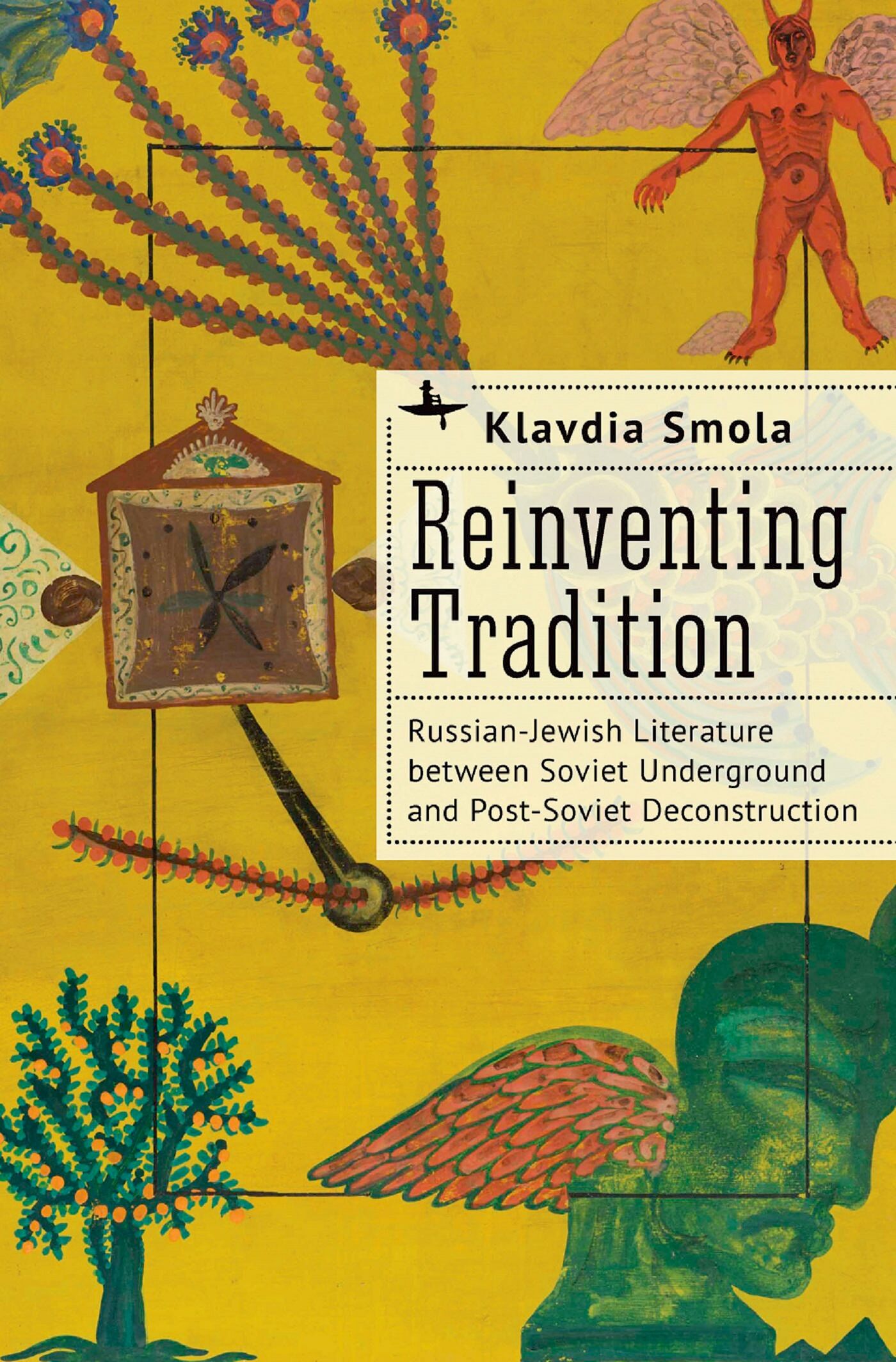
How was the Jewish tradition reinvented in Russian-Jewish literature after a long period of assimilation, the Holocaust, and decades of Communism? The process of reinventing the tradition began in the counter-culture of Jewish dissidents, in the midst of the late-Soviet underground of the 1960-1970s, and it continues to the present day. In this period, Jewish literature addresses the reader of the ‘post-human’ epoch, when the knowledge about traditional Jewry and Judaism is received not from the family members or the collective environment, but rather from books, paintings, museums and popular culture.
Klavdia Smola explores how contemporary Russian-Jewish literature turns to the traditions of Jewish writing, from biblical Judaism to early-Soviet (anti-)Zionist novels, and how it ‘re-writes’ Haskalah satire, Hassidic Midrash or Yiddish travelogues.
eBook

Women's Poetry and Religion in Victorian England
Victorian women poets lived in a time when religion was a vital aspect of their identities. Cynthia Scheinberg examines Anglo-Jewish (Grace Aguilar and Amy Levy) and Christian (Elizabeth Barrett Browning and Christina Rossetti) women poets, and argues that there are important connections between the discourses of nineteenth-century poetry, gender and religious identity. Further, Scheinberg argues that Jewish and Christian women poets had a special interest in Jewish discourse; calling on images from Judaism and the Hebrew Scriptures, their poetry created complex arguments about the relationships between Jewish and female artistic identity. She suggests that Jewish and Christian women used poetry as a site for creative and original theological interpretation, and that they entered into dialogue through their poetry about their own and each other's religious and artistic identities. This book's interdisciplinary methodology calls on poetics, religious studies, feminist literary criticism, and little read Anglo-Jewish primary sources.
eBook

The Edinburgh Companion to Modern Jewish Fiction
WINNER of the Association of Jewish Libraries' Judaica Reference AwardProvides critical overviews of the main writers and key themes of Anglophone Jewish fiction
This collection of essays represents a new departure for, and a potentially (re)defining moment in, literary Jewish Studies. It is the first volume to bring together 28 chapters covering a wide range of American, British, South African, Canadian and Australian Jewish fiction.
The volume is divided into 3 parts - American Jewish Fiction; British Jewish Fiction; and International and Transnational Anglophone Jewish Fiction - but many of the essays cross over these boundaries and speak to each other implicitly, as well as, on occasion, explicitly. Extending and redefining the canon of modern Jewish fiction, the volume juxtaposes major authors with more marginal figures, revising and recuperating individual reputations, rediscovering forgotten and discovering new work, and in the process remapping the whole terrain. This volume opens windows onto vistas that previously had been obscured and opens doors for the next generation of studies that could not proceed without a wide-ranging, visionary empiricism grounding their work.
Key FeaturesHighlights the rich diversity of the field and identifies its key themes, including immigration, the Diaspora, the Holocaust, Judaism, assimilation, antisemitism and ZionismAnalyses the main trends in Anglophone Jewish fiction and situates them in historical contextDiscusses the place of Anglophone Jewish fiction in relation to critical debates concerning transatlanticism and transnationalism; ethnicity and identity politics; postcolonial studies, feminist studies and Jewish StudiesWith a preface by Mark Shechner, the volume's contributors include Vicki Aarons (Trinity University, Texas), Debra Shostak (Wooster College, Ohio), Ira Nadel (University of British Columbia), Efraim Sicher (Ben-Gurion University), Phyllis Lassner (Northwestern University), Sue Vice (University of Sheffield), Lori Harrison-Kahan (Boston College), Ruth Gilbert (University of Winchester), Beate Neumeier (University of Cologne) and Sandra Singer (University of Guelph)
eBook

Trinity of Passion
The second of three volumes by Alan Wald that track the political and personal lives of several generations of U.S. left-wing writers,Trinity of Passioncarries forward the chronicle launched inExiles from a Future Time: The Forging of the Mid-Twentieth-Century Literary Left. In this volume Wald delves into literary, emotional, and ideological trajectories of radical cultural workers in the era when the International Brigades fought in the Spanish Civil War (1936-39) and the United States battled in World War II (1941-45). Probing in rich and haunting detail the controversial impact of the Popular Front on literary culture, he explores the ethical and aesthetic challenges that pro-Communist writers faced.Wald presents a cross section of literary talent, from the famous to the forgotten, the major to the minor. The writers examined include Len Zinberg (a.k.a. Ed Lacy), John Oliver Killens, Irwin Shaw, Albert Maltz, Ann Petry, Chester Himes, Henry Roth, Lauren Gilfillan, Ruth McKenney, Morris U. Schappes, and Jo Sinclair. He also uncovers dramatic new information about Arthur Miller's complex commitment to the Left.Confronting heartfelt questions about Jewish masculinity, racism at the core of liberal democracy, the corrosion of utopian dreams, and the thorny interaction between antifascism and Communism, Wald re-creates the intellectual and cultural landscape of a remarkable era.
eBook

The Cambridge Companion to Jewish American Literature
For more than two hundred years, Jews have played important roles in the development of American literature. The Cambridge Companion to Jewish American Literature addresses a wide array of themes and approaches to the distinct yet multifaceted body of Jewish American literature. Essays examine writing from the 1700s to major contemporary writers such as Saul Bellow and Philip Roth. Topics covered include literary history, immigration and acculturation, Yiddish and Hebrew literature, popular culture, women writers, literary theory and poetics, multilingualism, the Holocaust, and contemporary fiction. This collection of specially commissioned essays by leading figures discusses Jewish American literature in relation to ethnicity, religion, politics, race, gender, ideology, history, and ethics, and places it in the contexts of both Jewish and American writing. With its chronology and guides to further reading, this volume will prove valuable to scholars and students alike.
eBook

Kaddish and Other Millin Setimin: Esoteric Languages in Jewish–American Narratives
In this article, I analyze the use of Hebrew, Yiddish, and Aramaic texts—and the Kaddish in particular—as esoteric tongues in Jewish–American narratives, including poems, plays, television shows, and films. I suggest that by doing so, the creators of these works evoke the Lurianic notion of millin setimin or “secreted words”—utterances that transcend the communicative function of everyday speech and partake in some profound revelations. I hope to show that from Allen Ginsberg, through Tony Kushner, to the Coen Brothers and beyond, Jewish–American creators have been evoking Jewish tongues both as symbols of a lost past and as millin setimin that aspire to restore the connection to that past, within the Jewish–American community and beyond.
Journal Article
Trauma, memory and identity in five Jewish novels from the Southern Cone
The Jewish presence in Latin America is a recent chapter in Jewish history that has produced a remarkable body of literature that gives voice to the fascinating experience of Jews in Latin American lands. This book explores the complexity of Jewish identity in Latin America through the fictional Jewish characters of five novels written by Jewish authors from the Southern Cone: Argentina, Brazil, Chile, Paraguay and Uruguay. It examines how trauma and memory have profound effects on shaping the identity of these Jewish characters who have to forge a new identity as they begin to interact with the Latin American societies of their newly adopted homes. The first three novels present stories narrated by the first generation of immigrants who arrived in Latin American lands escaping pogroms in Russia, and the increasing persecution and anti-Semitism in Europe, in the decades prior to World War II. The fourth novel analyses the identity conflicts experienced by a second generation Latin American born Jew who questions his Jewish, questions of assimilation and integration in to his society. The last novel closes this study with the existential crisis experienced by a perfectly assimilated non-religious Jew, who enquires about his Jewishness and compares himself to other Jews around him.
eBook
The Jewish Persona in the European Imagination
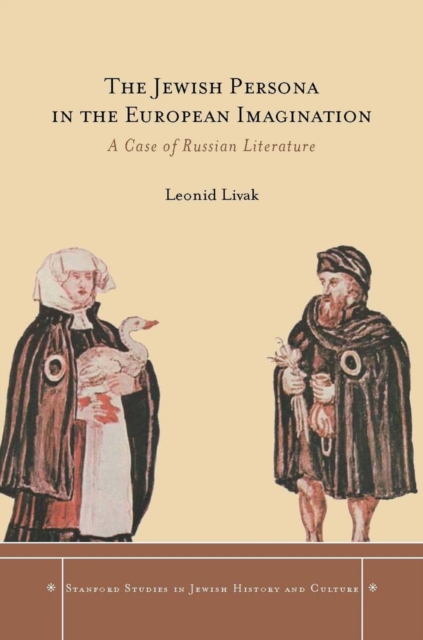
This book proposes that the idea of the Jews in European cultures has little to do with actual Jews, but rather is derived from the conception of Jews as Christianity's paradigmatic Other, eternally reenacting their morally ambiguous New Testament role as the Christ-bearing and -killing chosen people of God. Through new readings of canonical Russian literary texts by Gogol, Turgenev, Chekhov, Babel, and others, the author argues that these European writers-Christian, secular, and Jewish-based their representation of Jews on the Christian exegetical tradition of anti-Judaism. Indeed, Livak disputes the classification of some Jewish writers as belonging to \"Jewish literature,\" arguing that such an approach obscures these writers' debt to European literary traditions and their ambivalence about their Jewishness.
This work seeks to move the study of Russian literature, and Russian-Jewish literature in particular, down a new path. It will stir up controversy around Christian-Jewish cultural interaction; the representation of otherness in European arts and folklore; modern Jewish experience; and Russian literature and culture.
eBook
The German-Hebrew Dialogue
This series focuses on the Jewish textual tradition as well as the ways it evolves in response to new intellectual, historical, social and political contexts. Fostering dialogue between literary, philosophical, political and religious perspectives, this series, which consists of original scholarship and proceedings of international conferences, reflects contemporary concerns of Jewish Studies in the broadest sense. _x000D_.
eBook