
Catalogue Search | MBRL


Are you sure you want to remove the book from the shelf?

{{itemTitle}}
32
result(s) for
"Automobile racing United States History."
Sort by:

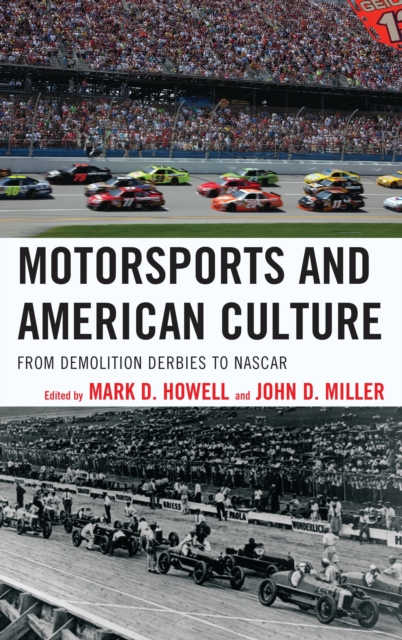
Motorsports and American culture
Soon after the first automobiles were introduced in the United States, auto racing became a reality. Since that time, motorsports have expanded to include drag racing, open wheel racing, rallying, demolition derbies, stock car racing, and more. Motorsports have grown to such an extent that NASCAR is now the second most watched professional sport in America, behind only football. But motorsports are about much more than going fast and finishing first. These events also reflect our culture, our society, our values, and our history. In Motorsports and American Culture: From Demolition Derbies to NASCAR, Mark D. Howell and John D. Miller bring together essays that examine the relevancy of motorsports to American culture and history, from the late nineteenth century to the present. Addressing a wide spectrum of motorsports—such as stock car racing, demolition derbies, land speed record pursuits, and even staged train wrecks—the essays highlight the social and cultural implications of contemporary and historical moments in these sports. Topics covered include gender roles in motorsports, hot rods and the creation of fan and participant identities, the appeal of demolition derbies, the globalization of motorsports, the role of moonshine in stock car history, the economic relationship between NASCAR and its corporate sponsors, and more. Offering the most thorough study of motorsports to date from a diverse pool of disciplines and subjects, Motorsports and American Culture will appeal to motorsports and automobile enthusiasts, as well as those interested in American history, popular culture, sports history, and gender studies.
eBook

Boss Mustang : 50 years
The Ford Boss Mustang is the most iconic pony car ever created, and this book covers it more extensively than any other. Boss Mustang: 50 Years--a fully expanded version of Mustang Boss 302--includes the complete history of its creation; racing and street histories of both the 302 and 429 models; and photos and interviews with Boss Mustang designers, engineers, racers, and more.
Book
Breaking three hours : trailblazing African American women marathoners
Of 14 million marathon finishers, only twenty were US-born, African American women who finished in under three hours. This documentary is about nine sub-three-hour women, National Black Distance Running Hall of Fame inductees.
Streaming Video


Teaching Twentieth Century American History Topics Through the Rearview Mirror of Motorsports
Over the last forty years, motorsports has grown to become one of the most popular spectator sports in the United States, second only to professional football. Often motorsports reflected the narratives of the times. The authors of this article, one a historian and one a business professor, teamed up to teach an interdisciplinary history course at a Midwestern university that combined aspects of U.S. history and motorsports. The university offered an interdisciplinary program in motorsports management housed in the College of Business. The course earned foundational studies credit under the historical studies category and was available to all undergraduate students. As a result of enrolling and completing the course, students often demonstrated an even higher level of interdisciplinary learning and American history recall than expected by the two instructors.
Journal Article

Speed duel : the inside story of the land speed record in the sixties
Looks at the rivalry between Craig Breedlove and Art Arfons as they aspired to set new land speed records during the 1960s.
Book

NASCAR, Sturgis, and the New Economy of Spectacle
NASCAR, Sturgis, and the New Economy of Spectacle maps the structure of economies of spectacle in stock car racing and large displacement motorcycle rallying. The book traces the historical development of economic spectacles and models the structural components and moving parts that sustain them. Economies of spectatorship emerge when activities and legends in the cultural commons are privatized or enclosed as immaterial property. Once privatized, a spectacular diegesis supports a triple-circuit of profit: spectatorship markets (payments to see), sponsorship markets (payments to be seen) and trophy markets (payments to be seen enjoying). Vivid illustrations of legendary action in NASCAR and carnivalesque displays at Sturgis reveal how spectator events function as intensive sites of profit-making in contemporary capitalism.
eBook


NASCAR Nation
This is the first work to go beyond the popular myths of stock car racing to fully examine the sport's true history. NASCAR Nation: A History of Stock Car Racing in the United States details the ongoing saga of this quintessentially American pastime. Looking at the drivers, events, and teams, it positions NASCAR racing within larger social, economic, and cultural trends in an attempt to address the sport's phenomenal growth and popularity. This chronological examination of the evolution of stock car racing is the first history to go beyond the widely held myth that it was “invented” by Prohibition-era moonshiners. The book traces stock car racing history from its beginnings, to the formation of The National Association for Stock Car Auto Racing (NASCAR) in 1948, through today. Of course, readers will meet the sport’s many colorful personalities, including the Earnhardts, Richard Petty, Jeff Gordon (who has raked in more than $70 million in career winnings), “Fireball” Roberts, Darrell Waltrip, Daytona pioneer Bill France, and women drivers like Janet Guthrie, Louise Smith, and Jennifer Jo Cobb. While the focus is on NASCAR, the book also examines other prominent stock car racing organizations to round out its comprehensive portrait.
eBook