
Catalogue Search | MBRL


Are you sure you want to remove the book from the shelf?

{{itemTitle}}
1,985
result(s) for
"Autonomie"
Sort by:

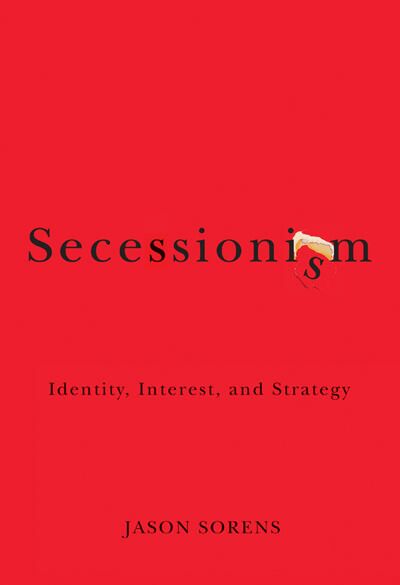
Secessionism
Using innovative methods to analyze both advanced democracies and developing countries, Jason Sorens shows how central governments can alleviate or increase ethnic minority demands for regional autonomy. He argues that when countries treat secession as negotiable and provide legal paths to pursuing it rather than absolutely prohibiting independence, violence is far less likely. Additionally, independence movements encourage government policies of decentralization that may be beneficial to regional minorities. An informative investigation of the root causes of political violence, Secessionism provides a clear-eyed look at independence movements for both governments and secessionists.
eBook

Technology and the overturning of human autonomy
\"This book offers an extensive historical, philosophical and ethical discussion on the role of autonomous technologies, and their influence on human identity. By connecting those different perspectives, and analysing some practical case studies, it guides readers to dissect the relationship between machine and human autonomy, and machine and human identity. It analyses how the relationship between human and technology has been evolving in the last few centuries. Last, it aims at proposing an explanation on the reason/s why humans have been keen on developing their own autonomy's perfect avatar.\"--Back cover.
BOOK

Self-leadership in the context of part-time teleworking
Employees who work periodically in both a traditional office and home office (part-time teleworkers) face opportunities and risks related to both working locations. As self-leadership might play a crucial role in this context, we examined within-person variations in self-leadership (self-reward, self-punishment, self-cueing, self-goal setting, imagining successful performance, and evaluation of beliefs and assumptions) on home days and office days. In a typical workweek, 195 part-time teleworkers filled out daily surveys (729 days), and we examined the relationship between working location (office and home) and self-leading behavior as well as the mediating role of autonomy. Finally, we investigated whether self-leading behavior relates to ego depletion and work satisfaction at the end of the working day. Multilevel analyses revealed that part-time teleworkers reported higher use of self-reward, self-goal setting, and visualization of successful performance on home days than on office days. The association between working location and self-reward, self-goal setting, visualization of successful performance, and evaluation of beliefs and assumptions was mediated by autonomy. There were no indirect effects of working location on ego depletion through self-leadership. However, we found that on home days, part-time teleworkers were more satisfied with their job at the end of the workday through self-goal setting.
Journal Article


Nonmonetary incentives and the implications of work as a source of meaning
Empirical research in economics has begun to explore the idea that workers care about nonmonetary aspects of work. An increasing number of economic studies using survey and experimental methods have shown that nonmonetary incentives and nonpecuniary aspects of one’s job have substantial impacts on job satisfaction, productivity, and labor supply. By drawing on this evidence and relating it to the literature in psychology, this paper argues that work represents much more than simply earning an income: for many people, work is a source of meaning. In the next section, we give an economic interpretation of meaningful work and emphasize how it is affected by the mission of the organization and the extent to which job design fulfills the three psychological needs at the basis of self-determination theory: autonomy, competence, and relatedness. We point to the evidence that not everyone cares about having a meaningful job and discuss potential sources of this heterogeneity. We sketch a theoretical framework to start to formalize work as a source of meaning and think about how to incorporate this idea into agency theory and labor supply models. We discuss how workers’ search for meaning may affect the design of monetary and nonmonetary incentives. We conclude by suggesting some insights and open questions for future research.
Journal Article


Time reclaimed: temporality and the experience of meaningful work
The importance of meaningful work has been identified in scholarly writings across a range of disciplines. However, empirical studies remain sparse and the potential relevance of the concept of temporality, hitherto somewhat neglected even in wider sociological studies of organizations, has not been considered in terms of the light that it can shed on the experience of work as meaningful. These two disparate bodies of thought are brought together to generate new accounts of work meaningfulness through the lens of temporality. Findings from a qualitative study of workers in three occupations with ostensibly distinct temporal landscapes are reported. All jobs had the potential to be both meaningful and meaningless; meaningfulness arose episodically through work experiences that were shared, autonomous and temporally complex. Schutz’s notion of the ‘vivid present’ emerged as relevant to understanding how work is rendered meaningful within an individual’s personal and social system of relevances.
Journal Article


Agency in Educational Technology: Interdisciplinary Perspectives and Implications for Learning Design
Advancing learners’ agency is a key educational goal. The advent of personalized EdTech, which automatically tailor learning environments to individual learners, gives renewed relevance to the topic. EdTech researchers and practitioners are confronted with the same basic question: What is the right amount of agency to give to learners during their interactions with EdTech? This question is even more relevant for younger learners. Our aim in this paper is twofold: First, we outline and synthesize the ways in which agency is conceptualized in three key learning disciplines (philosophy, education, and psychology). We show that there are different types and levels of agency and various prerequisites for the effective exercise of agency and that these undergo developmental change. Second, we provide guiding principles for how agency can be designed for in EdTech for children. We propose an agency personalization loop in which the level of agency provided by the EdTech is assigned in an adaptive manner to strike a balance between allowing children to freely choose learning content and assigning optimal content to them. Finally, we highlight some examples from practice.
Journal Article