
Catalogue Search | MBRL


Are you sure you want to remove the book from the shelf?

{{itemTitle}}
219
result(s) for
"Avantgarde"
Sort by:

Poetic community : avant-garde activism and Cold War culture
\"Poetic Community examines the relationship between poetry and community formation in the decades after the Second World War. In four detailed case studies (of Black Mountain College in North Carolina, the Caribbean Artists Movement in London, the Women's Liberation Movement at sites throughout the US, and the Toronto Research Group in Canada) the book documents and compares a diverse group of social models, small press networks, and cultural coalitions informing literary practice during the Cold War era. Drawing on a wealth of unpublished archival materials, Stephen Voyce offers new and insightful comparative analysis of poets such as John Cage, Charles Olson, Adrienne Rich, Kamau Brathwaite, and bpNichol. In contrast with prevailing critical tendencies that read mid-century poetry in terms of expressive modes of individualism, Poetic Community demonstrates that the most important literary innovations of the post-war period were the results of intensive collaboration and social action opposing the Cold War's ideological enclosures.\"--Jacket.
Book
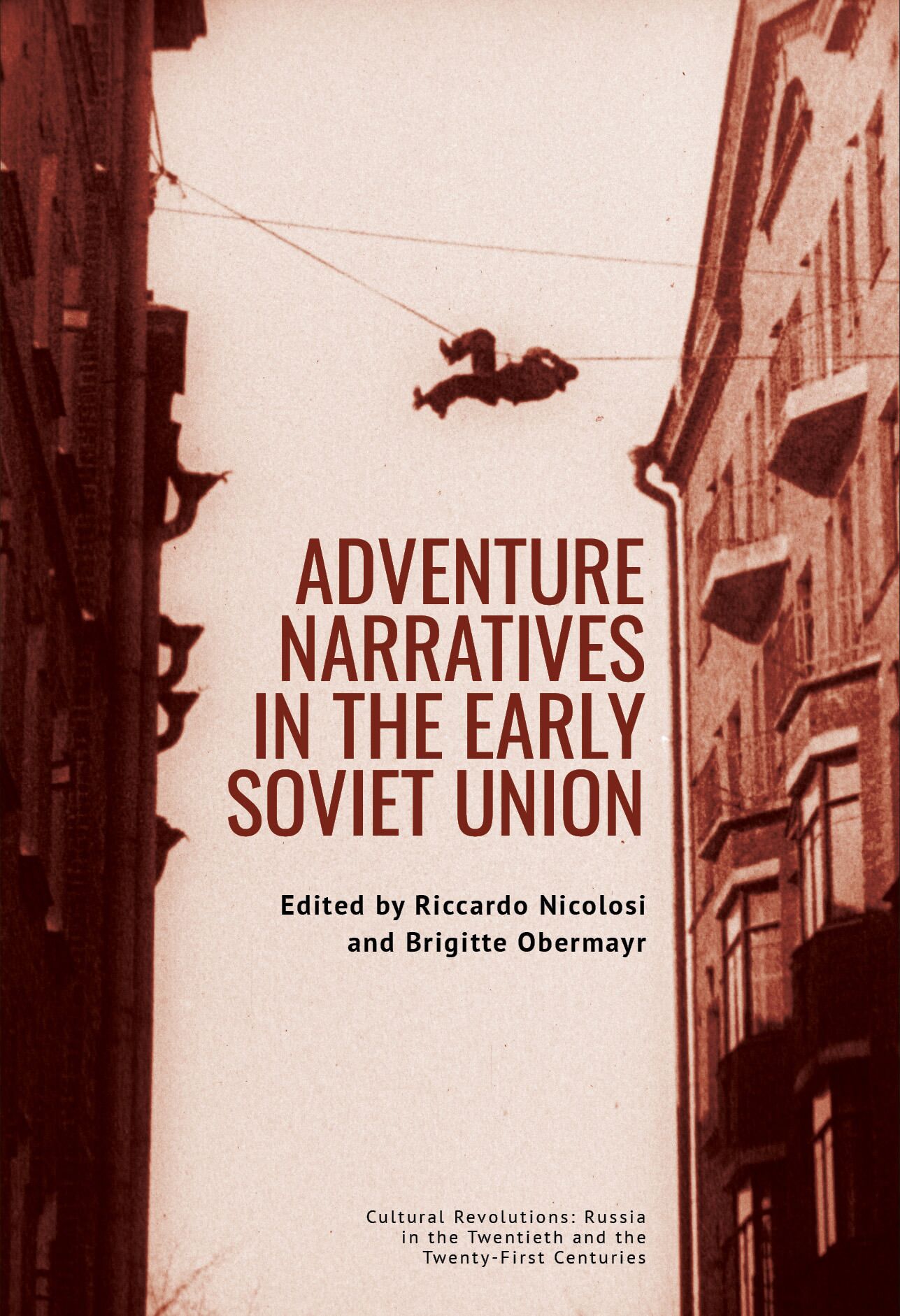
Adventure Narratives in the Early Soviet Union
In the early 1920s, Soviet writers and literary theorists were convinced that adventure fiction held the key to developing a new kind of narrative. The call for a \"Russian Stevenson\" (Lev Lunts) profoundly impacted the theory of prose and different notions of the literary hero. It also led theorists like Shklovsky to write dime novels and convinced writers of various backgrounds to explore Soviet topography in a new light, harnessing the synergies between imperialism and adventure. Despite the inherently anarchist nature of adventure and its bourgeois offspring, the magic of adventure found its way into socialist realism under different guises, demanding recognition and resisting neglect, especially in the case of socialist realist film.
This book offers a critical historical reconstruction of the early Soviet adventure craze and its lasting popularity in socialist realism. It also offers innovative theoretical propositions for a philological analysis of adventure fiction that arise from this unique historical context.
eBook
Anarchism and the Avant-Garde : radical arts and politics in perspective
\"Anarchism and the Avant-Garde: Radical Arts and Politics in Perspective contributes to the continuing debate on the encounter of the classical anarchisms (1860s 1940s) and the artistic and literary avant-gardes of the same period, probing its dimensions and limits. Case studies on Dadaism, decadence, fauvism, neo-impressionism, symbolism, and various anarchisms explore the influence anarchism had on the avant-gardes and reflect on avant-garde tendencies within anarchism. This volume also explores the divergence of anarchism and the avant-gardes. It offers a rich examination of politics and arts, and it complements an ongoing discourse with theoretical tools to better assess the aesthetic, social, and political cross-pollination that took place between the avant-gardes and the anarchists in Europe\"--Page 4 of cover.
Book

Chess and Freedom
The tension between the game of chess as strictly regulated by rules and the idea of freedom can be traced in three radidal examples separated by media and different periods of the twentieth century. The first emphatic employment of the concept of freedom is in the title of a chess journal issued by the Communist opposition of the central German working-class chess organization at the end of the Weimar Republic. In the journal Frei Schach! the radical subsection of “Red Sports Unity” asserts its claim for supremacy, demanding revolutionary goals in the class struggle. But this journalistic appeal to freedom was countered by the use of the same concept by the moderate alternative central chess organisation, and soon even by the National Socialists suppressing both working-class organisations. In the cultural scene after the second world war there was a distant, strangely depoliticized echo of freedom in chess. In the Austrian avantgarde dramatist Wolfgang Bauer`s version of Ibsen`s modernist revision of classical drama in the play Ghosts there is a farcical use of everyday objects as a replacement of chess elements. They function as a postmodern parody of the conventional structures of a conversation play. Compared to such highly idiosyncratic ludic transformation of chess games, today`s digitalized chess in which the computer is the final arbiter makes the game more accessible to the masses. The surface democratic appeal in which average players can turn into critics of the chess elite is accompanied by the complete subjection to digitalisation on a late capitalist agenda. However, this does not completely deprive the traditional game of chess of its promise of playful enjoyment for an increasing number of people on a global scale.
Journal Article

The noisemakers : Estridentismo, vanguardism, and social action in postrevolutionary Mexico
\"The Noisemakers examines Estridentismo, one of Mexico's first modernist art and literary movements. Founded by poet Manuel Maples Arce, Estridentismo spurred dynamic collaborations and debates among artists, writers, and intellectuals during the decade after the Mexican Revolution. Lynda Klich explores the paradoxical aims of the movement's writers and artists who deployed manifestos, journals, and cubo-futurist forms to insert themselves into international vanguard networks as they simultaneously participated in nationalist reconstruction of the 1920s. In crafting a cosmopolitan Mexican identity, Estridentista artists both circulated images of modern technologies and urban life and visually updated traditional subjects such as masks and Mexican types. Klich reads the movement's radical cultural production as a call for active sociopolitical engagement and characterizes Estridentismo as an ambitious program for national cultural and social modernity in the early twentieth century. Exploring the tensions that emerged from these divergent cosmopolitan and local proposals, The Noisemakers inserts Mexico into the dialogue of global modernisms.\"--Provided by publisher.
Book

The New Avant-Garde in Italy
The debate on literature and the arts provoked by the Italian neoavant-garde (neoavanguardia) is undoubtedly one of the most animated and controversial the country has witnessed from World War II to the present. Comprising the period between the late 1950s and the late 1960s, the phenomenon of theneoavanguardiainvolved key writers, critics, and artists, both as insiders - Sanguineti, Balestrini, Guglielmi, Eco, and others - and adversaries such as Pasolini, Calvino, and Moravia.
InThe New Avant-Garde in Italy- the first book in English to document the movement - John Picchione's objective is twofold: to provide a comprehensive analysis of the theoretical tenets that inform the works of theneoavanguardiaand to show how they are applied to the poetic practices of its authors. Theneoavanguardiacannot, Picchione argues, be defined as a movement with a unified program expressed in the form of manifestos or shared theoretical principles. It experiences irreconcilable internal conflicts that are explored as a split between two main blocs - one that is tied to the project of modernity, the other to post-modern aesthetic postures. This study suggests that some of the contentious views proposed by theneoavanguardiaanticipated a wide range of issues that continue to be significant and pressing to this day.
eBook

Embattled avant-gardes : modernism's resistance to commodity culture in Europe
\"This sweeping work, at once a panoramic overview and an ambitious critical reinterpretation of European modernism, provides a bold new perspective on a movement that defined the cultural landscape of the early twentieth century. Walter L. Adamson embarks on a lucid, wide-ranging exploration of the avant-garde practices through which the modernist generations after 1900 resisted the rise of commodity culture as a threat to authentic cultural expression. Taking biographical approaches to numerous avant-garde leaders, Adamson charts the rise and fall of modernist aspirations in movements and individuals as diverse as Ruskin, Marinetti, Kandinsky, Bauhaus, Purism, and the art critic Herbert Read. In conclusion, Adamson rises to the defense of the modernists, suggesting that their ideas are relevant to current efforts to think through what it might mean to create a vibrant, aesthetically satisfying form of cultural democracy.\"--Publisher's website.
Book
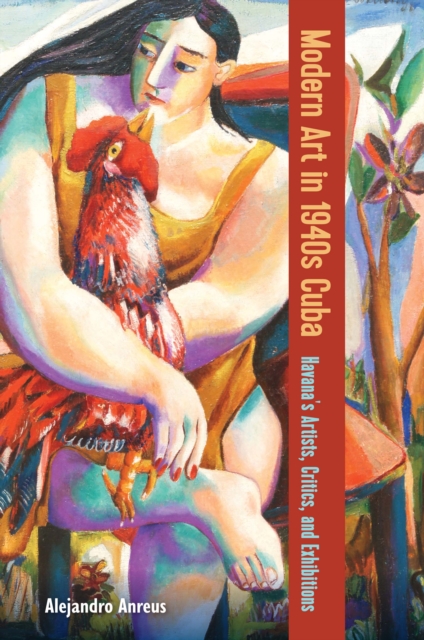
Modern Art in 1940s Cuba
The first book to explore the work ofavant-garde artists in Cuba during the nations years as a democracyProviding the first comprehensive historyof modern Cuban art during the 1940s, this book contextualizes the artisticpractices, values, and contributions of the first and second generations ofavant-garde artists on the island within the framework of the nations onlydemocratic period. Between 1940 and the 1952 coup byFulgencio Batista, Cuba experienced a democratic system of government as wellas a vibrant cultural renaissance, particularly in the visual arts. Arthistorian and curator Alejandro Anreus uses interviews with key figures as wellas previously untapped archival materials from this period to explorehowCuban artists collaborated to create distinct visual languagesthatwould become part of the canon of modern art in the Americas.Inthis decade, Cuban art was showcased in major exhibitions both domestically andinternationally,including the landmark 1944 exhibition Modern CubanPainters at the Museum of Modern Art in New York. In addition to formal analysis ofspecific artworks, Anreus provides social art history to situate these artistsand their work within their political and economic context. Anreus drawsattention to an influential but overlooked decade in Cubas political andartistic history that reflects postwar hemispheric solidarity and culturalexchange between democracies, highlighting the lasting impact of this time andplace on the global landscape of modern art.
eBook
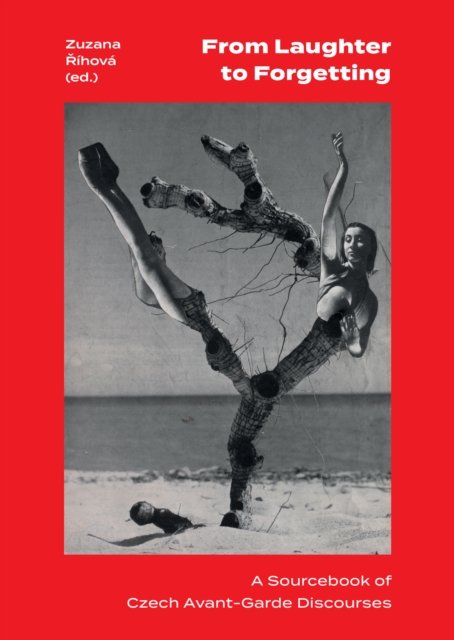
From Laughter to Forgetting
A comprehensive reader on the Czech literary avant-garde. In recent years a prominent trend in the study of European modernism and the avant-garde has been increased attention to texts and traditions that have long stood in the shadow of the French, German, and British traditions that dominate the canon. Yet this more expansive view of European modernism and the avant-garde has been hindered by the limited range of texts available outside the original languages. This book addresses that problem by offering a wide-ranging selection of literary, theoretical, and documentary sources from one of the most dynamic and original European avant-garde traditions: that of the first Czechoslovak Republic and of the Bohemian lands. The Czech avant-garde is in many respects the ideal \"alternative\" avant-garde to present in detail to a wider readership: it tracks Central European developments and was often influential internationally while being deeply embedded in particular cultural dynamics that produced original forms. This volume returns interwar Czech avant-garde writings to their place as a firmly embedded component of the European avant-garde.
eBook

The Routledge Companion to Experimental Literature
What is experimental literature? How has experimentation affected the course of literary history, and how is it shaping literary expression today? Literary experiment has always been diverse and challenging, but never more so than in our age of digital media and social networking, when the very category of the literary is coming under intense pressure. How will literature reconfigure itself in the future?
The Routledge Companion to Experimental Literature maps this expansive and multifaceted field, with essays on:
the history of literary experiment from the beginning of the twentieth century to the present
the impact of new media on literature, including multimodal literature, digital fiction and code poetry
the development of experimental genres from graphic narratives and found poetry through to gaming and interactive fiction
experimental movements from Futurism and Surrealism to Postmodernism, Avant-Pop and Flarf.
Shedding new light on often critically neglected terrain, the contributors introduce this vibrant area, define its current state, and offer exciting new perspectives on its future.
This volume is the ideal introduction for those approaching the study of experimental literature for the first time or looking to further their knowledge.
eBook