
Catalogue Search | MBRL


Are you sure you want to remove the book from the shelf?

{{itemTitle}}
1,204
result(s) for
"Awakening"
Sort by:


Awakening the beauty: a journey through dormant gems in strategic management literature
The primary objective of this study was to identify the phenomenon of sleeping beauties within the realm of strategic management. We applied the methodology introduced by Van Raan, which revolves around three variables for identifying sleeping beauty articles: depth of sleep, length of sleep, and awakening intensity. The research's statistical population consisted of strategic management articles within the Scopus database, that met the requirement of at least 100 citations. Despite many papers possessing the requisite characteristics to be considered sleeping beauties in the initial phase, they were excluded from contention in the final phase—specifically, the assessment of the awakening intensity of these works. No work was ultimately identified as a sleeping beauty. Among the articles receiving a limited number of citations in their early stages, some remained dormant after a certain period, akin to taking a nap, failing to achieve the distinction of a sleeping beauty. We postulate that due to the disparate nature of each article and the distinct needs of readers and researchers, a fixed standard cannot be employed to universally identify sleeping beauties. This recognition is influenced by the fluctuating wakefulness and dormancy that hinges upon numerous factors entwined with the demands of the scientific community.
Journal Article

Reform of Islam : forty theses for an Islamic ethics in the 21st century
Abdel-Hakim Ourghi's 'Reform of Islam' is an open indictment of prevailing conservative Islam which insists on the absolute subjugation of the body and mind of all Muslims. The author seeks a humanist understanding of Islam and aims to interpret Islam in today's terms. He argues against the historical alienation and transfiguration that still shape the collective consciousness of Muslims in the 21st Century. Using critical analysis and logic, the author aims to reveal the true core of Islam.
Book

Sleep problems in adolescence are prospectively linked to later depressive symptoms via the cortisol awakening response
Sleep disturbance is a symptom of and a well-known risk factor for depression. Further, atypical functioning of the HPA axis has been linked to the pathogenesis of depression. The purpose of this study was to examine the role of adolescent HPA axis functioning in the link between adolescent sleep problems and later depressive symptoms. Methods: A sample of 157 17–18 year old adolescents (61.8% female) completed the Pittsburgh Sleep Quality Inventory (PSQI) and provided salivary cortisol samples throughout the day for three consecutive days. Two years later, adolescents reported their depressive symptoms via the Center for Epidemiological Studies Depression Scale (CES-D). Results: Individuals (age 17–18) with greater sleep disturbance reported greater depressive symptoms two years later (age 19–20). This association occurred through the indirect effect of sleep disturbance on the cortisol awakening response (CAR) (indirect effect = 0.14, 95%CI [.02 -.39]). Conclusions: One pathway through which sleep problems may lead to depressive symptoms is by up-regulating components of the body’s physiological stress response system that can be measured through the cortisol awakening response. Behavioral interventions that target sleep disturbance in adolescents may mitigate this neurobiological pathway to depression during this high-risk developmental phase.
Journal Article


The cortisol awakening response predicts major depression: predictive stability over a 4-year follow-up and effect of depression history
The cortisol awakening response (CAR) has been shown to predict major depressive episodes (MDEs) over a 1-year period. It is unknown whether this effect: (a) is stable over longer periods of time; (b) is independent of prospective stressful life events; and (c) differentially predicts first onsets or recurrences of MDEs.
A total of 270 older adolescents (mean age 17.06 years at cortisol measurement) from the larger prospective Northwestern-UCLA Youth Emotion Project completed baseline diagnostic and life stress interviews, questionnaires, and a 3-day cortisol sampling protocol measuring the CAR and diurnal rhythm, as well as up to four annual follow-up interviews of diagnoses and life stress.
Non-proportional person-month survival analyses revealed that higher levels of the baseline CAR significantly predict MDEs for 2.5 years following cortisol measurement. However, the strength of prediction of depressive episodes significantly decays over time, with the CAR no longer significantly predicting MDEs after 2.5 years. Elevations in the CAR did not significantly increase vulnerability to prospective major stressful life events. They did, however, predict MDE recurrences more strongly than first onsets.
These results suggest that a high CAR represents a time-limited risk factor for onsets of MDEs, which increases risk for depression independently of future major stressful life events. Possible explanations for the stronger effect of the CAR for predicting MDE recurrences than first onsets are discussed.
Journal Article
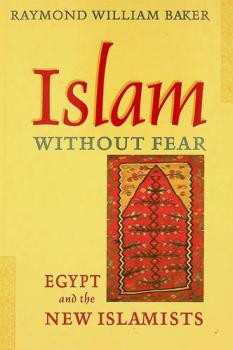
Islam without fear : Egypt and the new Islamists
\"For the last several decades an influential group of Egyptian scholars and public intellectuals has been having a profound effect in the Islamic world. Raymond Baker offers a portrait of these New Islamists - Islamic scholars, lawyers, judges, and journalists who provide the moral and intellectual foundations for a more fully realized Islamic community, open to the world and with full rights of active citizenship for women and non-Muslims.\" \"The New Islamists have a record of constructive engagement in Egyptian public life, balanced by an unequivocal critique of the excesses of Islamist extremists. Baker shows how the New Islamists are translating their thinking into action in education and the arts, economics and social life, and politics and foreign relations despite an authoritarian political environment.\" \"For the first time, Baker allows us to hear in context the most important New Islamist voices, including Muhammad al Ghazzaly, Kamal Abul Magd, Muhammad Selim al Awa, Fahmy Huwaidy, Tareq al Bishry, and Yusuf al Qaradawy - regarded by some as the most influential Islamic scholar in the world today.\"--Jacket.
Book

High Trait Anxiety Predicts Decreased Cortisol Awakening Response
Cortisol awakening response (CAR) refers to the dynamic change of cortisol concentration within 1 h after awakening. Trait anxiety is a general risk marker of anxiety disorders. The present study aimed to investigate the effect of trait anxiety on CAR using R30 (change in cortisol level at 30 min after awakening) and AUCi (the area under the curve with respect to the increase) as indicators. 133 college students were divided into high trait anxiety (HTA) and low trait anxiety (LTA) group according to the median score of the trait version of State-Trait Anxiety Inventory. Saliva samples were collected immediately upon awakening, 30 min, 45 and 60 min on two consecutive mornings. The results showed that, (1) decreased CAR was found for the male than female participants. (2) Compared to the LTA group, the HTA group showed decreased R30 and AUCi. (3) Both R30 and AUCi were negatively correlated with trait anxiety scores. These results demonstrated that trait anxiety might weaken the CAR, and both R30 and AUCi can be used as CAR indicators in detecting trait anxiety. Future research on CAR should consider the moderating effect of trait anxiety.
Journal Article

The Awakening of Islamic pop music
Awakening -- an Islamic media company formed in London -- has created the soundtrack to many Muslim lives during the last two decades and has produced superstars like Sami Yusuf and Maher Zain, among a host of other artists. As the company celebrates its first 20 years in the industry, Jonas Otterbeck examines Awakening's rise to global success and their pop music inspired by Islam--back cover.
Book
Essentials. Pivotal events, war, and conflict. Episode 71, The First Great Awakening
The First Great Awakening revived Christianity across the American colonies, introducing a new era of religious practice and community involvement.
Streaming Video