
Catalogue Search | MBRL


Are you sure you want to remove the book from the shelf?

{{itemTitle}}
8
result(s) for
"Aymara Indians -- Bolivia -- Government relations"
Sort by:


Acting Inca
For most of the postcolonial era, the Aymara Indians of highland Bolivia were a group without representation in national politics. Believing that their cause would finally be recognized, the Aymara fought alongside the victorious liberals during the Civil War of 1899. Despite Aymara loyalty, liberals quickly moved to marginalize them after the war. In her groundbreaking study, E. Gabrielle Kuenzli revisits the events of the civil war and its aftermath to dispel popular myths about the Aymara and reveal their forgotten role in the nation-building project of modern Bolivia.Kuenzli examines documents from the famous postwar Peñas Trial to recover Aymara testimony during what essentially became a witch hunt. She reveals that the Aymara served as both dutiful plaintiffs allied with liberals and unwitting defendants charged with wartime atrocities and instigating a race war.To further combat their \"Indian problem,\" Creole liberals developed a public discourse that positioned the Inca as the only Indians worthy of national inclusion. This was justified by the Incas' high civilization and reputation as noble conquerors, along with their current non-threatening nature. The \"whitening\" of Incans was a thinly veiled attempt to block the Aymara from politics, while also consolidating the power of the Liberal Party.Kuenzli posits that despite their repression, the Aymara did not stagnate as an idle, apolitical body after the civil war. She demonstrates how the Aymara appropriated the liberal's Indian discourse by creating theatrical productions that glorified Incan elements of the Aymara past. In this way, the Aymara were able to carve an acceptable space as \"progressive Indians\" in society. Kuenzli provides an extensive case study of an \"Inca play\" created in the Aymara town of Caracollo, which proved highly popular and helped to unify the Aymara.As her study shows, the Amyara engaged liberal Creoles in a variety of ways at the start of the twentieth century, shaping national discourse and identity in a tradition of activism that continues to this day.
eBook

Indigeneity and Decolonization in the Bolivian Andes
Indigeneity and Decolonization in the Bolivian Andes: Ritual Practice and Activism explores how Evo Morales's victory in the 2005 Bolivian presidential elections led to indigeneity as the core of decolonization politics.
eBook

El Alto, Rebel City
Combining anthropological methods and theories with political philosophy, Sian Lazar analyzes everyday practices and experiences of citizenship in a satellite city to the Bolivian capital of La Paz: El Alto, where more than three-quarters of the population identify as indigenous Aymara. For several years, El Alto has been at the heart of resistance to neoliberal market reforms, such as the export of natural resources and the privatization of public water systems. In October 2003, protests centered in El Alto forced the Bolivian president to resign; in December 2005, the country's first indigenous president, Evo Morales, was elected. The growth of a strong social justice movement in Bolivia has caught the imagination of scholars and political activists worldwide. El Alto remains crucial to this ongoing process. In El Alto, Rebel City Lazar examines the values, practices, and conflicts behind the astonishing political power exercised by El Alto citizens in the twenty-first century.
Drawing on ethnographic fieldwork conducted between 1997 and 2004, Lazar contends that in El Alto, citizenship is a set of practices defined by one's participation in a range of associations, many of them collectivist in nature. Her argument challenges Western liberal notions of the citizen by suggesting that citizenship is not only individual and national but in many ways communitarian and distinctly local, constituted through different kinds of affiliations. Since in El Alto these affiliations most often emerge through people's place of residence and their occupational ties, Lazar offers in-depth analyses of neighborhood associations and trade unions. In so doing, she describes how the city's various collectivities mediate between the state and the individual. Collective organization in El Alto and the concept of citizenship underlying it are worthy of attention; they are the basis of the city's formidable power to mobilize popular protest.
eBook
El Alto, Rebel City
Combining anthropological methods and theories with political philosophy, Sian Lazar analyzes everyday practices and experiences of citizenship in a satellite city to the Bolivian capital of La Paz: El Alto, where more than three-quarters of the population identify as indigenous Aymara. For several years, El Alto has been at the heart of resistance to neoliberal market reforms, such as the export of natural resources and the privatization of public water systems. In October 2003, protests centered in El Alto forced the Bolivian president to resign; in December 2005, the country’s first indigenous president, Evo Morales, was elected. The growth of a strong social justice movement in Bolivia has caught the imagination of scholars and political activists worldwide. El Alto remains crucial to this ongoing process. In El Alto, Rebel City Lazar examines the values, practices, and conflicts behind the astonishing political power exercised by El Alto citizens in the twenty-first century.Drawing on ethnographic fieldwork conducted between 1997 and 2004, Lazar contends that in El Alto, citizenship is a set of practices defined by one’s participation in a range of associations, many of them collectivist in nature. Her argument challenges Western liberal notions of the citizen by suggesting that citizenship is not only individual and national but in many ways communitarian and distinctly local, constituted through different kinds of affiliations. Since in El Alto these affiliations most often emerge through people’s place of residence and their occupational ties, Lazar offers in-depth analyses of neighborhood associations and trade unions. In so doing, she describes how the city’s various collectivities mediate between the state and the individual. Collective organization in El Alto and the concept of citizenship underlying it are worthy of attention; they are the basis of the city’s formidable power to mobilize popular protest.
eBook
Indigeneity and กecolonization in the bolivian andes
This book explores how Evo Morales's victory in the 2005 Bolivian presidential elections led to indigeneity as the core of decolonization politics. Burman analyzes how indigenous Aymara ritual specialists are essential in representing this indigeneity in official state ceremony and in legitimizing the president's role as \"the indigenous president.\"
eBook

El Alto, Rebel City
Combining anthropological methods and theories with political philosophy, Sian Lazar analyzes everyday practices and experiences of citizenship in a satellite city to the Bolivian capital of La Paz: El Alto, where more than three-quarters of the population identify as indigenous Aymara. For several years, El Alto has been at the heart of resistance to neoliberal market reforms, such as the export of natural resources and the privatization of public water systems. In October 2003, protests centered in El Alto forced the Bolivian president to resign; in December 2005, the country's first indigenous president, Evo Morales, was elected. The growth of a strong social justice movement in Bolivia has caught the imagination of scholars and political activists worldwide. El Alto remains crucial to this ongoing process. In El Alto, Rebel City Lazar examines the values, practices, and conflicts behind the astonishing political power exercised by El Alto citizens in the twenty-first century. Drawing on ethnographic fieldwork conducted between 1997 and 2004, Lazar contends that in El Alto, citizenship is a set of practices defined by one's participation in a range of associations, many of them collectivist in nature. Her argument challenges Western liberal notions of the citizen by suggesting that citizenship is not only individual and national but in many ways communitarian and distinctly local, constituted through different kinds of affiliations. Since in El Alto these affiliations most often emerge through people's place of residence and their occupational ties, Lazar offers in-depth analyses of neighborhood associations and trade unions. In so doing, she describes how the city's various collectivities mediate between the state and the individual. Collective organization in El Alto and the concept of citizenship underlying it are worthy of attention; they are the basis of the city's formidable power to mobilize popular protest.
eBook
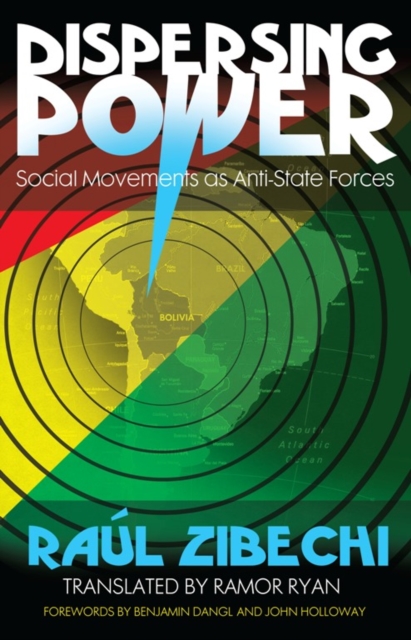
Dispersing power : social movements as anti-state forces
\"Zibechi goes to Bolivia to learn. Like us, he goes with questions, questions that stretch far beyond the borders of Bolivia. How do we change the world and create a different one? How do we get rid of capitalism? How do we create a society based on dignity? What is the role of the state and what are the possibilities of changing society through anti-state movements?... the most important practical and theoretical questions that have risen from the struggles in Latin America and the world in the last fifteen years or so... The book is beautiful, exciting, stimulating... Do read it and also give it your friends.\"—John Holloway, from the Foreword
\"Raúl Zibechi recounts in wonderful detail how dynamic and innovative Bolivian social movements succeeded in transforming the country. Even more inspiring than the practical exploits, though, are the theoretical innovations of the movements, which Zibechi highlights, giving us new understandings of community, political organization, institution, and a series of other concepts vital to contemporary political thought.\"—Michael Hardt, co-author of Empire, Multitude, and Commonwealth
This, Raúl Zibechi's first book translated into English, is an historical analysis of social struggles in Bolivia and the forms of community power instituted by that country's indigenous Aymara. Dispersing Power, like the movements it describes, explores new ways of doing politics beyond the state, gracefully mapping the \"how\" of revolution, offering valuable lessons to activists and new theoretical frameworks for understanding how social movements can and do operate independently of state-centered models for social change.
eBook