
Catalogue Search | MBRL


Are you sure you want to remove the book from the shelf?

{{itemTitle}}
11
result(s) for
"Azerbaijan Civilization"
Sort by:


Azeri Women in Transition
This study of women and gender in a Muslim society draws on archival and literary sources as well as the life stories of women of different generations to offer a unique ethnographic and historical account of the lives of urban women in contemporary Azerbaijan. Focussing on a group of professional women in Baku, it provides insight into the impact of the Soviet system on the position of Azeri women, their conceptions of femininity and the significant changes brought about by the post-Soviet transition to a market economy and growing western influence. Also explored are the ways in which local cultural expectations and Islamic beliefs were accommodated to different modernisation projects.
eBook
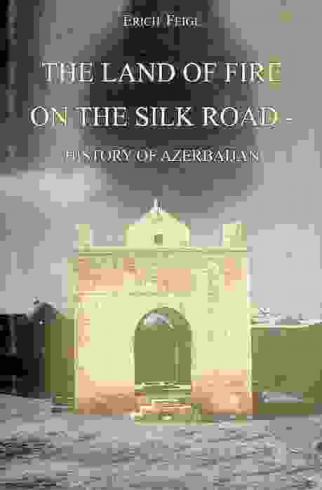
The land of fire on the silk road : history of Azerbaijan
The book by famous Austrian historian an writer Erich Feigl translated from German language narrates on various stages in history of Azerbaijan.
Book

The Origins and Foundations of Instrumental Jazz Music in Azerbaijan (1920–2024)
This is a brief overview of how instrumental jazz music in Azerbaijan (1920–present) evolved and responded to cultural and historical factors. It explores how locally and globally different sociocultural and musical ecosystems shaped the development of music in this country. As a result, it inspires a reevaluation of the nature of this subject from several perspectives and approaches. Chronologically, the Soviet and post-Soviet contexts are reviewed to determine how changes in musical practices, musical languages, traditional musical culture, and aspects of local and global sociopolitical events affected creativity and formed its musical and educational tendencies in Azerbaijan. Globalization and its effects on the formation of the musical landscape and the country’s musical identity are primary foci. The fusion of culture and diverse musical genres emerged as the new trend and tendencies in the region. Within this context, the origins of jazz music and its fusion are explored and explained in more detailed perspectives.
Journal Article

Digital orientation and service delivery in Africa: A post-COVID-19 epoch perspective
BackgroundGlobally, the proliferation and widespread use of information and communication technology (ICT) have reformed service delivery. Hitherto, the COVID-19 pandemic has disrupted the delivery of those services in the African continent. Although the public sector’s application of emerging digital technologies (EDTs) has improved efficiency, transparency, citizen participation and service delivery, the African emerging economies still need to overcome impediments that obstruct their full potential.AimThis study investigates the effect of digital orientation on the service delivery of public sector organisations (PSOs) in Africa in the post-COVID-19 epoch.SettingThis study focused on the African continent.MethodsThis study delves into a qualitative approach, utilising the systematic literature review and applied Preferred Reporting Items for Systematic Reviews and Meta-Analysis (PRISMA) to investigate the effect of digital orientation on the service delivery of PSOs in Africa in the post-COVID-19 epoch.ResultsThe results reveal that the digital divide, inadequate digital infrastructure, lack of digital competencies and unreliable networks remain the most common contextual determinants experienced by African economies post-COVID-19.ConclusionThe main obstacles to adopting and implementing digital technologies in Africa are bureaucracy and the lack of appropriate funding.ContributionThis study may assist managers, decision-makers, policymakers and practitioners of PSOs reshape service delivery and develop sound legislative mandates regarding EDTs. Moreover, to contributing by providing an overview of the present theoretical and application insights of digital orientation, that is, the Internet of Things (IoT), artificial intelligence (AI), big data, virtual platforms and cloud computing by the African public sector.
Journal Article

History and Policy of Translating Poetry: Azerbaijan and Its Neighbors
Throughout the history of civilization the art of translation has existed as a bridge that connects different cultures. The article focuses on the history of poetic (and other) translations in the Middle East and territories abutting Azerbaijan from the Middle Ages to the 20th century. It also explores the practice of translating holy books and its influence on the region, as well as the tradition of nezire, or writing a new book under the inspiration of an original one rather than simply translating the original. The second part of the article discusses the history of poetic translation into and from the Azerbaijani language, especially translation work from Abbas Sehhet and Samad Vurghun, two renowned translators in Azerbaijani history. Finally, important aspects of the art of translating poetry are reviewed and analyzed, such as poetic forms and metaphors, rhythm and rhyme schemes, and the style of the text. The article concludes by making the point that poetry should indeed be translated; however, translators must take many factors into account in their work so that the target text reflects as much as possible the beauty of the original.
Journal Article

Politics of Romanisation in Azerbaijan (1921–1992)
Writing systems are used as, and considered to be,
important tools and symbols of political discourses
of their time. This article presents a historical
overview of the alphabet changes in Azerbaijan and
shows how the alphabets were associated with the
discourses of modernisation, nationalism and
national identity construction. In the early
twentieth century, the discussion on the need to
shift from the Arabic alphabet to the Roman was
actually an extension of the wider debate on
national identity and language coupled with the will
to modernise and progress. In 1940, the Soviet
regime imposed the shift from the Roman alphabet to
the Cyrillic in a top-down manner. This change was
neither negotiated nor discussed among the
intellectuals and there was almost no room for the
expression of critical views. With the introduction
of glasnost and perestroika in the late 1980s,
intellectuals started to question to what extent the
Cyrillic alphabet and the Russian language could
represent the Azerbaijani language, civilisation,
and national identity. In 1991, Azerbaijan adopted
the Roman alphabet. The case of Azerbaijan shows
that alphabet changes are symbolic acts to deny
and/or reject the previous political and cultural
heritage and its legitimacy and tools for
undermining its prominence in the new processes of
transformation and change.
Journal Article

The Caucasus - An Introduction
The Caucasus is one of the most complicated regions in the world: with many different peoples and political units, differing religious allegiances, and frequent conflicts, and where historically major world powers have clashed with each other. Until now there has been no single book for those wishing to learn about this complex region. This book fills the gap, providing a clear, comprehensive introduction to the Caucasus, which is suitable for all readers. It covers the geography; the historical development of the region; economics; politics and government; population; religion and society; culture and traditions; alongside its conflicts and international relations. Written throughout in an accessible style, it requires no prior knowledge of the Caucasus. The book will be invaluable for those researching specific issues, as well as for readers needing a thorough introduction to the region.
Frederik Coene is currently Attaché dealing with post-conflict assistance in the Delegation of the European Commission to Georgia. His research on the Caucasus began in 1999 during his internship in the Office of the Secretary-General at NATO Headquarters. Since then he has researched, worked and travelled in all parts of the Caucasus.
\"Coene provides a vast amount of information on a range ofissues and his book may be a useful reference point for those wishing to know more about the region... The Caucasus is a useful introduction to the region.\" - Liam O'Shea (2011) 'Reviews', Europe-Asia Studies, 63: 2, 351-353
1: Geography 2: Territorial Division, Government and Administration 3: Population and Society 4: History 5: Conflicts 6: International Politics 7: Economy 8: Culture, Mentality and Traditions
eBook

Rethinking Russia From Zardob: Hasan Melikov Zardabi and the “Native” Intelligentsia
Many non-Russians in the Russian Empire were active members of imperial educated society (obshchestvo), and they often conceived of the colonial advance of Russia as part of the march of the progressive West and “civilization” itself into the backward lands of the East. Reformist empire builders who criticized the brutal wars and population transfers that marked the conquest of the southern borderlands also emphasized the civilizing mission of the empire on its eastern frontier. This article explores the conception of Russia and its empire in the work of the Azerbaijani publicist Hasan Melikov Zardabi. Zardabi was genuinely enthusiastic about Russia and the prospect of an enlightened imperial future for the lands of the former khanates on the frontier of the Iranian and Ottoman empires. The unusual circumstances of his life, however, which included exile to his remote and native village of Zardob, a small fishing village on the Kura River to the west of Baku, compelled him to re-evaluate his estimation of Russia and the benefits of imperial rule. Zardabi learned from his experience in Zardob, and grew to rethink his earlier views about civilization and the Russian Empire.
Journal Article