
Catalogue Search | MBRL


Are you sure you want to remove the book from the shelf?

{{itemTitle}}
3,556
result(s) for
"Azerbaijan."
Sort by:


Frustrated democracy in post-Soviet Azerbaijan
\"Frustrated Democracy in Post-Soviet Azerbaijan follows a newly independent oil-rich former Soviet republic as it adopts a Western model of democratic government and then turns toward corrupt authoritarianism. Audrey L. Altstadt begins with the Nagorno-Karabagh War (1988-1994) which triggered Azerbaijani nationalism and set the stage for the development of a democratic movement. Initially successful, this government soon succumbed to a coup. Western oil companies arrived and money flowed in--a quantity Altstadt calls 'almost unimaginable'--causing the regime to resort to repression to maintain its power. Despite Azerbaijan's long tradition of secularism, political Islam emerged as an attractive alternative for those frustrated with the stifled democratic opposition and the lack of critique of the West's continued political interference. Altstadt's work draws on instances of censorship in the Azerbaijani press, research by embedded experts and nongovernmental and international organizations, and interviews with diplomats and businesspeople. The book is an essential companion to her earlier works, The Azerbaijani Turks : Power and Identity Under Russian Rule and The Politics of Culture in Soviet Azerbaijan, 1920-1940\"--Publisher's website.
eBook
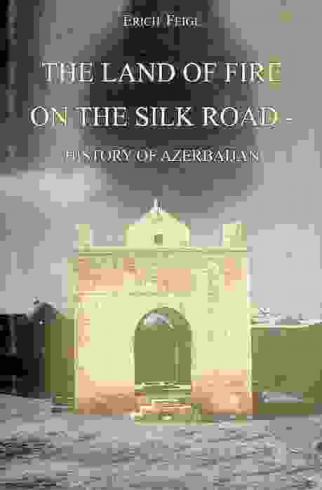
The land of fire on the silk road : history of Azerbaijan
The book by famous Austrian historian an writer Erich Feigl translated from German language narrates on various stages in history of Azerbaijan.
Book

Ethnicity, Nationalism and Conflict in the South Caucasus
This book examines the underlying factors of the Nagorno-Karabakh conflict in the South Caucasus from 1905 to 1994, and explores the ways in which issues of ethnicity and nationalism contributed to that conflict. The author examines the historiography and politics of the conflict, and the historical, territorial and ethnic dimensions which contributed to the dynamics of the war. The impact of Soviet policies and structures are also included, pinpointing how they contributed to the development of nationalism and the maintenance of national identities. The book firstly explores the historical development of the Armenian and Azerbaijani national identities and the overlapping claims to the territory of Nagorno-Karabakh. The author goes on to assess the historical link between ethnicity and territorial location as sources of ethnic identification and conflict. He examines how identity differences shaped the relationsa between Armenians and Azerbaijanis during the different phases of conflict and presents a detailed historical account of Soviet nationalities policy and ethno-territorial federalism - the basis of which ethnic relations were conducted between governing and minority nations in the south Caucasus. This invaluable book offers students and scholars of post-Soviet politics and society a unique insight into the causes and consequences of this long-standing conflict.
eBook


Khrushchev's thaw and national identity in soviet azerbaijan, 1954-1959
In a tangle of old problems : first steps of new leaders of Azerbaijan -- The 20th Congress of the CPSU and Soviet republics of the South Caucasus -- Enactment of the law on state language of Azerbaijan -- Deeping of political crisis in the leadership of Azerbaijan -- The year 1957 : aggravation of contradictions in the Soviet leadership and Azerbaijan -- Transformation of national policy into a key factor of society's development -- Attempts of party bodies to strengthen control in ideology -- Summer 1959 : Moscow's interference and change of leadership in Azerbaijan. Jamil Hasanli's research on 1950s' Azerbaijan sheds light on the watershed period in Soviet history while also furnishing the reader with a greater understanding of the root causes of the dissolution of the USSR.
eBook


Nested Nationalism
Nested Nationalism is a study of the politics and
practices of managing national minority identifications, rights,
and communities in the Soviet Union and the personal and political
consequences of such efforts. Titular nationalities that had
republics named after them in the USSR were comparatively
privileged within the boundaries of \"their\" republics, but they
still often chafed both at Moscow's influence over republican
affairs and at broader Russian hegemony across the Soviet Union.
Meanwhile, members of nontitular communities frequently complained
that nationalist republican leaders sought to build titular nations
on the back of minority assimilation and erasure. Drawing on
extensive archival and oral history research conducted in Armenia,
Azerbaijan, Dagestan, Georgia, and Moscow, Krista A. Goff argues
that Soviet nationality policies produced recursive, nested
relationships between majority and minority nationalisms and
national identifications in the USSR.
Goff pays particular attention to how these asymmetries of power
played out in minority communities, following them from Azerbaijan
to Georgia, Dagestan, and Iran in pursuit of the national ideas,
identifications, and histories that were layered across internal
and international borders. What mechanisms supported cultural
development and minority identifications in communities subjected
to assimilationist politics? How did separatist movements coalesce
among nontitular minority activists? And how does this
historicization help us to understand the tenuous space occupied by
minorities in nationalizing states across contemporary Eurasia?
Ranging from the early days of Soviet power to post-Soviet ethnic
conflicts, Nested Nationalism explains how Soviet-era
experiences and policies continue to shape interethnic
relationships and expectations today.
eBook
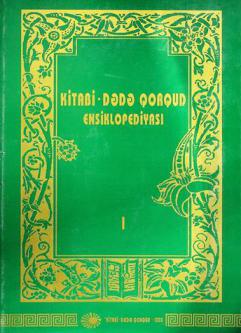

Azerbaijan Since Independence
Azerbaijan, a small post-Soviet republic located on the western shore of the Caspian Sea, has outsized importance becaus of its strategic location at the corssroads of Europe and Asia, its oil resources, and
eBook