
Catalogue Search | MBRL


Are you sure you want to remove the book from the shelf?

{{itemTitle}}
132
result(s) for
"Aztec mythology"
Sort by:

Musicians of the sun
In this retelling of an Aztec myth, Lord of the Night sends Wind to free the four musicians that the Sun is holding prisoner so they can bring joy to the world.
Book

Decoding the Codex Borgia
Exploring the meanings in the intricate symbolism of a
rare Precolumbian manuscript
This book explores the rich symbolism of the Codex Borgia, a
masterpiece of Precolumbian art dating to the fifteenth century,
one of the few surviving books from before the Spanish conquest of
Mexico. Susan Milbrath uses information from the fields of art
history, anthropology, ethnohistory, natural history, and cultural
astronomy to show how the manuscript's intricate and colorful
imagery conveys complex ideas related to Mesoamerican myths and
religion.
Milbrath sets the work in historical context, establishing its
provenance in the Puebla-Tlaxcala Valley of Central Mexico and
pinpointing the date it was painted based on rain almanacs found in
its pages. She offers a new interpretation of a unique narrative
section that has long intrigued scholars, arguing that the
ceremonial variations depicted in it are related to the solar
cycle. Overall, this book opens new doors in the study of the Codex
Borgia by identifying seasonal imagery in the narrative and
associated astronomical events, especially those that involve the
three brightest objects in the sky: the sun, the moon, and Venus.
Decoding the Codex Borgia is an illuminating journey into
the culture and cosmology of the Aztecs and their neighboring
communities.
eBook

Snake poems : an Aztec invocation
\"Francisco X. Alarcón's poetic response to the body of work by Catholic priest and historian Hernando Ruiz de Alarcón, in a special edition with poems translated in Spanish and Nahuatl\"--Provided by publisher.
Book

Cycles of time and meaning in the Mexican books of fate
In communities throughout precontact Mesoamerica, calendar priests and diviners relied on pictographic almanacs to predict the fate of newborns, to guide people in choosing marriage partners and auspicious wedding dates, to know when to plant and harvest crops, and to be successful in many of life’s activities. As the Spanish colonized Mesoamerica in the sixteenth century, they made a determined effort to destroy these books, in which the Aztec and neighboring peoples recorded their understanding of the invisible world of the sacred calendar and the cosmic forces and supernaturals that adhered to time. Today, only a few of these divinatory codices survive. Visually complex, esoteric, and strikingly beautiful, painted books such as the famous Codex Borgia and Codex Borbonicus still serve as portals into the ancient Mexican calendrical systems and the cycles of time and meaning they encode. In this comprehensive study, Elizabeth Hill Boone analyzes the entire extant corpus of Mexican divinatory codices and offers a masterful explanation of the genre as a whole. She introduces the sacred, divinatory calendar and the calendar priests and diviners who owned and used the books. Boone then explains the graphic vocabulary of the calendar and its prophetic forces and describes the organizing principles that structure the codices. She shows how they form almanacs that either offer general purpose guidance or focus topically on specific aspects of life, such as birth, marriage, agriculture and rain, travel, and the forces of the planet Venus. Boone also tackles two major areas of controversy—the great narrative passage in the Codex Borgia, which she freshly interprets as a cosmic narrative of creation, and the disputed origins of the codices, which, she argues, grew out of a single religious and divinatory system.
eBook

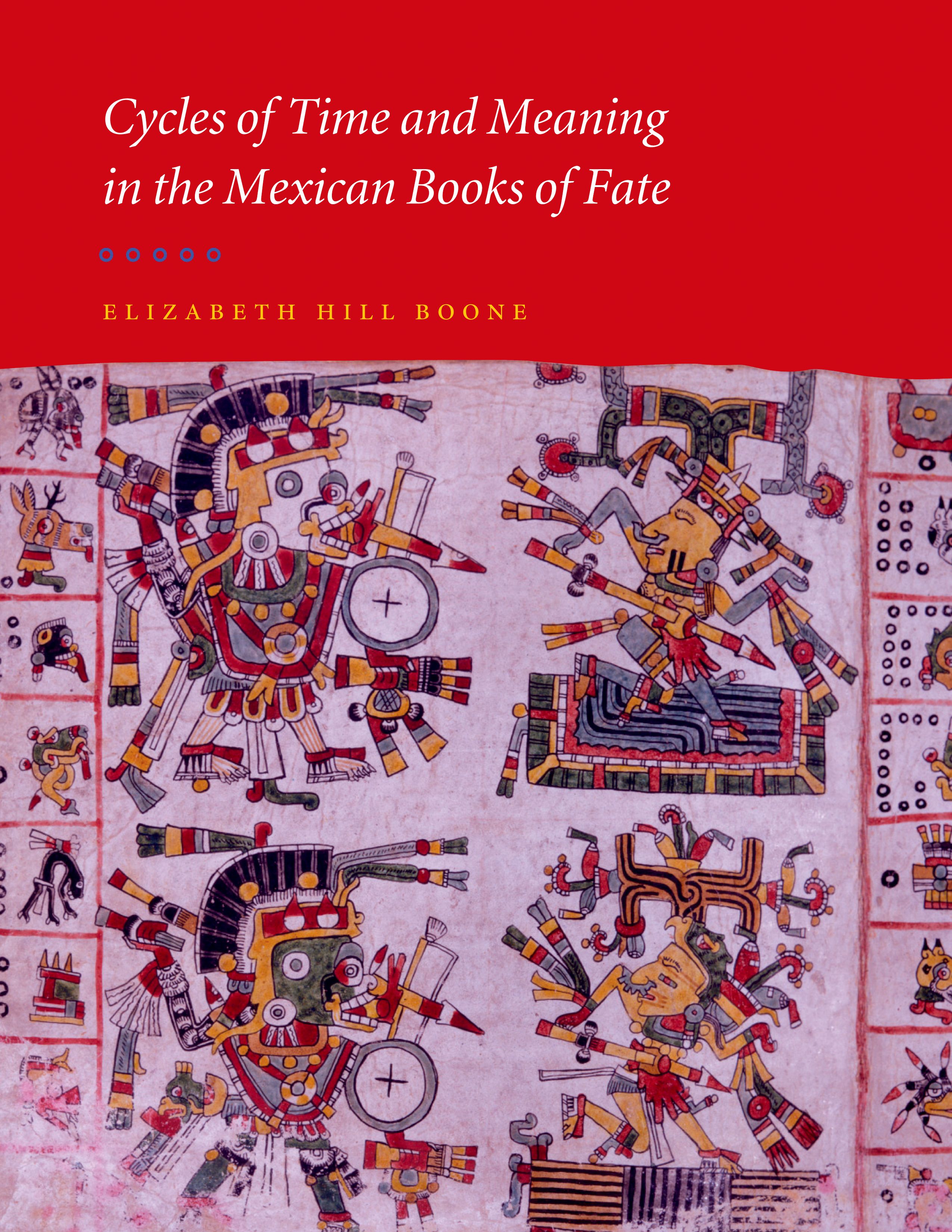
Cycles of Time and Meaning in the Mexican Books of Fate
In communities throughout precontact Mesoamerica, calendar priests and diviners relied on pictographic almanacs to predict the fate of newborns, to guide people in choosing marriage partners and auspicious wedding dates, to know when to plant and harvest crops, and to be successful in many of life's activities. As the Spanish colonized Mesoamerica in the sixteenth century, they made a determined effort to destroy these books, in which the Aztec and neighboring peoples recorded their understanding of the invisible world of the sacred calendar and the cosmic forces and supernaturals that adhered to time. Today, only a few of these divinatory codices survive. Visually complex, esoteric, and strikingly beautiful, painted books such as the famous Codex Borgia and Codex Borbonicus still serve as portals into the ancient Mexican calendrical systems and the cycles of time and meaning they encode. In this comprehensive study, Elizabeth Hill Boone analyzes the entire extant corpus of Mexican divinatory codices and offers a masterful explanation of the genre as a whole. She introduces the sacred, divinatory calendar and the calendar priests and diviners who owned and used the books. Boone then explains the graphic vocabulary of the calendar and its prophetic forces and describes the organizing principles that structure the codices. She shows how they form almanacs that either offer general purpose guidance or focus topically on specific aspects of life, such as birth, marriage, agriculture and rain, travel, and the forces of the planet Venus. Boone also tackles two major areas of controversy—the great narrative passage in the Codex Borgia, which she freshly interprets as a cosmic narrative of creation, and the disputed origins of the codices, which, she argues, grew out of a single religious and divinatory system.
eBook

Mesoamerican myths
The belief systems and myths of the early inhabitants of Mexico, Central America, and South America are explored.
Book
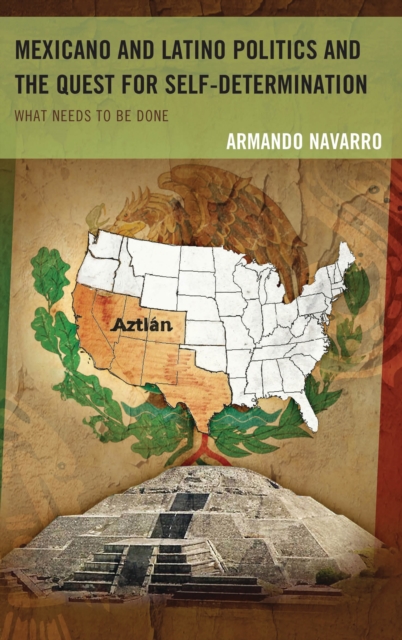
Mexicano and latino politics and the quest for self-determination
This book critically examines the current status of Mexicano and Latino Politics in the United States and how both represent a dysfunctional and failed mode of politics. Two change models are provided as alternatives: Aztlan's Politics of a Nation-Within-a-Nation (APNWN) and Aztlan's Politics of Separatism (APS).
eBook

