
Catalogue Search | MBRL


Are you sure you want to remove the book from the shelf?

{{itemTitle}}
333
result(s) for
"Aztecs -- Religion"
Sort by:

Guardians of idolatry : gods, demons, and priests in Hernando Ruiz de Alarcâon's treatise on the heathen superstitions
\"A multidisciplinary, in-depth study of the Treatise of the Heathen Superstitions written by Hernando Ruiz de Alarcâon in 1629 and the Manual for Ministers of These Indians written by Jacinto de la Serna in 1656. Provides insight into Postclassic Mesoamerican indigenous beliefs and religious practices with close readings of four nahualtocaitl incantations.\"--Provided by publisher.
Book

The Fate of Earthly Things
Following their first contact in 1519, accounts of Aztecs identifying Spaniards as gods proliferated. But what exactly did the Aztecs mean by a \"god\" (teotl), and how could human beings become gods or take on godlike properties? This sophisticated, interdisciplinary study analyzes three concepts that are foundational to Aztec religion—teotl (god), teixiptla (localized embodiment of a god), and tlaquimilolli (sacred bundles containing precious objects)—to shed new light on the Aztec understanding of how spiritual beings take on form and agency in the material world. In The Fate of Earthly Things, Molly Bassett draws on ethnographic fieldwork, linguistic analyses, visual culture, and ritual studies to explore what ritual practices such as human sacrifice and the manufacture of deity embodiments (including humans who became gods), material effigies, and sacred bundles meant to the Aztecs. She analyzes the Aztec belief that wearing the flayed skin of a sacrificial victim during a sacred rite could transform a priest into an embodiment of a god or goddess, as well as how figurines and sacred bundles could become localized embodiments of gods. Without arguing for unbroken continuity between the Aztecs and modern speakers of Nahuatl, Bassett also describes contemporary rituals in which indigenous Mexicans who preserve costumbres (traditions) incorporate totiotzin (gods) made from paper into their daily lives. This research allows us to understand a religious imagination that found life in death and believed that deity embodiments became animate through the ritual binding of blood, skin, and bone.
eBook

Sweeping the Way
Incorporating human sacrifice, flaying, and mock warfare, the pre-Columbian Mexican ceremony known as Ochpaniztli, or \"Sweeping,\" has long attracted attention. Although among the best known of eighteen annual ceremonies, Ochpaniztli's significance has nevertheless been poorly understood. Ochpaniztli is known mainly from early colonial illustrated manuscripts produced in cross-cultural collaboration between Spanish missionary-chroniclers and native Mexican informants and artists. Although scholars typically privilege the manuscripts' textual descriptions, Sweeping the Way examines the fundamental role of their pictorial elements, which significantly expand the information contained in the texts. DiCesare emphasizes the primacy of the regalia, ritual implements, and adornments of the patron \"goddess\" as the point of intersection between sacred, cosmic forces and ceremonial celebrants. The associations of these paraphernalia indicate that Ochpaniztli was a period of purification rituals, designed to transform and protect individual and communal bodies alike. Spanish friars were unable to apprehend the complex nature of the festival's patroness, ultimately fragmenting her identity into categories meeting their expectations, which continues to vex modern investigations. Taken together, the variety of Ochpaniztli sources offer a useful tool for addressing myriad issues of translation and transformation in pre-Columbian and post-conquest Mexico, as Christian friars and native Mexicans together negotiated a complex body of information about outlawed ritual practices and proscribed sacred entities.
eBook
Translated Christianities
Beginning in the sixteenth century, ecclesiastics and others
created religious texts written in the native languages of the
Nahua and Yucatec Maya. These texts played an important role in the
evangelization of central Mexico and Yucatan. Translated
Christianities is the first book to provide readers with
English translations of a variety of Nahuatl and Maya religious
texts. It pulls Nahuatl and Maya sermons, catechisms, and
confessional manuals out of relative obscurity and presents them to
the reader in a way that illustrates similarities, differences, and
trends in religious text production throughout the colonial
period.
The texts included in this work are diverse. Their authors range
from Spanish ecclesiastics to native assistants, from Catholics to
Methodists, and from sixteenth-century Nahuas to nineteenth-century
Maya. Although translated from its native language into English,
each text illustrates the impact of European and native cultures on
its content. Medieval tales popular in Europe are transformed to
accommodate a New World native audience, biblical figures assume
native identities, and texts admonishing Christian behavior are
tailored to meet the demands of a colonial native population.
Moreover, the book provides the first translation and analysis of a
Methodist catechism written in Yucatec Maya to convert the Maya of
Belize and Yucatan. Ultimately, readers are offered an uncommon
opportunity to read for themselves the translated Christianities
that Nahuatl and Maya texts contained.
eBook
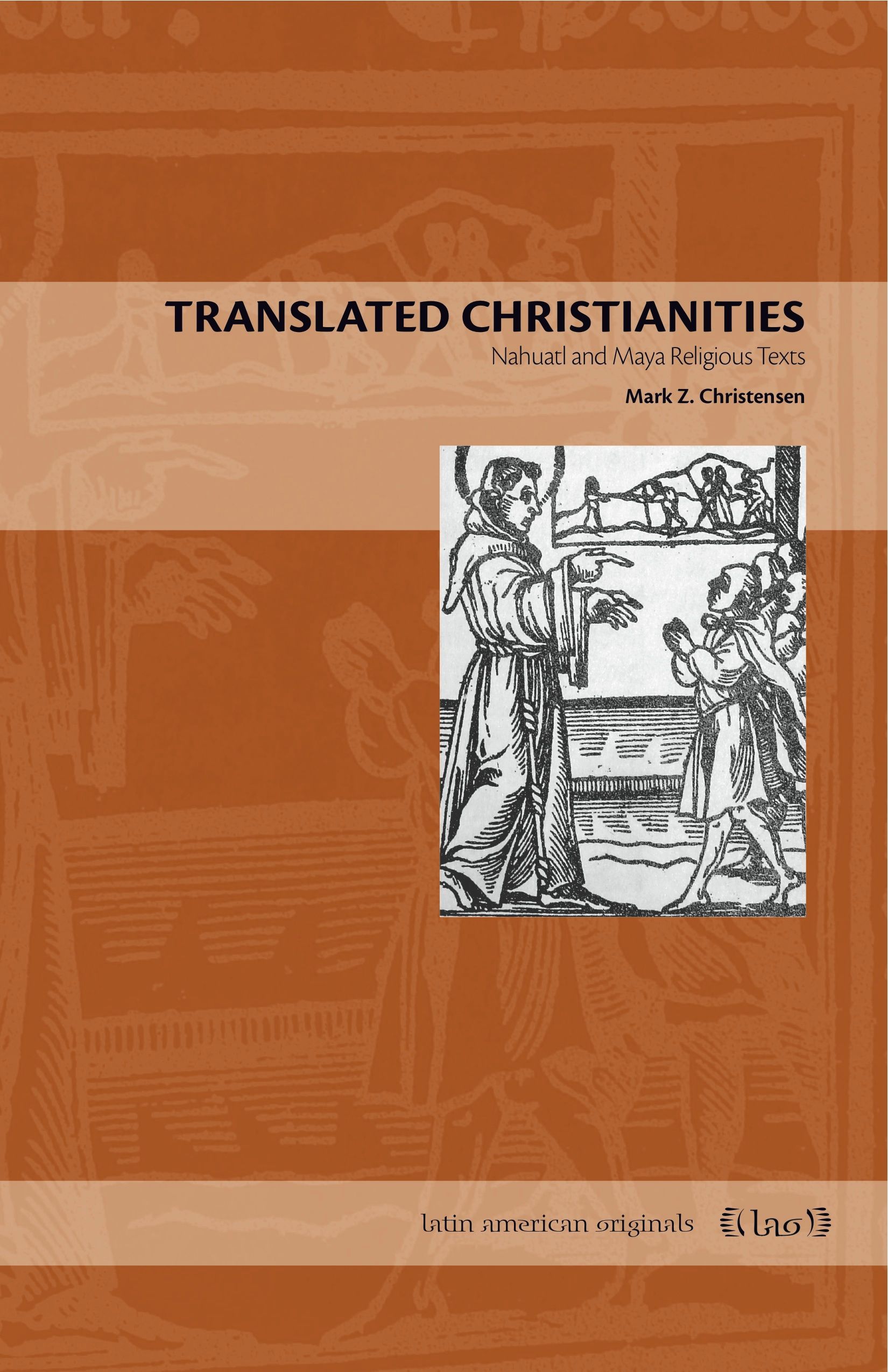
Translated Christianities
Beginning in the sixteenth century, ecclesiastics and others created religious texts written in the native languages of the Nahua and Yucatec Maya. These texts played an important role in the evangelization of central Mexico and Yucatan. Translated Christianities is the first book to provide readers with English translations of a variety of Nahuatl and Maya religious texts. It pulls Nahuatl and Maya sermons, catechisms, and confessional manuals out of relative obscurity and presents them to the reader in a way that illustrates similarities, differences, and trends in religious text production throughout the colonial period. The texts included in this work are diverse. Their authors range from Spanish ecclesiastics to native assistants, from Catholics to Methodists, and from sixteenth-century Nahuas to nineteenth-century Maya. Although translated from its native language into English, each text illustrates the impact of European and native cultures on its content. Medieval tales popular in Europe are transformed to accommodate a New World native audience, biblical figures assume native identities, and texts admonishing Christian behavior are tailored to meet the demands of a colonial native population. Moreover, the book provides the first translation and analysis of a Methodist catechism written in Yucatec Maya to convert the Maya of Belize and Yucatan. Ultimately, readers are offered an uncommon opportunity to read for themselves the translated Christianities that Nahuatl and Maya texts contained.
eBook
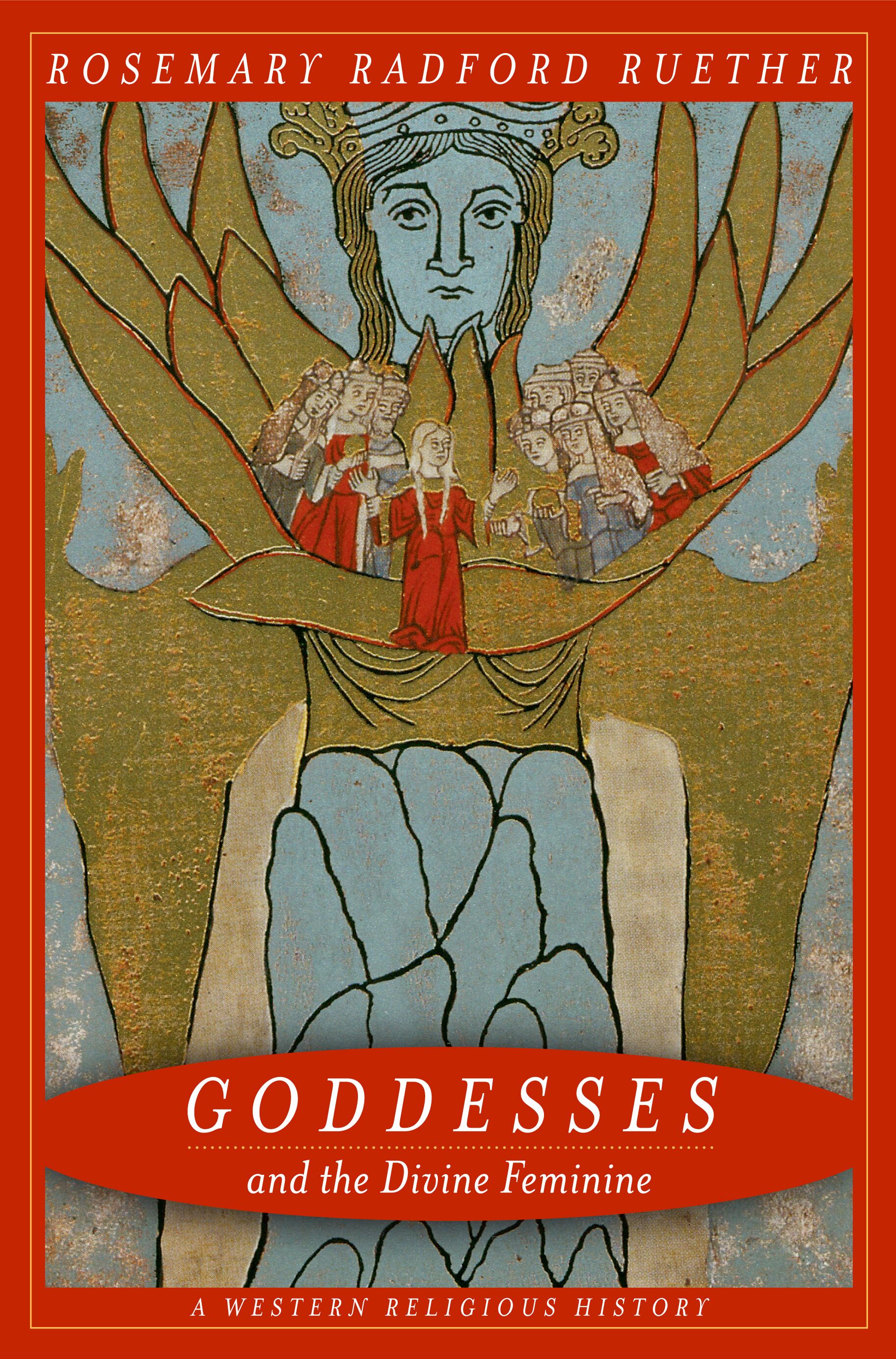
Goddesses and the Divine Feminine
This landmark work presents the most illuminating portrait we have to date of goddesses and sacred female imagery in Western culture—from prehistory to contemporary goddess movements. Beautifully written, lucidly conceived, and far-ranging in its implications, this work will help readers gain a better appreciation of the complexity of the social forces— mostly androcentric—that have shaped the symbolism of the sacred feminine. At the same time, it charts a new direction for finding a truly egalitarian vision of God and human relations through a feminist-ecological spirituality. Rosemary Radford Ruether begins her exploration of the divine feminine with an analysis of prehistoric archaeology that challenges the popular idea that, until their overthrow by male-dominated monotheism, many ancient societies were matriarchal in structure, governed by a feminine divinity and existing in harmony with nature. For Ruether, the historical evidence suggests the reality about these societies is much more complex. She goes on to consider key myths and rituals from Sumerian, Babylonian, Egyptian, and Anatolian cultures; to examine the relationships among gender, deity, and nature in the Hebrew religion; and to discuss the development of Mariology and female mysticism in medieval Catholicism, and the continuation of Wisdom mysticism in Protestanism. She also gives a provocative analysis of the meeting of Aztec and Christian female symbols in Mexico and of today's neo-pagan movements in the United States.
eBook

“If You Could Die…”: Hart Crane’s “Accursed Share” in Mexico
This article explores the “spirit of sacrifice” and the influence of Aztec religion, as analyzed by Georges Bataille in various writings, on two poems written by Hart Crane in Mexico shortly before his suicide.
Journal Article

Deities of the Sun and Moon in Borgia Group Codices
Chapter 5 features a detailed study of solar and lunar deities in Borgia Group codices and their relationship with deities in Aztec religion. This chapter outlines iconographic features associated with the Sun God Tonatiuh, and related solar gods, such as Piltzintecuhtli, a nocturnal aspect of the sun, and Xochipilli, a solar god linked with gaming, feasting, and flowers. Lunar deities featured in this chapter include Xochiquetzal, the bride of the sun who is associated with sensuality and butterflies. The Moon Goddess, Tlazolteotl, symbolizes motherhood and feminine activities, such as spinning cotton, and she has an interesting relationship with the malevolent Cihuateteo. Chapter 5 also highlights male lunar avatars, most notably the Moon God, Tecciztecatl, called the “conch-shell-lord,” and lunar personas of Tezcatlipoca, the god of the smoking mirror. The last section features the pulque gods linked with the lunar cycle used to time the production of this alcoholic beverage.
Book Chapter

