
Catalogue Search | MBRL


Are you sure you want to remove the book from the shelf?

{{itemTitle}}
11
result(s) for
"Aztecs First contact with Europeans."
Sort by:

Fifth sun : a new history of the Aztecs
\"Five hundred years ago, in November 1519, Hernando Cortâes walked along a causeway leading to the capital of the Aztec kingdom and came face to face with Moctezuma. That story--and the story of what happened afterwards--has been told many times, but always from the point of view of the Europeans. After all, we have been taught, it was the Europeans who held the pens. But the Native Americans were more intrigued by the Roman alphabet than the Spaniards ever knew. Unbeknownst to the newcomers, the Aztecs took it home and used it to write detailed histories in their own language of Nahuatl. Until recently, these sources remained obscure, only partially translated, and almost never consulted by scholars. For the first time, in Fifth Sun, the history of the Aztecs is offered in all its complexity, in an account based solely on the texts written by the people themselves. The Aztecs suddenly appear as real people, rather than the exotic, bloody figures of stereotypes. The conquest is neither an apocalyptic moment, nor an origin story launching Mexicans into existence. This book presents the story of Native Americans who had a history of their own long before the Europeans arrived and who used their talents to survive when the worst of times came upon them. It shows people who realigned their political allegiances, accommodated new obligations, adopted new technologies (such as alphabetic writing and European paper), and carried on. This revisionist history of the Aztecs explores the experience of a once-powerful people facing the trauma of conquest--as well as their survival and continuity--offering an accessible and humanized depiction of a civilization for experts and non-specialists alike.\"-- Provided by publisher.
Book

Dancing the New World
From Christopher Columbus to \"first anthropologist\" Friar Bernardino de Sahagún, fifteenth- and sixteenth-century explorers, conquistadors, clerics, scientists, and travelers wrote about the \"Indian\" dances they encountered throughout the New World. This was especially true of Spanish missionaries who intensively studied and documented native dances in an attempt to identify and eradicate the \"idolatrous\" behaviors of the Aztec, the largest indigenous empire in Mesoamerica at the time of its European discovery.
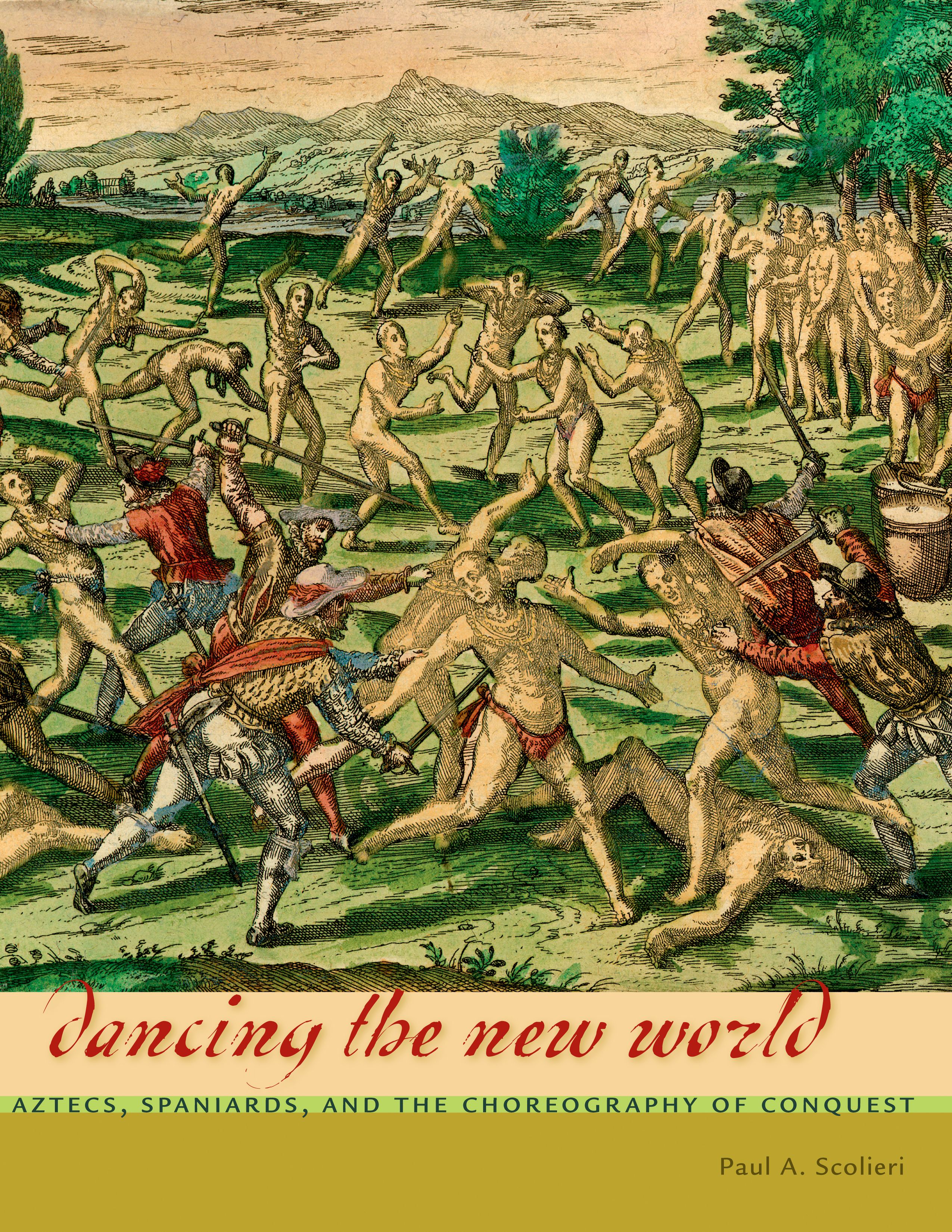
Dancing the New Worldtraces the transformation of the Aztec empire into a Spanish colony through written and visual representations of dance in colonial discourse-the vast constellation of chronicles, histories, letters, and travel books by Europeans in and about the New World. Scolieri analyzes how the chroniclers used the Indian dancing body to represent their own experiences of wonder and terror in the New World, as well as to justify, lament, and/or deny their role in its political, spiritual, and physical conquest. He also reveals that Spaniards and Aztecs shared an understanding that dance played an important role in the formation, maintenance, and representation of imperial power, and describes how Spaniards compelled Indians to perform dances that dramatized their own conquest, thereby transforming them into colonial subjects. Scolieri's pathfinding analysis of the vast colonial \"dance archive\" conclusively demonstrates that dance played a crucial role in one of the defining moments in modern history-the European colonization of the Americas.
eBook


The Tira de Tepechpan
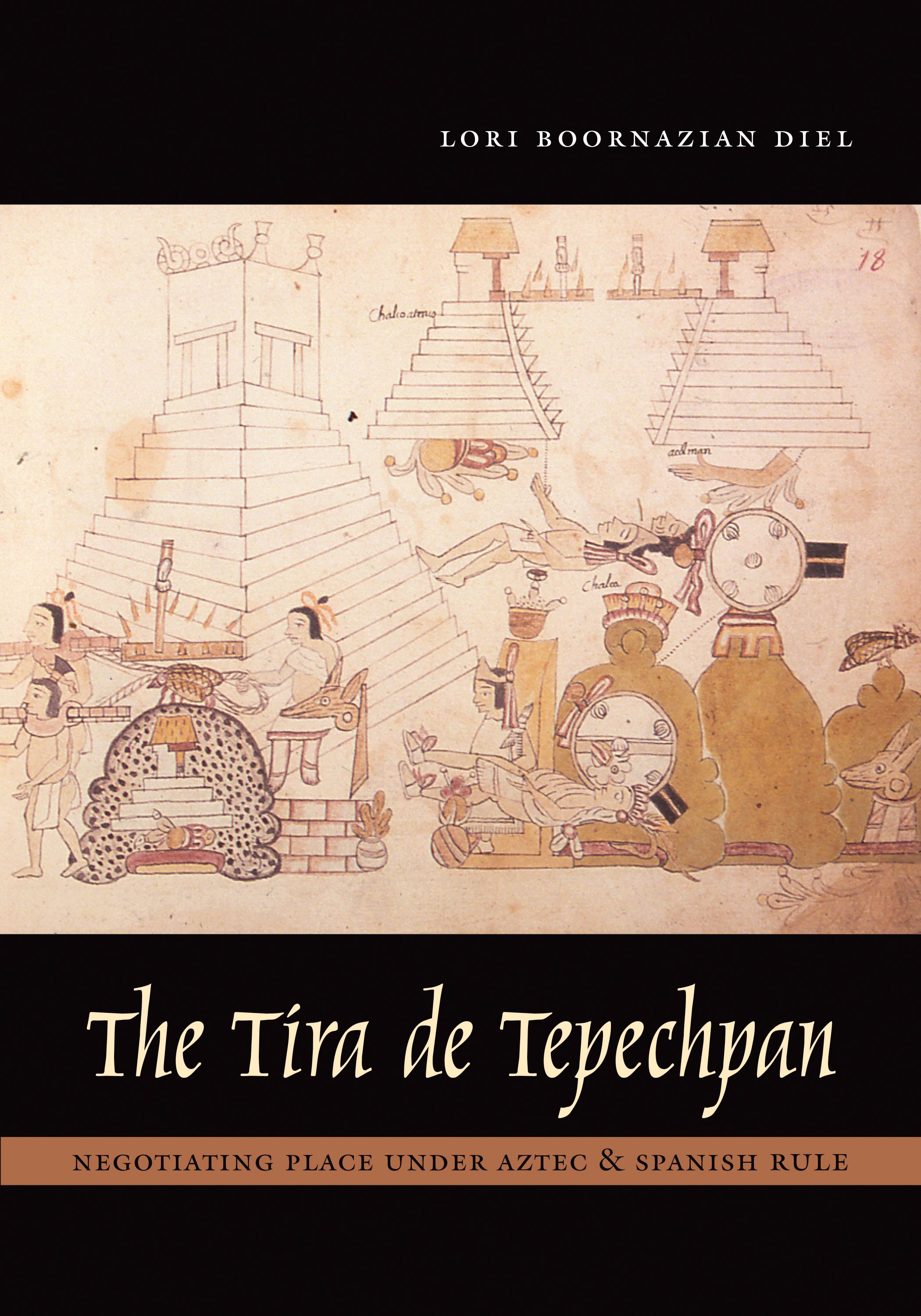
Created in Tepechpan, a relatively minor Aztec city in Central Mexico, the Tira de Tepechpan records important events in the city’s history from 1298 through 1596. Most of the history is presented pictographically. A line of indigenous year signs runs the length of the Tira, with images above the line depicting events in Tepechpan and images below the line recording events at Tenochtitlan, capital of the Aztec empire and later the seat of Spanish rule. Written annotations amplify some of the images. In this volume, which includes color plates of the entire Tira, Lori Boornazian Diel investigates the motives behind the creation and modification of the Tira in the second half of the sixteenth century. She identifies the Tira’s different contributors and reconciles their various histories by asking why these painters and annotators, working at different times, recorded the events that they did. Comparing the Tira to other painted histories from Central Mexico, Diel demonstrates that the main goal of the Tira was to establish the antiquity, autonomy, and prestige of Tepechpan among the Central Mexican city-states that vied for power and status in the preconquest and colonial worlds. Offering the unique point of view of a minor city with grand ambitions, this study of the Tira reveals imperial strategy from the grassroots up, showing how a subject city negotiated its position under Aztec and Spanish control.
eBook

The Tira de Tepechpan
Created in Tepechpan, a relatively minor Aztec city in Central Mexico, the Tira de Tepechpan records important events in the city's history from 1298 through 1596. Most of the history is presented pictographically. A line of indigenous year signs runs the length of the Tira, with images above the line depicting events in Tepechpan and images below the line recording events at Tenochtitlan, capital of the Aztec empire and later the seat of Spanish rule. Written annotations amplify some of the images. In this volume, which includes color plates of the entire Tira, Lori Boornazian Diel investigates the motives behind the creation and modification of the Tira in the second half of the sixteenth century. She identifies the Tira's different contributors and reconciles their various histories by asking why these painters and annotators, working at different times, recorded the events that they did. Comparing the Tira to other painted histories from Central Mexico, Diel demonstrates that the main goal of the Tira was to establish the antiquity, autonomy, and prestige of Tepechpan among the Central Mexican city-states that vied for power and status in the preconquest and colonial worlds. Offering the unique point of view of a minor city with grand ambitions, this study of the Tira reveals imperial strategy from the grassroots up, showing how a subject city negotiated its position under Aztec and Spanish control.
eBook
Dancing the New World
Winner, Oscar G. Brockett Book Prize in Dance Research, 2014 Honorable Mention, Sally Banes Publication Prize, American Society for Theatre Research, 2014 de la Torre Bueno® Special Citation, Society of Dance History Scholars, 2013 From Christopher Columbus to “first anthropologist” Friar Bernardino de Sahagún, fifteenth- and sixteenth-century explorers, conquistadors, clerics, scientists, and travelers wrote about the “Indian” dances they encountered throughout the New World. This was especially true of Spanish missionaries who intensively studied and documented native dances in an attempt to identify and eradicate the “idolatrous” behaviors of the Aztec, the largest indigenous empire in Mesoamerica at the time of its European discovery. Dancing the New World traces the transformation of the Aztec empire into a Spanish colony through written and visual representations of dance in colonial discourse—the vast constellation of chronicles, histories, letters, and travel books by Europeans in and about the New World. Scolieri analyzes how the chroniclers used the Indian dancing body to represent their own experiences of wonder and terror in the New World, as well as to justify, lament, and/or deny their role in its political, spiritual, and physical conquest. He also reveals that Spaniards and Aztecs shared an understanding that dance played an important role in the formation, maintenance, and representation of imperial power, and describes how Spaniards compelled Indians to perform dances that dramatized their own conquest, thereby transforming them into colonial subjects. Scolieri’s pathfinding analysis of the vast colonial “dance archive” conclusively demonstrates that dance played a crucial role in one of the defining moments in modern history—the European colonization of the Americas.
eBook

The Medicine of Memory
\"People who live in California deny the past,\" asserts Alejandro Murguía. In a state where \"what matters is keeping up with the current trends, fads, or latest computer gizmo,\" no one has \"the time, energy, or desire to reflect on what happened last week, much less what happened ten years ago, or a hundred.\" From this oblivion of memory, he continues, comes a false sense of history, a deluded belief that the way things are now is the way they have always been. In this work of creative nonfiction, Murguía draws on memories—his own and his family's reaching back to the eighteenth century—to (re)construct the forgotten Chicano-indigenous history of California. He tells the story through significant moments in California history, including the birth of the mestizo in Mexico, destruction of Indian lifeways under the mission system, violence toward Mexicanos during the Gold Rush, Chicano farm life in the early twentieth century, the Chicano Movement of the 1960s, Chicano-Latino activism in San Francisco in the 1970s, and the current rebirth of Chicano-Indio culture. Rejecting the notion that history is always written by the victors, and refusing to be one of the vanquished, he declares, \"This is my California history, my memories, richly subjective and atavistic.\"
eBook

The medicine of memory : a Mexica clan in California
People who live in California deny the past, asserts Alejandro Murguía. In a state where what matters is keeping up with the current trends, fads, or latest computer gizmo, no one has the time, energy, or desire to reflect on what happened last week, much less what happened ten years ago, or a hundred. From this oblivion of memory, he continues, comes a false sense of history, a deluded belief that the way things are now is the way they have always been. In this work of creative nonfiction, Murguía draws on memories—his own and his family’s reaching back to the eighteenth century—to (re)construct the forgotten Chicano-indigenous history of California. He tells the story through significant moments in California history, including the birth of the mestizo in Mexico, destruction of Indian lifeways under the mission system, violence toward Mexicanos during the Gold Rush, Chicano farm life in the early twentieth century, the Chicano Movement of the 1960s, Chicano-Latino activism in San Francisco in the 1970s, and the current rebirth of Chicano-Indio culture. Rejecting the notion that history is always written by the victors, and refusing to be one of the vanquished, he declares, This is my California history, my memories, richly subjective and atavistic.
eBook

The Tira de Tepechpan
Created in Tepechpan, a relatively minor Aztec city in Central Mexico, the Tira de Tepechpan records important events in the city's history from 1298 through 1596. Most of the history is presented pictographically. A line of indigenous year signs runs the length of the Tira, with images above the line depicting events in Tepechpan and images below the line recording events at Tenochtitlan, capital of the Aztec empire and later the seat of Spanish rule. Written annotations amplify some of the images.
In this volume, which includes color plates of the entire Tira, Lori Boornazian Diel investigates the motives behind the creation and modification of the Tira in the second half of the sixteenth century. She identifies the Tira's different contributors and reconciles their various histories by asking why these painters and annotators, working at different times, recorded the events that they did. Comparing the Tira to other painted histories from Central Mexico, Diel demonstrates that the main goal of the Tira was to establish the antiquity, autonomy, and prestige of Tepechpan among the Central Mexican city-states that vied for power and status in the preconquest and colonial worlds. Offering the unique point of view of a minor city with grand ambitions, this study of the Tira reveals imperial strategy from the grassroots up, showing how a subject city negotiated its position under Aztec and Spanish control.
eBook