
Catalogue Search | MBRL


Are you sure you want to remove the book from the shelf?

{{itemTitle}}
27
result(s) for
"Aztlán."
Sort by:


Creating Aztlán
In lowriding culture, the ride is many things-both physical and intellectual. Embraced by both Xicano and other Indigenous youth, lowriding takes something very ordinary-a car or bike-and transforms it and claims it.Using the idea that lowriding is an Indigenous way of being in the world, artist and historian Dylan A. T. Miner discusses the multiple roles that Aztlán has played at various moments in time, from the pre-Cuauhtemoc codices through both Spanish and American colonial regimes, past the Chicano Movement and into the present day. Across this \"migration story,\" Miner challenges notions of mestizaje and asserts Aztlán, as visualized by Xicano artists, as a form of Indigenous sovereignty.Throughout this book, Miner employs Indigenous and Native American methodologies to show that Chicano art needs to be understood in the context of Indigenous history, anticolonial struggle, and Native American studies. Miner pays particular attention to art outside the U.S. Southwest and includes discussions of work by Nora Chapa Mendoza, Gilbert \"Magú\" Luján, Santa Barraza, Malaquías Montoya, Carlos Cortéz Koyokuikatl, Favianna Rodríguez, and Dignidad Rebelde, which includes Melanie Cervantes and Jesús Barraza.With sixteen pages of color images, this book will be crucial to those interested in art history, anthropology, philosophy, and Chicano and Native American studies. Creating Aztlán interrogates the historic and important role that Aztlán plays in Chicano and Indigenous art and culture.
eBook

Mexican American Parrhesia at Troy
In the late 1960s, Mexican American and Chicana/o students and faculty began to create new cultural and academic spaces at the University of Southern California (USC). As outspoken advocates, they promoted a collective social identity as they questioned USC’s commitment to fulfilling the moral and humanistic responsibilities of its educational mission. These students and faculty members took part in the formation of ethnic studies and Chicana/o studies on their campus and in higher education generally. Their activist contributions, however, have been ignored by USC and by most of the scholarly community. Yet, through their work and use of parrhesia (saying what one means with frank speech), the core Chicana/o movement concepts of Aztlán (the conception of a sacred homeland, borrowed from the Aztec cosmovision archetype of origins) and Chicanismo (a collective Chicana/o cultural nationalism) have been woven into the mythology of USC, creating a Chicana/o legacy of deep education and learning.
Journal Article

Indiánská identifikace jako politický nástroj? Aztlán a bronzová rasa v procesu politizace mexické diaspory v USA
The paper explores the use of ethnicity as a strategic tool in the politicization of the Mexican diaspora in the United States of America in the late 1960s and early 1970s. Referring to the example of the 1969 founding manifesto entitled “The Spiritual Plan of Aztlán” (El Plan Espiritual de Aztlán), it pays attention to the ways in which a section of the Mexican diaspora in the United States — Chicanos — came to identify themselves with the indigenous peoples of the United States and Mexico in the construction of their new collective identity. The text further examines the symbols of the Aztlán and the Bronze Race, the meanings attributed to them, and the question of authorship. In doing so, it draws on the interpretive frameworks of S. Hall, B. Anderson, R. Barthes and M. Castells. It concludes that the manifesto represents a highly selective, strategic narrative which mirrors both the Chicano movement’s claims for recognition in the US and the ways the Mexican diaspora interpreted its past to serve its current and future goals between the 1960s and early 1970s.
Journal Article

The Chicano Studies Reader
The Chicano Studies Reader , the best-selling anthology
of articles from Aztlán: A Journal of Chicano Studies , has
been newly expanded with a group of essays that focus on Chicana/o
and Latina/o youth. This section, Generations against Exclusion,
joins Decolonizing the Territory, Performing Politics,
(Re)Configuring Identities, Remapping the World, and Continuing to
Push Boundaries. Introductions to each section offer analysis and
contextualization. This fourth edition of the Reader
documents the foundation of Chicano studies, testifies to its broad
disciplinary range, and explores its continuing development.
eBook

The Aztlán Fault System
Gravity and seismic studies enabled us to establish the major features of the shallow crustal structure beneath Chichinautzin Range. Accordingly, the Chichinautzin Range evolved above Mesozoic calcareous rocks lying on a metamorphic basement. To the north and south this basement is downfaulted. Nevertheless the north dipping faults downward displace the basement to larger depths (2 to 3 km) in the Mexico and Toluca basins. In the Morelos Basin, the basin is shallower. As block-faulting evolved, the basement edge migrated southwards, thus widening an E-W oriented major depression south of the Mexico Basin. In particular, gravity modeling enabled us to integrate the different faults mapped up to today in and around the Chichinautzin Range into a fault system that can be correlated from the Nevado de Toluca. This system will be referred to collectively as the Aztlán Fault System.
The Xicomulco, Aztec (central and major fault) and La Pera faults are featured by seismicity. Orientation and dips obtained from simple and composite mechanisms indicate NW-SE to N-S extension with minor E-W left-lateral movement. In particular, seismicity extends down to the brittle-ductile transition crustal zone (maximum hypocentral depths of about 15 km) but consequently the major faults, considering their length, should reach lower crustal levels (approximately 40 km). This system is a major active fault system of at least 100 km in length and 30 – 40 km in width, with a density of approximately 10 E-W faults in 30 km, and local extension of about 10 %.
In conjunction with pre-existing NW-SE and NE-SW faults, this E-W fault system would have intensely fractured the crust beneath the Sierra de Chichinautzin. This high degree of fracturing would have enabled the relatively fast emplacement of large quantities of volcanic material to give rise to the Chichinautzin Range, closing the Mexico Basin to the south. The gravity model shows how the different styles of structures north and south of the Chichinautzin Range (extensional and compressive) accommodate themselves. In particular, faults of the Taxco-San Miguel de Allende system affect the basement of the Morelos Basin well further south.
Journal Article
Mexicano and latino politics and the quest for self-determination
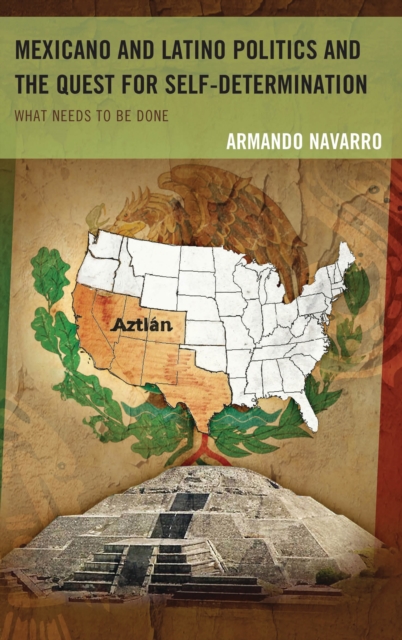
This book critically examines the current status of Mexicano and Latino Politics in the United States and how both represent a dysfunctional and failed mode of politics. Two change models are provided as alternatives: Aztlan's Politics of a Nation-Within-a-Nation (APNWN) and Aztlan's Politics of Separatism (APS).
eBook
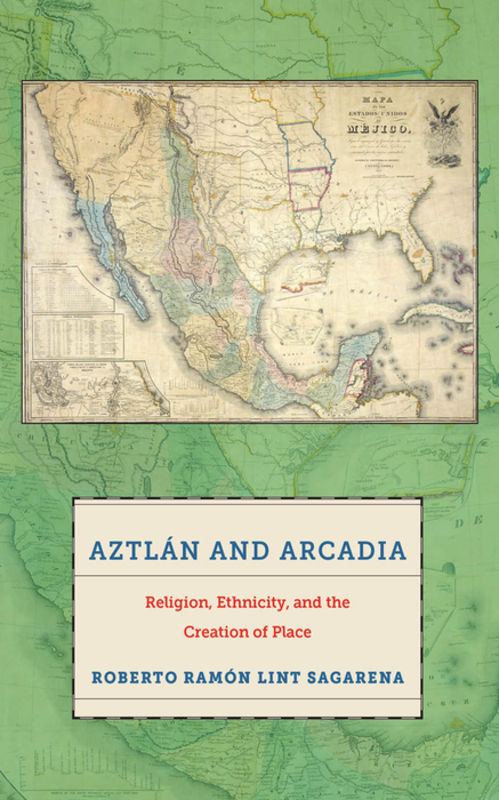


The nativist Aztlán: Fantasies and anxieties of whiteness on the border
In the late 1960s, the concept of Aztlán became a powerful, temporarily unifying force within the Chicano movement. Chicano nationalists articulated a lineage to the indigenous Aztecs and contended that the Aztec ancestral homeland was located in the US Southwest. This deployment of Aztlán contested central US narratives of white supremacy. Over the past 30 years, Aztlán has increasingly become a fixture within contemporary nativist discourse. Conservative cultural workers have redeployed Aztlán to depict a cultural, racial and geopolitical invasion. This article contends that the nativist Aztlán emerges out of the political exigencies of an era marked by heightened globalization and multicultural gains. Moreover, this article examines how Aztlán, once used to contest white supremacy, has been reconfigured to forge white solidarity through the guise of white victimhood.
Journal Article