
Catalogue Search | MBRL


Are you sure you want to remove the book from the shelf?

{{itemTitle}}
5
result(s) for
"BBC Radio 4"
Sort by:

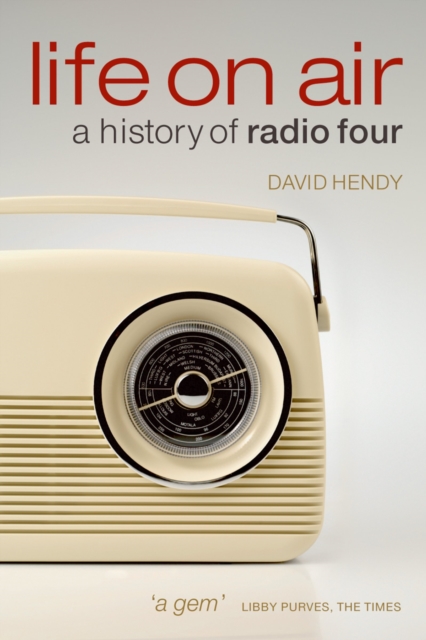
Life on air : a history of Radio Four
Radio Four has been described as 'the greatest broadcasting channel in the world', the 'heartbeat of the BBC', a cultural icon of Britishness, and the voice of Middle England. Defined by its rich mix, encompassing everything from journalism and drama to comedy, quizzes, and short-stories, its programmes - such as Today,The Archers, Woman's Hour, The Hitchhiker's Guide To the Galaxy, Gardeners' Question Time, and The Shipping Forecast - have been part of British life for decades. Others, less successful, have caused offence and prompted derision. Born as it was in the Swinging Sixties, Radio Four's central challenge has been to change with the times, while trying not to lose faith with those who see it as a standard-bearer for quality, authoritativeness, or simply 'old-fashioned' BBC values. In this first major behind-the-scenes account of the station's history, David Hendy - a former producer for Radio Four - draws on privileged access to the BBC's own archives and new interviews with key personnel to illuminate the arguments and controversies behind the creation of some of its most popular programmes. He reveals the station's struggle to justify itself in a television age, favouring clear branding and tightly-targeted audiences, with bitter disputes between the BBC and its fiercely loyal listeners. The story of these struggles is about more than the survival of one radio network: Radio Four has been a lightning rod for all sorts of wider social anxieties over the past forty years. A kaleidoscopic view of the changing nature of the BBC, the book provides a gripping insight into the very nature of British life and culture in the last decades of the twentieth century.
eBook

BBC Radio 4 analysis project
BBC Radio 4 Analysis is a documentary programme series that began with the first broadcast in 1970. When the BBC Radio 4 Office relocated, audiotapes (1974-1994) and transcripts (1970-1982) were given to Bournemouth University and form the BBC Radio 4 Analysis Collection. Outlines the component parts of the BBC Radio 4 Analysis Project which involves the digitization of the core material and supplementary materials. (The author may be contacted by electronic mail at [mailto:mholland@bournemouth.ac.uk]).
Journal Article
Reinventing public service television for the digital future
Since the 1980s there has been much speculation about the demise of public service television, initially because of the advent of cable and satellite television and the variety of entertainment channels they offer. While the proliferation of global niche media might seem to accelerate the demise of public television, in reality, public broadcasters are undergoing a reinvention. Reinventing Public Service Television for the Digital Future draws on fifty interviews with media industry and academic specialists from four countries to discuss on how public service broadcasting institutions are responding to the changes in digital media. This seminal work offers superior insights into the constraints and possibilities of the public service system and its prospects for survival in the age of on-demand media.
eBook