
Catalogue Search | MBRL


Are you sure you want to remove the book from the shelf?

{{itemTitle}}
30
result(s) for
"BIOMEDICALSCIENCEnetBASE"
Sort by:
Introduction to Computational Health Informatics
This class-tested textbook is designed for a semester-long graduate or senior undergraduate course on Computational Health Informatics. The focus of the book is on computational techniques that are widely used in health data analysis and health informatics and it integrates computer science and clinical perspectives. This book prepares computer science students for careers in computational health informatics and medical data analysis.
Features
Integrates computer science and clinical perspectives
Describes various statistical and artificial intelligence techniques, including machine learning techniques such as clustering of temporal data, regression analysis, neural networks, HMM, decision trees, SVM, and data mining, all of which are techniques used widely used in health-data analysis
Describes computational techniques such as multidimensional and multimedia data representation and retrieval, ontology, patient-data deidentification, temporal data analysis, heterogeneous databases, medical image analysis and transmission, biosignal analysis, pervasive healthcare, automated text-analysis, health-vocabulary knowledgebases and medical information-exchange
Includes bioinformatics and pharmacokinetics techniques and their applications to vaccine and drug development
eBook

Deep Learning for Healthcare Decision Making
Health care today is known to suffer from siloed and fragmented data, delayed clinical communications, and disparate workflow tools due to the lack of interoperability caused by vendor-locked health care systems, lack of trust among data holders, and security/privacy concerns regarding data sharing. The health information industry is ready for big leaps and bounds in terms of growth and advancement. This book is an attempt to unveil the hidden potential of the enormous amount of health information and technology. Throughout this book, we attempt to combine numerous compelling views, guidelines, and frameworks to enable personalized health care service options through the successful application of deep learning frameworks. The progress of the health-care sector will be incremental as it learns from associations between data over time through the application of suitable AI, deep net frameworks, and patterns. The major challenge health care is facing is the effective and accurate learning of unstructured clinical data through the application of precise algorithms. Incorrect input data leading to erroneous outputs with false positives is intolerable in healthcare as patients’ lives are at stake. This book is written with the intent to uncover the stakes and possibilities involved in realizing personalized health-care services through efficient and effective deep learning algorithms. The specific focus of this book will be on the application of deep learning in any area of health care, including clinical trials, telemedicine, health records management, etc.
eBook

Biotechnology Fundamentals Third Edition
After successful launching of first and second editions of Biotechnology Fundamentals, we thought let us find out the feedbacks from our esteemed readers, faculty members, and students about their experiences and after receiving their suggestions and recommendation we thought it would be great idea to write 3 rd edition of the book. Being a teacher of biotechnology, I always wanted a book which covers all aspects of biotechnology, right from basics to applied and industrial levels. In our previous editions, we have included all topics of biotechnology which are important and fundamentals for students learning. One of the important highlights of the book that it has dedicated chapter for the career aspects of biotechnology and you may agree that many students eager to know what are career prospects they have in biotechnology. There are a great number of textbooks available that deal with molecular biotechnology, microbial biotechnology, industrial biotechnology, agricultural biotechnology, medical biotechnology, or animal biotechnology independently; however, there is not a single book available that deals with all aspects of biotechnology in one book. Today the field of biotechnology is moving with lightening speed. It becomes very important to keep track of all those new information which affect the biotechnology field directly or indirectly. In this book, I have tried to include all the topics which are directly or indirectly related to fields of biotechnology. The book discusses both conventional and modern aspects of biotechnology with suitable examples and gives the impression that the field of biotechnology is there for ages with different names; you may call them plant breeding, cheese making, in vitro fertilization, alcohol fermentation is all the fruits of biotechnology. The primary aim of this book is to help the students to learn biotechnology with classical and modern approaches and take them from basic information to complex topics. There is a total of 21 chapters in this textbook covering topics ranging from an introduction to biotechnology, genes to genomics, protein to proteomics, recombinant DNA technology, microbial biotechnology, agricultural biotechnology, animal biotechnology, environmental biotechnology, medical biotechnology, nanobiotechnology, product development in biotechnology, industrial biotechnology, forensic science, regenerative medicine, biosimialars, synthetic biology, biomedical engineering, computational biology, ethics in biotechnology, careers in biotechnology, and laboratory tutorials. All chapters begin with a brief summary followed by text with suitable examples. Each chapter illustrated by simple line diagrams, pictures, and tables. Each chapter concludes with a question session, assignment, and field trip information. I have included laboratory tutorials as a separate chapter to expose the students to various laboratory techniques and laboratory protocols. This practical information would be an added advantage to the students while they learn the theoretical aspects of biotechnology.
1. Introduction to Biotechnology. 2. Genes & Genomics. 3. Proteins & Proteomics. 4. Recombinant DNA Technology. 5. Microbial Biotechnology. 6. Plant Biotechnology. 7. Animal Biotechnology. 8. Environmental Biotechnology. 9. Medical Biotechnology. 10. Nanobiotechnology. 11. Industrial Biotechnology. 12. Trends in Biotechnology (Forensic Science, Synthetic Biology, Bioinformatics, Regenerative Medicine & Biosimilars). 13: Product Development in Biotechnology. 14: Ethics in Biotechnology. 15. Career in Biotechnology
eBook

Enhancing Healthcare and Rehabilitation
Summary Description
This book is primarily a celebration of the qualitative work undertaken internationally by a number of experienced researchers. It also focuses on developing the use of qualitative research for health and rehabilitative practitioners by recognizing its value methodologically and empirically. We find that the very nature of qualitative research offers an array of opportunities for researchers in being able to understand the social world around us. Further, through experience and discussion, this book identifies the multifaceted use of qualitative methods in the healthcare and rehabilitative setting. This book touches on the role of the researcher, the participants involved, and the research environment. In short, we see how these three central elements can affect the nature of qualitative work in attempts to offer originality. This text speaks to a number of audiences. Students who are writing undergraduate dissertations and research proposals, they may find the myriad of examples stimulating and may support the rationale for methodological decisions in their own work. For academics, practitioners, and prospective qualitative researchers this book also aims to demonstrate an array of opportunism in the field of qualitative research and how they may resonate with arguments proffered. It is anticipated that readers will find this collection of qualitative examples not only useful for informing their own research, but we also hope to enlighten new discussions and arguments regarding both methodological and empirical use of qualitative work internationally.
Features
Encompasses the importance of qualitative research and how it can be used to facilitate healthcare and rehabilitation across a wide range of health conditions.
Evaluates empirical data whilst critically applying it to contemporary practices.
Provides readers with an overview with future directions and influence policy makers in order to develop practice.
Focuses on an array of health conditions that can affect groups of the population, coincided with life issues and the care and family support received.
Offers innovative methodological insights for prospective researchers in order to add to the existing evidence base.
1. Introduction. 2. Qualitative Research in Rehabilitation. 3. Children and Young Adults. 4. Life Issues. 5. Older People. 6. Caregivers and Family Support. 7. Policymakers.
'As an introduction to qualitative work in rehabilitation settings with a focus on the perspective of healthcare professionals, this book provides sufficient information and examples of qualitative research that has been conducted by experts in their respective fields. This book is worth reading and I recommend it. The qualitative examples are useful for helping to inform readers about their own research and for demonstrating the value of qualitative research both methodologically and empirically.' - Dominique Kinnett-Hopkins , Northwestern University Feinberg School of Medicine
Dr. Hayre is currently a lecturer in diagnostic radiography at the University of Suffolk. He has published both qualitative and quantitative refereed papers in the field of diagnostic radiography. He founded the Journal of Social Science & Allied Health Professions and remains Editor in Chief. He is currently writing a book chapter surrounding sustainable practices in medical imaging and is currently a visiting lecturer at the Odisee University in Brussels.
Professor Muller is currently Editor of the CRC series with Professor Marcia Scherer on Rehabilitation Science in Practice. He was founder Editor of the Journal Aphasiology and is currently Editor in Chief of the Journal Disability and Rehabilitation. He has published over forty refereed papers and has been involved either as Series Editor, Editor or Author of over fifty books. He is a visiting Professor at the University of Suffolk, United Kingdom.
eBook
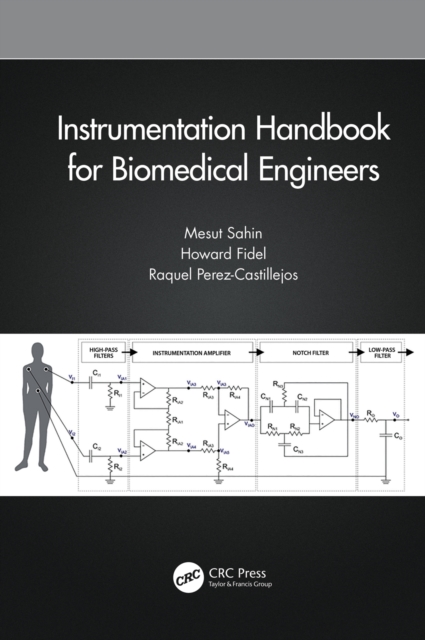
Instrumentation Handbook for Biomedical Engineers
The book fills a void as a textbook with hands-on laboratory exercises designed for biomedical engineering undergraduates in their senior year or the first year of graduate studies specializing in electrical aspects of bioinstrumentation. Each laboratory exercise concentrates on measuring a biophysical or biomedical entity, such as force, blood pressure, temperature, heart rate, respiratory rate, etc., and guides students all the way through from sensor level to data acquisition and analysis on the computer. This book distinguishes itself from others by providing electrical circuits and other measurement setups that have been tested by the first author over many years of teaching undergraduate classes at his home institute.
Key Features:
Hands-on laboratory exercises on measurements of biophysical and biomedical variables
Each laboratory exercise is complete by itself, and they can be covered in any sequence desired by the instructor during the semester
Electronic equipment and supplies required are typical for biomedical engineering departments
Data collected by undergraduate students and data analysis results are provided as samples
Additional information and references are included for preparing a report or further reading at the end of each chapter
Students using this book are expected to have basic knowledge of electrical circuits and troubleshooting. Practical information on circuit components, basic laboratory equipment, and circuit troubleshooting are also provided in the first chapter of the book.
eBook

Green Computing and Predictive Analytics for Healthcare
The book Green Computing and Predictive Analytics for Healthcare excavates the rudimentary concepts of Green Computing, Big Data and the Internet of Things along with the latest research development in the domain of healthcare. It also covers various applications and case studies in the field of computer science with state-of-the-art tools and technologies. The rapid growth of the population is a challenging issue in maintaining and monitoring various experiences of quality of service in healthcare. The coherent usage of these limited resources in connection with optimum energy consumption has been becoming more important. The major healthcare nodes are gradually becoming Internet of Things-enabled and using sensors, and the work data and involvement of networking is creating smart campuses and corporate houses. The book includes chapters on the Internet of Things and Big Data technologies.
Features:
Biomedical data monitoring under the Internet of Things
Environment data sensing and analyzing
Big data analytics and clustering
Machine learning techniques for sudden cardiac death prediction
Robust brain tissue segmentation
Energy-efficient and green Internet of Things for healthcare applications
Blockchain technology for the healthcare Internet of Things
Advanced healthcare for domestic medical tourism system
Edge computing for data analytics
This book on Green Computing and Predictive Analytics for Healthcare aims to promote and facilitate the exchange of research knowledge and findings across different disciplines on the design and investigation of healthcare data analytics. It can also be used as a textbook for a Master's course in biomedical engineering. This book will also present new methods for medical data evaluation and the diagnosis of different diseases to improve quality of life in general and for better integration of Internet of Things into society.
eBook

Foundations of Evidence-Based Medicine
This comprehensive text focuses on reasoning, critical thinking and pragmatic decision making in medicine. Based on the author’s extensive experience and filled with definitions, formulae, flowcharts and checklists, this fully revised second edition continues to provide invaluable guidance to the crucial role that clinical epidemiology plays in the expanding field of evidence-based medicine.
Key Features:
• Considers evidence-based medicine as a universal initiative common to all health sciences and professions, and all specialties within those disciplines
• Demonstrates how effective practice is reliant on proper foundations, such as clinical and fundamental epidemiology, and biostatistics
• Introduces the reader to basic epidemiological methods, meta-analysis and decision analysis
• Shows that structured, modern, argumentative reasoning is required to build the best possible evidence and use it in practice and research
• Outlines how to make the most appropriate decisions in clinical care, disease prevention and health promotion
Presenting a range of topics seldom seen in a single resource, the innovative blend of informal logic and structured evidence-based reasoning makes this book invaluable for anyone seeking broad, in-depth and readable coverage of this complex and sometimes controversial field.
Part 1: How do we see things in medicine: Our trains of thought. 1. How do we see medicine, health and disease? A basic set of rules and fundamental paradigms (including evidence). 2. The work of physicians with individuals and communities: Epidemiology and other partners in evidence-based medicine. 3. The logic in modern medicine: Reasoning and underlying concepts. Part 2: How do we do things in medicine: Gathering and evaluating evidence. 4. Producing evidence: Classification, objectives and worthiness of medical research. 5. Assessing the health of individuals and communities: Health indicators, indexes and scales. 6. Identifying cases of disease: Clinimetrics and diagnosis. 7. Describing what happens: Clinical case reports, case series, occurrence studies. 8. Search for causes of disease occurrence: Why does disease occur? 9. The impact of treatment and other clinical and community health interventions: A 'does it work?' evaluation. 10. Prognosis: Studies of disease course and outcomes. Part 3: Putting experiences together and making decisions in medicine: Structured uses of evidence. 11. Analyzing and integrating a body of knowledge: Systematic reviews and meta-analysis of evidence. 12. Using evidence and logic in everyday clinical reasoning, communication and legal and scientific argumentation. 13. Decision analysis and decision-making in medicine: Beyond intuition, guts and flair. Epilogue: Widening horizons, staying in touch - What next? Glossary: Preferred terms and their definitions in the context of this book.
Milos Jenicek is Professor (PT), McMaster University, Professor Emeritus at the Université de Montréal and former Adjunct Professor at McGill University, Canada. He is a Fellow of the Royal College of Physicians and Surgeons of Canada. In 2009, he was elected Fellow of the Royal Society of Medicine, London, UK.
eBook
R for Health Data Science
HealthyR: R for Health Data Analysis includes everything you need to go from R Novice to R Guru. By the end of this book, you will be taking a sophisticated approach to health data science with beautiful visualisations, elegant tables, and nuanced analyses. You are in safe hands - Ewen is a clinician and Riinu a data scientist, and they bring 25 years combined experience of using R at the coalface. This content has been taught to hundreds of individuals from a variety of backgrounds, from rank beginners, to experts moving to R from another platform. You will learn:
The fundamentals of R
To understand your data with sophisticated plots and tables
The common statistical approaches to health data science
How to create final publishable documents in one-step
How to collaborate across teams and track versions.
eBook
Advanced Therapeutics in Pain Medicine
Chronic pain places a tremendous burden on both the patient and the healthcare system. The use of opioids to address chronic pain has resulted in negative impacts. As practitioners work to undo the current opioid crisis, a new approach is needed to manage pain. Advanced Therapeutics in Pain Medicine offers pioneering approaches to this intransigent problem, providing a functional medicine approach toward treating pain.
This book is dedicated to the advancement of non-opioid therapeutic options that offer real progress in reaching a future of better pain management. With an emphasis on pathophysiology, chapters review various types of pain and propose comprehensive treatment plans. These include manual therapies, novel pharmacologic and plant-based approaches, and hormonal effects on pain pathways, as well as psychological and lifestyle interventions.
Features
Written by a multi-disciplinary team, the book provides clinicians with multiple non-opioid treatment considerations.
Enables practitioners to shift from a \"one-size-fits-all\" treatment approach toward individualized patient care.
Includes case studies to help educate the provider on how to implement treatment plans in practice.
Written by a team of physicians, pharmacists, psychologists, and researchers, this important book offers a much-needed step forward in optimizing pain care and benefits practitioners who care for patients experiencing chronic pain.
eBook
100 Cases in Clinical Pharmacology, Therapeutics and Prescribing
100 Cases in Clinical Pharmacology, Therapeutics and Prescribing explores scenarios commonly seen by medical students and junior doctors in the ward, emergency department, outpatient clinic or in general practice in which an understanding of pharmacology and sound prescribing practice is central to successful clinical management and safe patient care. A succinct summary of the patient's history, examination and any initial investigations is followed by questions on the diagnosis and management of the case. The answer includes a detailed discussion on each topic, providing practical advice on how to deal with the challenges that occur when prescribing, including planning, drug calculations, prescription review and adverse drug reactions. The book will be invaluable during clinical placements and is an ideal companion during preparation for the Prescribing Safety Assessment examination.
Making speedy and appropriate clinical decisions, and choosing the best course of action to take as a result, is one of the most important and challenging parts of training to become a doctor. These true-to-life cases will teach students and junior doctors to prescribe appropriately, and to hone their diagnostic and management skills.
eBook