
Catalogue Search | MBRL


Are you sure you want to remove the book from the shelf?

{{itemTitle}}
257,124
result(s) for
"BLOOD CELLS"
Sort by:

Nine pints : a journey through the money, medicine, and mysteries of blood
\"Blood carries life, yet the sight of it makes people faint. It is a waste product and a commodity pricier than oil. It can save lives and transmit deadly infections. Each one of us has roughly nine pints of it, yet many don't even know their own blood type ... Rose George ... takes us from ancient practices of bloodletting to the breakthough of the 'liquid biopsy,' which promises to diagnose cancer and other diseases with a simple blood test\"--Publisher marketing.
Book

Single-cell proteo-genomic reference maps of the hematopoietic system enable the purification and massive profiling of precisely defined cell states
Single-cell genomics technology has transformed our understanding of complex cellular systems. However, excessive cost and a lack of strategies for the purification of newly identified cell types impede their functional characterization and large-scale profiling. Here, we have generated high-content single-cell proteo-genomic reference maps of human blood and bone marrow that quantitatively link the expression of up to 197 surface markers to cellular identities and biological processes across all main hematopoietic cell types in healthy aging and leukemia. These reference maps enable the automatic design of cost-effective high-throughput cytometry schemes that outperform state-of-the-art approaches, accurately reflect complex topologies of cellular systems and permit the purification of precisely defined cell states. The systematic integration of cytometry and proteo-genomic data enables the functional capacities of precisely mapped cell states to be measured at the single-cell level. Our study serves as an accessible resource and paves the way for a data-driven era in cytometry.
Haas, Velten and colleagues use single-cell multiomics of human blood and bone marrow to generate a reference map allowing the quantitative linking of cytometry and proteo-genomic information.
Journal Article
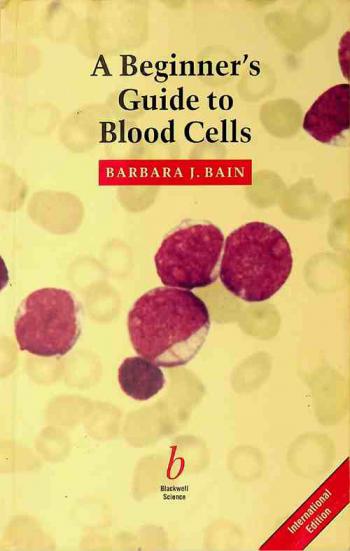
A beginner's guide to blood cells
A Beginner's Guide to Blood Cells is a straightforward text for those starting to examine blood films for the first time. No prior knowledge is assumed as the descriptions of haematological conditions start with normal cells and explanations of the terms commonly used to describe them. This leads on to abnormal findings. A Beginner's Guide to Blood Cells: outlines the basics of diagnostic haematology; stresses the skills required to diagnose diseases of the blood by morphological analysis; describes how to analyse a blood film, how to recognize any abnormality present and how to interpret abnormalities; explains the clinical relevance of haematology tests in patient care; gives a simple explanation of the full blood count and a table of normal ranges; and tests understanding with a self-assessment section. A Beginner's Guide to Blood Cells is ideal for a diverse group of practitioners who need a concise overview of diagnostic haematology.

Somatic mutation landscapes at single-molecule resolution
Somatic mutations drive the development of cancer and may contribute to ageing and other diseases
1
,
2
. Despite their importance, the difficulty of detecting mutations that are only present in single cells or small clones has limited our knowledge of somatic mutagenesis to a minority of tissues. Here, to overcome these limitations, we developed nanorate sequencing (NanoSeq), a duplex sequencing protocol with error rates of less than five errors per billion base pairs in single DNA molecules from cell populations. This rate is two orders of magnitude lower than typical somatic mutation loads, enabling the study of somatic mutations in any tissue independently of clonality. We used this single-molecule sensitivity to study somatic mutations in non-dividing cells across several tissues, comparing stem cells to differentiated cells and studying mutagenesis in the absence of cell division. Differentiated cells in blood and colon displayed remarkably similar mutation loads and signatures to their corresponding stem cells, despite mature blood cells having undergone considerably more divisions. We then characterized the mutational landscape of post-mitotic neurons and polyclonal smooth muscle, confirming that neurons accumulate somatic mutations at a constant rate throughout life without cell division, with similar rates to mitotically active tissues. Together, our results suggest that mutational processes that are independent of cell division are important contributors to somatic mutagenesis. We anticipate that the ability to reliably detect mutations in single DNA molecules could transform our understanding of somatic mutagenesis and enable non-invasive studies on large-scale cohorts.
NanoSeq is used to detect mutations in single DNA molecules and analyses show that mutational processes that are independent of cell division are important contributors to somatic mutagenesis.
Journal Article

Isolation of exosomes from whole blood by integrating acoustics and microfluidics
Exosomes are nanoscale extracellular vesicles that play an important role in many biological processes, including intercellular communications, antigen presentation, and the transport of proteins, RNA, and other molecules. Recently there has been significant interest in exosome-related fundamental research, seeking new exosome-based biomarkers for health monitoring and disease diagnoses. Here, we report a separation method based on acoustofluidics (i.e., the integration of acoustics and microfluidics) to isolate exosomes directly from whole blood in a label-free and contact-free manner. This acoustofluidic platform consists of two modules: a microscale cell-removal module that first removes larger blood components, followed by extracellular vesicle subgroup separation in the exosome-isolation module. In the cell-removal module, we demonstrate the isolation of 110-nm particles from a mixture of micro- and nanosized particles with a yield greater than 99%. In the exosome-isolation module, we isolate exosomes from an extracellular vesicle mixture with a purity of 98.4%. Integrating the two acoustofluidic modules onto a single chip, we isolated exosomes from whole blood with a blood cell removal rate of over 99.999%. With its ability to perform rapid, biocompatible, label-free, contact-free, and continuous-flow exosome isolation, the integrated acoustofluidic device offers a unique approach to investigate the role of exosomes in the onset and progression of human diseases with potential applications in health monitoring, medical diagnosis, targeted drug delivery, and personalized medicine.
Journal Article
Population dynamics of normal human blood inferred from somatic mutations
Haematopoietic stem cells drive blood production, but their population size and lifetime dynamics have not been quantified directly in humans. Here we identified 129,582 spontaneous, genome-wide somatic mutations in 140 single-cell-derived haematopoietic stem and progenitor colonies from a healthy 59-year-old man and applied population-genetics approaches to reconstruct clonal dynamics. Cell divisions from early embryogenesis were evident in the phylogenetic tree; all blood cells were derived from a common ancestor that preceded gastrulation. The size of the stem cell population grew steadily in early life, reaching a stable plateau by adolescence. We estimate the numbers of haematopoietic stem cells that are actively making white blood cells at any one time to be in the range of 50,000–200,000. We observed adult haematopoietic stem cell clones that generate multilineage outputs, including granulocytes and B lymphocytes. Harnessing naturally occurring mutations to report the clonal architecture of an organ enables the high-resolution reconstruction of somatic cell dynamics in humans.
Analysis of blood from a healthy human show that haematopoietic stem cells increase rapidly in numbers through early life, reaching a stable plateau in adulthood, and contribute to myeloid and B lymphocyte populations throughout life.
Journal Article

Machine learning approach of automatic identification and counting of blood cells
A complete blood cell count is an important test in medical diagnosis to evaluate overall health condition. Traditionally blood cells are counted manually using haemocytometer along with other laboratory equipment's and chemical compounds, which is a time-consuming and tedious task. In this work, the authors present a machine learning approach for automatic identification and counting of three types of blood cells using ‘you only look once’ (YOLO) object detection and classification algorithm. YOLO framework has been trained with a modified configuration BCCD Dataset of blood smear images to automatically identify and count red blood cells, white blood cells, and platelets. Moreover, this study with other convolutional neural network architectures considering architecture complexity, reported accuracy, and running time with this framework and compare the accuracy of the models for blood cells detection. They also tested the trained model on smear images from a different dataset and found that the learned models are generalised. Overall the computer-aided system of detection and counting enables us to count blood cells from smear images in less than a second, which is useful for practical applications.
Journal Article

Three-dimensional genome structures of single diploid human cells
Beyond the sequence of the genome, its three-dimensional structure is important in regulating gene expression. To understand cell-to-cell variation, the structure needs to be understood at a single-cell level. Chromatin conformation capture methods have allowed characterization of genome structure in haploid cells. Now, Tan et al. report a method called Dip-C that allows them to reconstruct the genome structures of single diploid human cells. Their examination of different cell types highlights the tissue dependence of three-dimensional genome structures. Science , this issue p. 924 A single-cell chromatin conformation capture method employs transposon-based whole-genome amplification to detect chromatin contacts. Three-dimensional genome structures play a key role in gene regulation and cell functions. Characterization of genome structures necessitates single-cell measurements. This has been achieved for haploid cells but has remained a challenge for diploid cells. We developed a single-cell chromatin conformation capture method, termed Dip-C, that combines a transposon-based whole-genome amplification method to detect many chromatin contacts, called META (multiplex end-tagging amplification), and an algorithm to impute the two chromosome haplotypes linked by each contact. We reconstructed the genome structures of single diploid human cells from a lymphoblastoid cell line and from primary blood cells with high spatial resolution, locating specific single-nucleotide and copy number variations in the nucleus. The two alleles of imprinted loci and the two X chromosomes were structurally different. Cells of different types displayed statistically distinct genome structures. Such structural cell typing is crucial for understanding cell functions.
Journal Article
A genome-wide transcriptomic analysis of protein-coding genes in human blood cells
Genome-wide analyses are increasingly providing resources for advances in basic and applied biomedical science. Uhlen et al. performed a global expression analysis of human blood cell types and integrated this data with data across all major human tissues and organs in the human protein atlas. This comprehensive compendium allows for classification of all human protein-coding genes with regard to their tissue- and cell-type distribution. Science , this issue p. eaax9198 Genome-wide expression profiles are analyzed across human immune cell populations and all major human tissues and organs. Blood is the predominant source for molecular analyses in humans, both in clinical and research settings. It is the target for many therapeutic strategies, emphasizing the need for comprehensive molecular maps of the cells constituting human blood. In this study, we performed a genome-wide transcriptomic analysis of protein-coding genes in sorted blood immune cell populations to characterize the expression levels of each individual gene across the blood cell types. All data are presented in an interactive, open-access Blood Atlas as part of the Human Protein Atlas and are integrated with expression profiles across all major tissues to provide spatial classification of all protein-coding genes. This allows for a genome-wide exploration of the expression profiles across human immune cell populations and all major human tissues and organs.
Journal Article

One-Unit versus Two-Unit Cord-Blood Transplantation for Hematologic Cancers
The use of two units of cord blood to reconstitute hematopoiesis in transplantation for relapsed hematologic cancers in patients 1 to 21 years of age proved to be no better and was in some ways worse than the standard one-unit transplant.
Since 1993, unrelated-donor umbilical-cord blood has been used as the source of hematopoietic stem cells for transplantation in an estimated 30,000 patients with malignant and nonmalignant diseases.
1
As compared with stem-cell grafts from adult donors, cord blood has the advantages of more rapid availability, relative absence of donor attrition, and, after transplantation, a reduced risk of graft-versus-host disease (GVHD) despite donor–recipient HLA disparity.
2
,
3
In addition, less restriction on HLA matching permits greater use of cord blood for members of racial minorities, who are less likely to have a suitably HLA-matched volunteer adult donor.
4
However, the use of cord blood . . .
Journal Article