
Catalogue Search | MBRL


Are you sure you want to remove the book from the shelf?

{{itemTitle}}
63,220
result(s) for
"BODY TEMPERATURE"
Sort by:
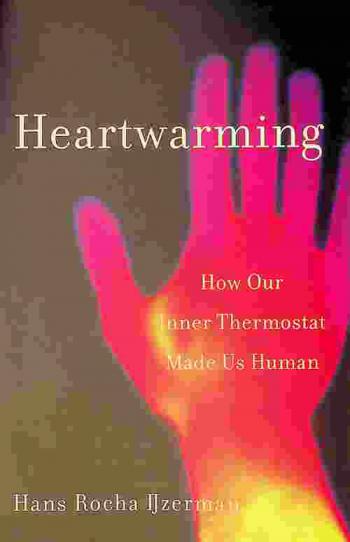
Heartwarming : how our inner thermostat made us human
\"A compelling investigation into the quest to maintain core body temperature-and how it drives genetic and social evolution, civilization, health, and technology. A cup of tea, coffee, or cocoa is calming and comforting-but why? Recent research suggests that temperature, even that derived from holding a hot beverage, can influence our emotions and behaviors. In Heartwarming, social psychologist Hans IJzerman explores temperature and its role in our daily lives through the long lens of evolution. Besides breathing, regulating body temperature is one of the most important tasks for any animal. Like huddling penguins, we humans have long relied each other to maintain our temperatures. Over millennia, this instinct for thermoregulation has driven our social lives. Understanding how temperature affects human sociality leads to fascinating new questions in our changing world: How will climate change impact society? Can thermoregulation keep relationships closer, even across distance? IJzerman offers new insights for therapists, doctors, sufferers of illnesses both mental and physical, and all of us who want to better understand our bodies and our connections. Heartwarming takes readers on a captivating journey through the world, seen from the perspective of coldness and warmth\"-- Provided by publisher.

l-Menthol mouth rinse or ice slurry ingestion during the latter stages of exercise in the heat provide a novel stimulus to enhance performance despite elevation in mean body temperature
PurposeThis study investigated the effects of l-menthol mouth rinse and ice slurry ingestion on time to exhaustion, when administered at the latter stages (~ 85%) of baseline exercise duration in the heat (35 °C).MethodTen male participants performed four time to exhaustion (TTE) trials on a cycle ergometer at 70% Wmax. In a randomized crossover design, (1) placebo-flavored non-calorific mouth rinse, (2) l-menthol mouth rinse (0.01%), or (3) ice ingestion (1.25 g kg−1), was administered at 85% of participants’ baseline TTE. Time to exhaustion, core and skin temperature, heart rate, rating of perceived effort, thermal comfort and thermal sensation were recorded.ResultsFrom the point of administration at 85% of baseline TTE, exercise time was extended by 1% (placebo, 15 s), 6% (l-menthol, 82 s) and 7% (ice, 108 s), relative to baseline performance (P = 0.036), with no difference between l-menthol and ice (P > 0.05). Core temperature, skin temperature, and heart rate increased with time but did not differ between conditions (P > 0.05). Thermal sensation did not differ significantly but demonstrated a large effect size (P = 0.080; \\[\\eta _{{\\text{p}}}^{2}\\] = 0.260).ConclusionThese results indicate that both thermally cooling and non-thermally cooling oral stimuli have an equal and immediate behavioral, rather than physiological, influence on exhaustive exercise in the heat.
Journal Article

Too hot? Too cold? : keeping body temperature just right
Explains how people and animals living in different parts of the world survive in hotter and colder climates using remarkable adaptive strategies and behaviors.
Book

Delineating the impacts of air temperature and humidity for endurance exercise
New Findings What is the central question of this study? What are the independent effects of air temperature and humidity on performance, physiological and perceptual responses during endurance exercise? What is the main finding and its importance? When examined independently, elevated air temperature increased heat strain and impaired aerobic exercise performance, but to a lesser extent than has been reported previously. These findings highlight the importance of absolute humidity relative to temperature when exercising or working under severe heat stress. Many studies have reported that ambient heat stress increases physiological and perceptual strain and impairs endurance exercise, but effects of air temperature per se remain almost unexamined. Most studies have used matched relative humidity, thereby exponentially increasing absolute humidity (water content in air) concurrently with temperature. Absolute (not relative) humidity governs evaporative rate and is more important at higher work rates and air temperatures. Therefore, we examined the independent effects of air temperature and humidity on performance, thermal, cardiovascular and perceptual measures during endurance exercise. Utilizing a crossover design, 14 trained participants (7 females) completed 45 min fixed‐intensity cycling (70% V̇O2peak ${\\dot V_{{{\\rm{O}}_{\\rm{2}}}{\\rm{peak}}}$ ) followed by a 20‐km time trial in each of four environments: three air temperatures at matched absolute humidity (Cool, 18°C; Moderate, 27°C; and Hot, 36°C; at 1.96 kPa, air velocity ∼4.5 m/s), and one at elevated humidity (Hot Humid, 36°C at 3.92 kPa). Warmer air caused warmer skin (0.5°C/°C; P < 0.001), higher heart rate (1 bpm/°C; P < 0.001), sweat rate (0.04 l/h/°C; P < 0.001) and thermal perceptions during fixed‐intensity exercise, but minimally affected core temperature (<0.01°C/°C; P = 0.053). Time‐trial performance was comparable between Cool and Moderate (95% CI: –1.4, 5.9%; P = 0.263), but 3.6–6% slower in Hot (95% CI: ±2.4%; P ≤ 0.006). Elevated humidity increased core temperature (P < 0.001), perceived temperature and discomfort but not skin temperature or heart rate, and reduced mean blood pressure (P = 0.046) during fixed‐intensity exercise. Elevated humidity impaired time‐trial performance by 3.4% (95% CI: ±2.2%; P = 0.006). In conclusion, these findings quantify the importance of absolute humidity alongside air temperature when exercising under severe heat stress.
Journal Article

How do penguins stay warm?
\"Read this book to learn more about how penguins stay warm in cold climates\"-- Provided by publisher.
Book

Dehydration constrains thermoregulation and space use in lizards
Climate change is negatively affecting many species. The increase in mean air temperature is often associated with shifts in distribution, changes in phenology, and local extinctions. Other factors that only partially correlate with air temperature, like water shortage, may also contribute to the negative consequences of climate change. Although the effect of temperature on lizards' ecophysiology is highly studied, many lizards are also at risks of increased water loss and dehydration, which are predicted to increase under climate change. Here we aimed for the first time to explore if lacertid lizards exposed to dehydration thermoregulate less precisely than hydrated lizards and if dehydrated lizards are less active, change the daily pattern of thermoregulation and balance water balance against thermoregulation. We exposed four lizard species with differences in the thermal preference to thermal gradients with or without a source of water. We measured preferred body temperatures, daily pattern of thermoregulation, and the use of space. Dehydration negatively affected thermoregulation in all investigated species. Dehydrated lizards reduced their preferred body temperature and showed a species-specific pattern of hourly change in thermal preference. Furthermore, they more frequently used the colder parts of the gradients and spent more time hidden. Lizards experiencing dehydration may suffer a reduction in survival and fitness because of poor thermoregulation. Similarly, they may spend more time hidden, waiting for more favourable weather conditions. Such inactivity may carry ecological costs especially in those regions that undergo either short or prolonged periods of droughts.
Journal Article

Do frogs drink hot chocolate? : how animals keep warm
\"Do polar bears build homes to keep warm? Do penguins snuggle with a friend? Yes! But their homes aren't made of wood, and penguins don't cuddle on a couch. Instead, these animals -- and many others -- have adapted in amazing ways to survive chilly weather. [This book] is a light-hearted introduction to animal adaptations around the world. Funny interactive questions paired with comic illustrations will leave readers laughing for more!\"-- Back cover.
Book

Thermoregulation During Pregnancy: a Controlled Trial Investigating the Risk of Maternal Hyperthermia During Exercise in the Heat
Objectives
Despite the well-established benefits of exercise, pregnant women are discouraged from physical activity in hot/humid conditions to avoid hyperthermia (core temperature (
T
core
) ≥ 39.0 °C). Recent epidemiological evidence also demonstrates greater risk of negative birth outcomes following heat exposure during pregnancy, possibly due to thermoregulatory impairments. We aimed to determine (1) the risk of pregnant women exceeding a
T
core
of 39.0 °C during moderate-intensity exercise in the heat; and (2) if any thermoregulatory impairments are evident in pregnant (
P
) versus non-pregnant (NP) women.
Methods
Thirty participants (15 pregnant in their second trimester or third trimester) completed two separate exercise-heat exposures in a climate chamber (32 °C, 45%RH). On separate occasions, each participant cycled on a semi-recumbent cycle ergometer for 45 min at a workload representative of a moderate-intensity (1) non-weight-bearing (NON-WB), or (2) weight-bearing (WB) activity. Thermoregulatory responses were monitored throughout.
Results
The highest rectal temperature observed in a pregnant individual was 37.93 °C. Mean end-exercise rectal temperature did not differ between groups (
P
:37.53 ± 0.22 °C, NP:37.52 ± 0.34 °C,
P
= 0.954) in the WB trial, but was lower in the P group (
P
:37.48 ± 0.25 °C, vs NP:37.73 ± 0.38 °C,
P
= 0.041) in the NON-WB trial. Whole-body sweat loss was unaltered by pregnancy during WB (
P
:266 ± 62 g, NP:264 ± 77 g;
P
= 0.953) and NON-WB P:265 ± 51 g, NP:300 ± 75 g;
P
= 0.145) exercise. Pregnant participants reported higher ratings of thermal sensation (felt hotter) than their non-pregnant counterparts in the WB trial (
P
= 0.002) but not in the NON-WB trial, (
P
= 0.079).
Conclusion
Pregnant women can perform 45 min of moderate-intensity exercise at 32 °C, 45%RH with very low apparent risk of excessive maternal hyperthermia. No thermoregulatory impairments with pregnancy were observed.
Journal Article


Greater vulnerability to warming of marine versus terrestrial ectotherms
Understanding which species and ecosystems will be most severely affected by warming as climate change advances is important for guiding conservation and management. Both marine and terrestrial fauna have been affected by warming
1
,
2
but an explicit comparison of physiological sensitivity between the marine and terrestrial realms has been lacking. Assessing how close populations live to their upper thermal limits has been challenging, in part because extreme temperatures frequently drive demographic responses
3
,
4
and yet fauna can use local thermal refugia to avoid extremes
5
–
7
. Here we show that marine ectotherms experience hourly body temperatures that are closer to their upper thermal limits than do terrestrial ectotherms across all latitudes—but that this is the case only if terrestrial species can access thermal refugia. Although not a direct prediction of population decline, this thermal safety margin provides an index of the physiological stress caused by warming. On land, the smallest thermal safety margins were found for species at mid-latitudes where the hottest hourly body temperatures occurred; by contrast, the marine species with the smallest thermal safety margins were found near the equator. We also found that local extirpations related to warming have been twice as common in the ocean as on land, which is consistent with the smaller thermal safety margins at sea. Our results suggest that different processes will exacerbate thermal vulnerability across these two realms. Higher sensitivities to warming and faster rates of colonization in the marine realm suggest that extirpations will be more frequent and species turnover faster in the ocean. By contrast, terrestrial species appear to be more vulnerable to loss of access to thermal refugia, which would make habitat fragmentation and changes in land use critical drivers of species loss on land.
Comparisons across terrestrial and marine ectotherms reveal that marine species experience temperatures closer to their upper thermal limits, and that local extirpations related to warming are more common in the ocean.
Journal Article