
Catalogue Search | MBRL


Are you sure you want to remove the book from the shelf?

{{itemTitle}}
475
result(s) for
"Babylon"
Sort by:

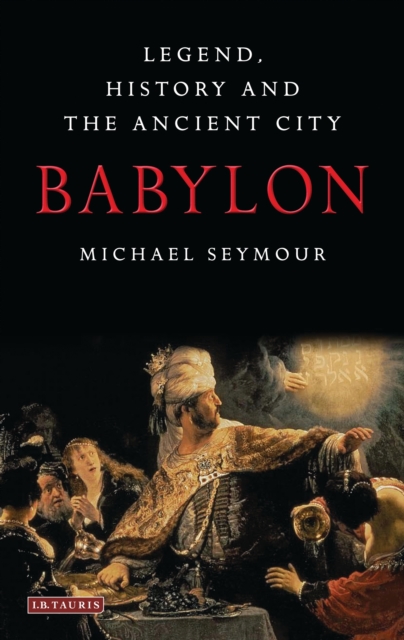
Babylon : legend, history and the ancient city
Babylon: for eons its very name has been a byword for luxury and wickedness. 'By the rivers of Babylon we sat down and wept', wrote the psalmist, 'as we remembered Zion'. One of the greatest cities of the ancient world, Babylon has been eclipsed by its own sinful reputation. For two thousand years the real, physical metropolis lay buried while another, ghostly city lived on, engorged on accounts of its own destruction. More recently the site of Babylon has been the centre of major excavation: yet the spectacular results of this work have done little displace the many other fascinating ways in which the city has endured and reinvented itself in culture. Saddam Hussein, for one, notoriously exploited the Babylonian myth to associate himself and his regime with its glorious past. Why has Babylon so creatively fired the human imagination, with results both good and ill? Why has it been so enthralling to so many, and for so long? In exploring answers, Michael Seymour' s book ranges extensively over space and time and embraces art, archaeology, history and literature. From Hammurabi and Nebuchadnezzar, via Strabo and Diodorus, to the Book of Revelation, Brueghel, Rembrandt, Voltaire, William Blake and modern interpreters like Umberto Eco, Italo Calvino and Gore Vidal, the author brings to light a carnival of disparate sources dominated by the powerful and intoxicating idea of depravity. Yet captivating as this dark mythology was and has continued to be, at its root lies a remarkable and sophisticated imperial civilization whose complex state-building, law- making and religion dominated Mesopotamia and beyond for millennia, before its incorporation into the still wider empire of the Achaemenid kings.
eBook

Babylon : legend, history and the ancient city
By looking at art, archeology, history, and literature over time, the author explains why Babylon has been and remains a fascination to many different cultures around the world.
Book

The First Dynasty of the Sealand in Mesopotamia
The Sealand kingdom arose from the rebellion against Babylonian hegemony in the latter half of the 18th century BCE., forcing it to share power over Sumer and Akkad. Although its kings maintained themselves throughout the turmoil leading to the demise of the Amorite dynasty at Babylon, it remains one of the most poorly documented Mesopotamian polities. Until recently, it was known to us mainly through its inclusion into later king lists and chronicles, but the recent publication of well over 400 archival texts from a Sealand palace, soon followed by literary and divinatory tablets, finally makes it possible to study this polity from primary sources. This book proposes a history of the Sealand kingdom based on the new evidence and a reevaluation of previously known sources. The aspects examined are: the economy — mainly the palatial administration and transformation of agricultural and animal resources; the panthea and the palace-sponsored cult, which show that Sealand I kings may have positioned their rule in a Larsean tradition; the political history, including a discussion of the geography and the relative chronology; the recording and transmission of knowledge on the Sealand I dynasty in Mesopotamian historiography.
eBook


The end of the oppressive empire is at hand: The thrust of the oracles in Jeremiah 50–51 Masoretic text
The article seeks to bring the effect of the encounter with the Neo-Babylonian Empire on the oracles in Jeremiah 50–51 Masoretic text (MT) to the fore. In these oracles, the Babylonian imperial claim of global rule from Babylon as a manifestation of the kingship of Marduk is countered with the counter-imperial claim that Yahweh is king. Babylon was merely a golden cup in the hand of Yahweh. The city of Babylon, which was built by Marduk, would suffer a fate similar to that of Jerusalem. It is argued that Empire Studies offer fresh insights into the apparent tension between the Oracles against Babylon and the pro-Babylonian sections of the book of Jeremiah. The contrast between them lies primarily in the manner in which the Babylonian imperial claims are dealt with. While the pro-Babylonian sections of the book of Jeremiah present a disguised transcript of resistance, the oracles against Babylon openly confront the Babylonian imperial claims. Utilising insights provided by Empire Studies, the article scrutinises the effect of the encounter with the Neo-Babylonian Empire on the oracles in Jeremiah 50–51 MT. Finally, the contrasting ways in which the oracles against Babylon and the oracle in Jeremiah 27:5–11, which is seemingly the most pro-Babylonian part of the book of Jeremiah, confront the imperial claims of Babylon, are considered.Intradisciplinary and/or interdisciplinary implicationsThe research highlights the effect of the encounter with the Neo-Babylonian Empire on the oracles in Jeremiah 50–51 MT. Unlike the oracle in Jeremiah 27:5–11, which represents a disguised transcript of resistance, the oracles against Babylon openly confront the Babylonian imperial claims.
Journal Article


Babylon Under Western Eyes
Babylon under Western Eyesexamines the mythic legacy of ancient Babylon, the Near Eastern city which has served western culture as a metaphor for power, luxury, and exotic magnificence for more than two thousand years.
eBook
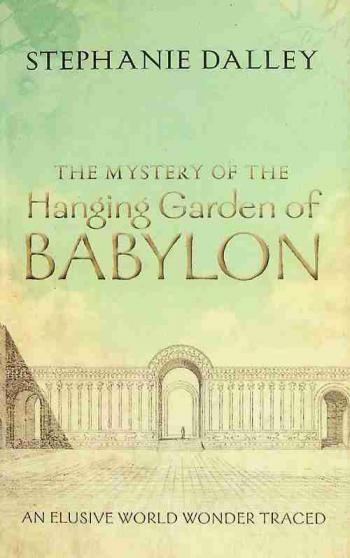
The mystery of the Hanging Garden of Babylon : an elusive world wonder traced
\"Identifies and locates one of the Ancient World wonders -- New description of a very early garden and the technology behind its water supply -- Identifies the early occurrence of the \"Water-raising Screw\" -- Links Assyrian texts and sculpture to later classical sources and explains legends surrounding the characters of Semiramis and Nebuchadnezzar -- Reassesses specific sculpture in the British Museum\"-- provided by Publisher.
Book

The Babylon Complex: Theopolitical Fantasies of War, Sex, and Sovereignty
Babylon is a surprisingly multivalent symbol in U.S. culture and politics. Political citations of Babylon range widely, from torture at Abu Ghraib to depictions of Hollywood glamour and decadence. In political discourse, Babylon appears in conservative ruminations on democratic law, liberal appeals to unity, Tea Party warnings about equality, and religious advocacy for family values. A composite biblical figure, Babylon is used to celebrate diversity and also to condemn it, to sell sexuality and to regulate it, to galvanize war and to worry about imperialism. Erin Runions explores the significance of these shifts and contradictions, arguing that together they reveal a theopolitics that tries to balance the drive for U.S. dominance with the countervailing ideals and subjectivities of economic globalization. Examining the confluence of cultural formations, biblical interpretations, and (bio)political philosophies, The Babylon Complex shows how theopolitical arguments for war, sexual regulation, and political control both assuage and contribute to anxieties about waning national sovereignty. Theoretically sophisticated and engaging, this remarkable book complicates our understanding of how the Bible affects U.S. political ideals and subjectivities.
eBook