
Catalogue Search | MBRL


Are you sure you want to remove the book from the shelf?

{{itemTitle}}
227
result(s) for
"Babysitting."
Sort by:


Technical Note—Analysis of Scrip Systems: On an Open Question in Johnson et al. (2014)
In a recent paper, Johnson et al. (2014) [Johnson K, Levi DS, Sun P (2014) Analyzing scrip systems. Oper. Res. 62(3):524–534.]use an infinitely repeated game with discounting, among a set of homogeneous players, to model a scrip system. In each period, a randomly chosen player requests service; all the other players have a choice of whether or not to volunteer to provide service. Among the players who volunteer, the service provider is chosen using the
minimum-scrip rule
: a player with the minimum number of scrips is chosen as the service provider. The authors study the
always-trade strategy
for a player, that is, the strategy of a player always willing to provide service, regardless of the distribution of scrips among the players. A key result of their work is that, under the minimum-scrip rule, for any number of players and for every discount factor close enough to one, there exists a Nash equilibrium in which each player plays the always-trade strategy. This result, however, is established under an assumption of severe
punishment
: If a player selected to provide service refuses to do so even once, then that player will be forever banned from participating in the system, thus losing all potential future benefit. Johnson et al. (2014) explain that this assumption is unsatisfactory, particularly for large scrip systems, because of difficulties in detecting players who refuse to provide service and verifying the reason(s) for their refusal, and the consequent possibility of players being unfairly banned. Motivated by this concern, the authors suggest an important direction of future research: investigate whether or not the always-trade strategy is an equilibrium
without
the punishment assumption.
In this note, we address the question posed in Johnson et al. (2014) for a generalization of their model. Our generalization allows for the possibility that players might genuinely not be available to provide service, say because of sickness. Without using the assumption of punishment, we show that when the number of players is large enough and the discount factor is close enough to one, there exists an
ε
-Nash equilibrium in which each player plays the always-trade strategy.
Journal Article

A smart girl's guide, babysitting : the care and keeping of kids /
Offers practical advice for babysitters, covering such basic topics as feeding, crying, keeping children amused, first aid, and bedtime.
Book
Donkey Hodie. Season 1, episode 33, Yodel bird sitting/Superhero squabble
Donkey is baby-yodel-bird-sitting. But no matter what she tries, the baby won't nap. Can her pals help figure out what the baby needs? Then, Donkey and Panda argue while playing their favorite superheroes. Can they still be friends?
Streaming Video


Optimising Malaysian childcare safety performance, in light of management, and babysitting practices
BackgroundSafety practices play a vital role in childcare business, as childcare entails managing children’s daily life routines and preventing them from any harm.AimThis study aims to explore the perspectives and awareness of childcare centres regarding the importance of childcare safety practices, babysitters’ traits and safety performance in Malaysian childcare business settings. In addition, this study seeks to appraise the initiatives and actions employed among childcare centres in improving the safety levels of their establishments and management.SettingThis study focuses on safety performance, and it’s practices, including the management, and babysitting among Malaysian childcare providers.MethodsA convenience sample of 11 participants, comprising childcare owners, management, supervisors and senior babysitters, from a wide variety of Malaysian childcare centres participated in a semi-structured interview.ResultsNine themes encompassing the actions and initiatives required by childcare practitioners in sustaining and empowering the safety of childcare centres were synthesised from the thematic analysis, which was grouped into two main categories: (1) Management practices; monitoring systems, training, rules and procedures and maintenance and (2) Babysitting practices; personality, mental health, religion and belief, responsibility and cooperation and knowledge and skills.ConclusionThese findings provide valuable insights to childcare practitioners, including the childcare owners, management and staff, in enhancing the safety levels of childcare premises and the benefits for the children they serve.ContributionThis study contributes to the childcare safety framework to be employed as a reference in monitoring and regulating the safety performance of childcare centres in Malaysia.
Journal Article

Baby-sitters' summer vacation
\"This summer, the Baby-sitters and a whole bunch of the kids they sit for are going to Camp Mohawk! With the girls as Counselors-in-Training, and the kids as campers, it'll be just like baby-sitting--in the woods! The Baby-sitters soon discover that camp isn't just nature walks and making lanyards. Dawn gets lost in the wilderness overnight. Kristy learns how to use mascara, and Mary Anne gets caught sneaking over to the boys' side of the camp. Stacey spends the two weeks with poison ivy ... and Claudia falls in L-U-V with a boy CIT. This is one summer vacation the Baby-sitters will never forget!\"-- Provided by publisher
BOOK

Babysitter
On Friday nights many parents want to have a little fun
together-without the kids. But \"getting a sitter\"-especially a
dependable one-rarely seems trouble-free. Will the kids be safe
with \"that girl\"? It's a question that discomfited parents have
been asking ever since the emergence of the modern American teenage
girl nearly a century ago. In Babysitter , Miriam
Forman-Brunell brings critical attention to the ubiquitous, yet
long-overlooked babysitter in the popular imagination and American
history. Informed by her research on the history of teenage girls'
culture, Forman-Brunell analyzes the babysitter, who has embodied
adults' fundamental apprehensions about girls' pursuit of autonomy
and empowerment. In fact, the grievances go both ways, as girls
have been distressed by unsatisfactory working conditions. In her
quest to gain a fuller picture of this largely unexamined cultural
phenomenon, Forman-Brunell analyzes a wealth of diverse sources,
such as The Baby-sitter's Club book series, horror movies like The
Hand That Rocks the Cradle, urban legends, magazines, newspapers,
television shows, pornography, and more. Forman-Brunell shows that
beyond the mundane, understandable apprehensions stirred by hiring
a caretaker to \"mind the children\" in one's own home, babysitters
became lightning rods for society's larger fears about gender and
generational change. In the end, experts' efforts to tame teenage
girls with training courses, handbooks, and other texts failed to
prevent generations from turning their backs on babysitting.
eBook

Monkey and Elephant and the babysitting adventure
When Monkey's cousin MeeMee tells Monkey and Elephant she needs someone to watch her three babies for an afternoon, the two friends volunteer. But Monkey and Elephant don't quite know what to expect. Will babysitting be hard? Will they need some rules? Will they be any good at it?
Book
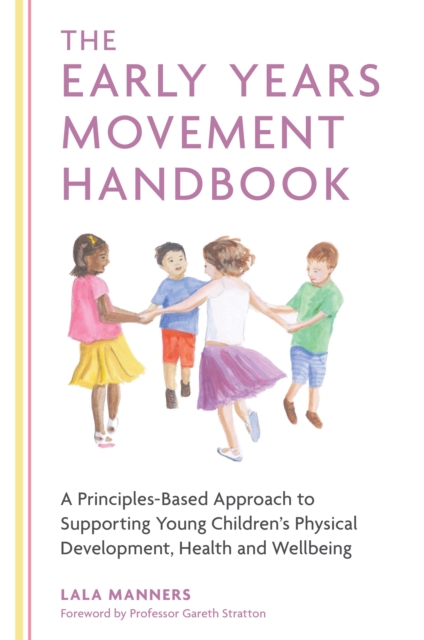
The Early Years Movement Handbook
Lala Manners PhD has enjoyed a long and varied career promoting the importance of EY movement development and physical activity - as educator, teacher, writer, researcher and consultant - both in the UK and internationally.
eBook