
Catalogue Search | MBRL


Are you sure you want to remove the book from the shelf?

{{itemTitle}}
46
result(s) for
"Bahrain Civilization."
Sort by:
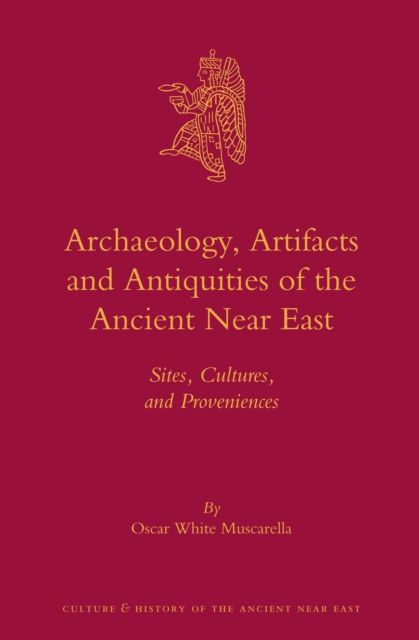
Archaeology, Artifacts and Antiquities of the Ancient Near East
Archaeology, Artifacts and Antiquities of the Ancient Near East follows the evolution of Oscar White Muscarella's scholarly work and interests and is divided into several categories of interrelated fields.
eBook


Why We Need a Just Rebellion Theory
The Arab Spring has generated a variety of responses from the West. While broad political support was voiced for uprisings in Egypt, Tunisia, and Yemen, the responses to protests in Bahrain and Morocco were muted. The swift decision to intervene in Libya stands in marked contrast to the ongoing hand-wringing on Syria. While political realists might see these contradictions as evidence that geopolitical concerns determine foreign policy, from an ethical point of view these responses also reveal a fundamental tension in Western thinking about rebellion. On one hand, rebellion is viewed with a distrustful eye—as a disruptive, chaotic force that threatens to destroy the day-to-day order on which civilization is built. On the other, rebellion is perceived more optimistically—as a regenerative, creative force that can leave a better civilization in its wake. These two radically disparate ways of thinking about rebellion have deep philosophical and theological roots. The pessimistic view has historically dominated just war thought, as James Turner Johnson's contribution to this roundtable illustrates; whereas the perspective of Enlightenment liberalism offers a more optimistic judgment, as found, for example, in the works of Locke and Rousseau.
Journal Article
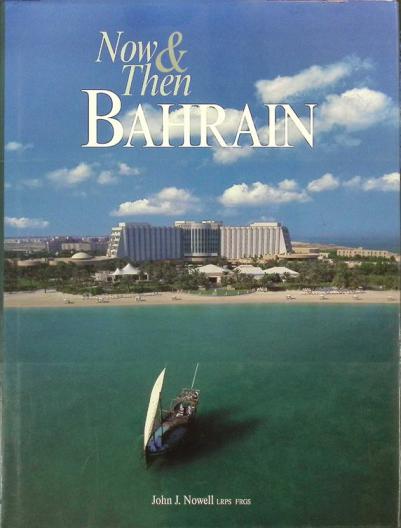
Now & then : Bahrain
\"Now & Then: Bahrain\" is a sophisticated visual record that employs the \"re-photography\" technique to document the dramatic urban and social metamorphosis of the Kingdom of Bahrain. John J. Nowell leverages his extensive archive of historical photographs—many dating back to the mid-20th century—and pairs them with contemporary shots taken from the exact same vantage points. The volume provides a stark, side-by-side analysis of how the discovery of oil and subsequent modernization have reshaped the island nation's landscape, from its traditional pearling villages to the futuristic skyline of Manama.
BOOK
Unusual cultures. Series 1, Episode 2
This documentary by Jiri Novak and Otto Kallus focuses on the cultures of Bahrain and Israel-Palestine.
Streaming Video

Frontier Fictions
In Frontier Fictions, Firoozeh Kashani-Sabet looks at the efforts of Iranians to defend, if not expand, their borders in the nineteenth and early twentieth centuries, and explores how their conceptions of national geography influenced cultural and political change. The \"frontier fictions,\" or the ways in which the Iranians viewed their often fluctuating borders and the conflicts surrounding them, played a dominant role in defining the nation. On these borderlands, new ideas of citizenship and nationality were unleashed, refining older ideas of ethnicity. Kashani-Sabet maintains that land-based conceptions of countries existed before the advent of the modern nation-state. Her focus on geography enables her to explore and document fully a wide range of aspects of modern citizenship in Iran, including love of homeland, the hegemony of the Persian language, and widespread interest in archaeology, travel, and map-making. While many historians have focused on the concept of the \"imagined community\" in their explanations of the rise of nationalism, Kashani-Sabet is able to complement this perspective with a very tangible explanation of what connects people to a specific place. Her approach is intended to enrich our understanding not only of Iranian nationalism, but also of nationalism everywhere.
eBook
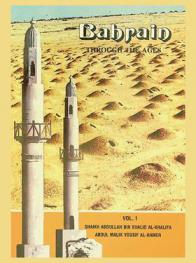

Archaeology and Islamic identities in Bahrain
Exploring the archaeological correlates of Islam in Bahrain, the author finds that 'Islamic identity' is no singular condition: communities are diverse, exhibiting a culture that is rich, multicultural and complex.
Journal Article