
Catalogue Search | MBRL


Are you sure you want to remove the book from the shelf?

{{itemTitle}}
631
result(s) for
"Baja California"
Sort by:

The other California : land, identity and politics on the Mexican borderlands
\"The Other California is the story of working-class communities and how they constituted the racially and ethnically diverse landscape of Baja California. Packed with new and transformative stories, the book examines the interplay of land reform and migratory labor on the peninsula from 1850 to 1954, as governments, foreign investors, and local communities shaped a vibrant and dynamic borderland alongside the booming cities of Tijuana, Mexicali, and Santa Rosalia. Migration and intermarriage between Mexican women and men from Asia, Europe, and the United States transformed Baja California into a multicultural society. Mixed-race families extended across national borders, forging new local communities, labor relations, and border politics\"--Provided by publisher.
Book

Ghost Galleon
Ghost Galleon tells the story of archaeologists’ twenty-year search on a desolate beach in Baja California for the enigmatic remains of a Spanish galleon that disappeared without a trace more than four centuries ago. Carrying a cargo of Asian riches to the New World, Manila galleons forged the final link in the unification of the world through commerce by their annual voyages across the Pacific Ocean. Here, author Edward Von der Porten relates how a chance viewing of Chinese porcelain sherds in a museum catalog led him, his wife Saryl, and a team of researchers to the beachcombers who discovered the sherds. To Von der Porten, these sherds represented the possibility of something much more significant: one of the earliest known Manila galleon shipwrecks on the West Coast. In collaboration with the National Institute of Anthropology and History of Mexico (INAH), Von der Porten and his colleagues undertook the first of many archaeological expeditions to investigate the site in 1999. Over twenty years, a team of American and Mexican archaeologists recovered thousands of artifacts and concluded that they had located the remains of the cargo from a Spanish galleon—most likely the San Juanillo of 1578. This copiously illustrated, highly accessible work offers an inside view of how archaeologists carefully assemble the evidence that allows scientific reconstruction of past events. Despite the grudging resistance of time, Von der Porten and his colleagues have resurrected the tale of the ill-fated San Juanillo to enrich our understanding and appreciation of the past.
eBook


Private Women, Public Lives
Through the lives and works of three women in colonial California, Bárbara O. Reyes examines frontier mission social spaces and their relationship to the creation of gendered colonial relations in the Californias. She explores the function of missions and missionaries in establishing hierarchies of power and in defining gendered spaces and roles, and looks at the ways that women challenged, and attempted to modify, the construction of those hierarchies, roles, and spaces. Reyes studies the criminal inquiry and depositions of Barbara Gandiaga, an Indian woman charged with conspiracy to murder two priests at her mission; the divorce petition of Eulalia Callis, the first lady of colonial California who petitioned for divorce from her adulterous governor-husband; and the testimonio of Eulalia Pérez, the head housekeeper at Mission San Gabriel who acquired a position of significant authority and responsibility but whose work has not been properly recognized. These three women’s voices seem to reach across time and place, calling for additional, more complex analysis and questions: Could women have agency in the colonial Californias? Did the social structures or colonial processes in place in the frontier setting of New Spain confine or limit them in particular gendered ways? And, were gender dynamics in colonial California explicitly rigid as a result of the imperatives of the goals of colonization?
eBook

Angel baby : a novel
To escape the awful life she has descended into, Luz plans carefully. She takes only the clothes on her back, a Colt .45, and all the money in her husband's safe. The corpses in the hallway weren't part of her plan. Luz needs to find the daughter she left behind years earlier, but she knows she may die trying. Her husband is El Principe, a key player in a high-powered drug cartel, a business he runs with the same violence he has used to keep Luz his perfect, obedient wife.
Book

Sex work and the city : the social geography of health and safety in Tijuana, Mexico
A gateway at the U.S.–Mexico border, Tijuana is a complex urban center with a sizeable population of sex workers. An in-depth case study of the trade, Sex Work and the City is the first major ethnographic publication on contemporary prostitution in this locale, providing a detailed analysis of how sex workers’ experiences and practices are shaped by policing and regulation. Contextualizing her research within the realm of occupational risk, Yasmina Katsulis examines the experiences of a diverse range of sex workers in the region and explores the implications of prostitution, particularly regarding the spheres of class hierarchies, public health, and other broad social effects. Based on eighteen months of intensive fieldwork and nearly 400 interviews with sex workers, customers, city officials, police, local health providers, and advocates, Sex Work and the City describes the arenas of power and the potential for disenfranchisement created by municipal laws designed to regulate the trade. Providing a detailed analysis of this subculture’s significance within Tijuana and its implications for debates over legalization of “vice” elsewhere in the world, Katsulis draws on powerful narratives as workers describe the risks of their world, ranging from HIV/AIDS and rape (by police or customers) to depression, work-related stress, drug and alcohol addiction, and social stigma. Insightful and compelling, Sex Work and the City captures the lives (and deaths) of a population whose industry has broad implications for contemporary society at large.
eBook

Big Blue
A young girl's dream to swim with a blue whale may finally come true when her mother, a writer, arranges for them to accompany her friends who are marine biologists on a research trip to Mexico.
Book
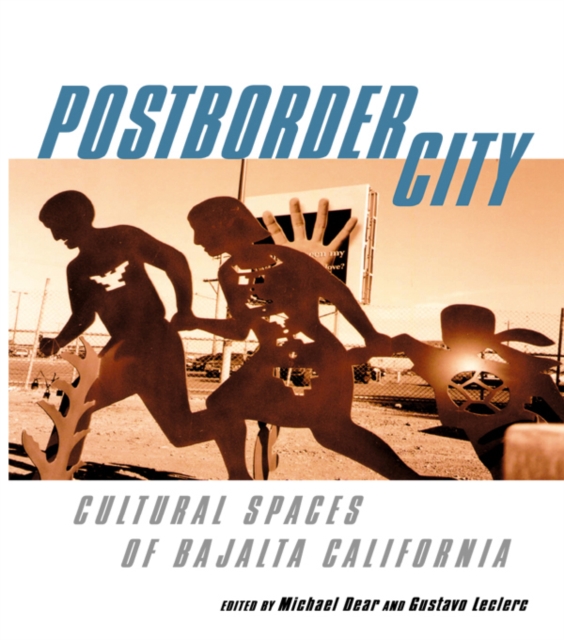
Postborder City
First published in 2003. Routledge is an imprint of Taylor & Francis, an informa company.
Michael Dear is Professor of Geography and Director of the Southern California Studies Center at USC.
Gustavo LeClerc is partner and founding member of ADOBE LA (Artists, Architects and Designers Opening the Border Edge of Los Angeles) since 1992.
eBook

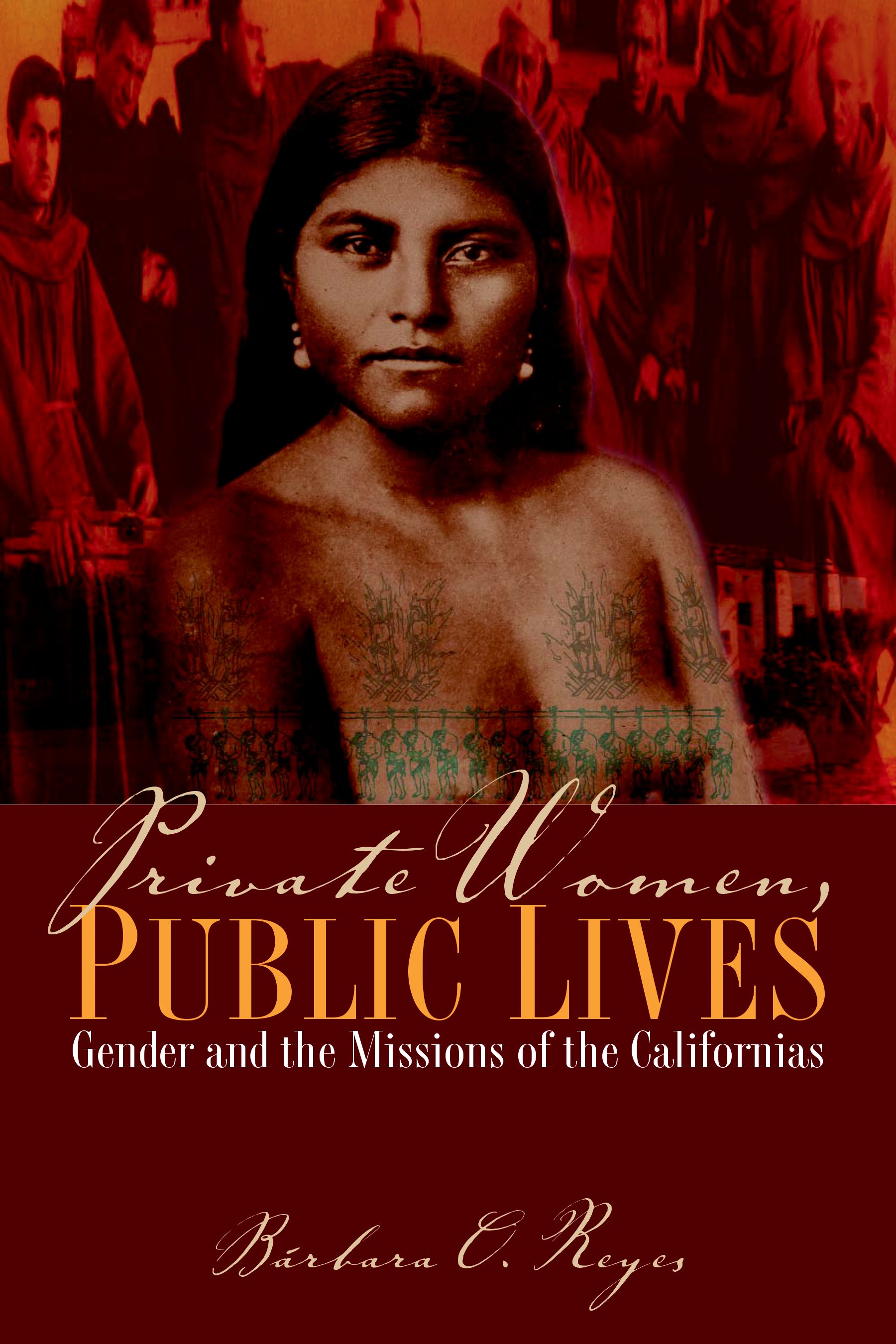
Private Women, Public Lives
Through the lives and works of three women in colonial California, Bárbara O. Reyes examines frontier mission social spaces and their relationship to the creation of gendered colonial relations in the Californias. She explores the function of missions and missionaries in establishing hierarchies of power and in defining gendered spaces and roles, and looks at the ways that women challenged, and attempted to modify, the construction of those hierarchies, roles, and spaces. Reyes studies the criminal inquiry and depositions of Barbara Gandiaga, an Indian woman charged with conspiracy to murder two priests at her mission; the divorce petition of Eulalia Callis, the first lady of colonial California who petitioned for divorce from her adulterous governor-husband; and the testimonio of Eulalia Pérez, the head housekeeper at Mission San Gabriel who acquired a position of significant authority and responsibility but whose work has not been properly recognized. These three women's voices seem to reach across time and place, calling for additional, more complex analysis and questions: Could women have agency in the colonial Californias? Did the social structures or colonial processes in place in the frontier setting of New Spain confine or limit them in particular gendered ways? And, were gender dynamics in colonial California explicitly rigid as a result of the imperatives of the goals of colonization?
eBook