
Catalogue Search | MBRL


Are you sure you want to remove the book from the shelf?

{{itemTitle}}
1,559
result(s) for
"Bakhtin"
Sort by:

Mikhail Bakhtin's heritage in literature, arts, and psychology : art and answerability
This book examines, from the angle of more than a dozen perspectives, the heritage of Mikhail Bakhtin, one of the most prominent thinkers and influential literary figures of the twentieth century. It opens a new critical discourse that reshapes our current understanding of Bakhtin.
Book

Voicing relationships : a dialogic perspective
An expansion of Baxter′s earlier award winning work on relationship communuication and ′relational dialectics theory′, the 1996 Relating Dialogues and Dialectics (co-authored with Barbara Montgomery).
eBook


Dialogue and desire
Mikhail Bakhtin, the Russian philosopher and cultural critic, was one of the pioneers of the 'linguistic turn' in philosophy and is now widely associated with the concept of the dialogical self and dialogical psychotherapy. However, whilst dialogism is the concept for which Bakhtin is most well known in psychotherapy, it is, in isolation, open to a wide range of interpretations that can be claimed by diverse and conflicting ideological positions. The radical contribution that a more inclusive reading of Bakhtin could bring to psychotherapy only becomes apparent when dialogism is understood in the context of Bakhtin's philosophy as a whole, and when Bakhtin himself is brought into a dialogical relationship with other thinkers. By bringing Bakhtin into dialogue with the controversial French anthropologist, Rene Girard, the centrality of desire in language and human social life is woven into the concept of the dialogical self and the practice of dialogical psychotherapy. This book will be of keen interest to students interested in the contemporary relevance of Bakhtin's thinking as well as psychotherapists concerned with the complex relationship between language, consciousness and the art of psychotherapy.
eBook
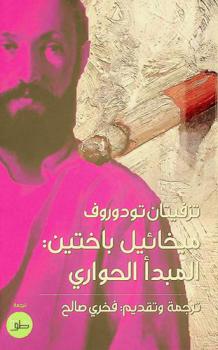
ميخائيل باختين : المبدأ الحواري /
لا شك أن ميخائيل باختين واحد من أعظم المنظرين والمفكرين في عصرنا، فاسمه يتردد بصورة مستمرة في الدراسات التي تتناول أمور متعلقة بالنوع الروائي، أو اللسانيات، أو الطبيعة الحوارية للممارسات الإنسانية، أو التمييز بين العلوم الطبيعية والعلوم الإنسانية، أو نظرية الأدب. ورغم مرور ما يزيد على خمسة وثلاثين عاما على رحيله، فإن حضور الفيلسوف والمنظر الأدبي الروسي، الذي ما زال عمله النقدي والكتب التي ألفها أو شارك في صياغتها (أو أنه على الأقل كان ملهم لأطروحاتها) مدار بحث وتساؤل، يزداد في زمن يشجب فيه التركيز على الجوانب الشكلية في الأعمال الأدبية والفنية ويعاد فيه الاعتبار للفاعلية والمشاركة الإنسانية. هكذا تبدو الأفكار الأساسية لباختين أي تلك التي تتعلق بمفهوم الحوارية، ونفي الثنائية عن العلاقة بين العلامة اللغوية والدلالة، ومفهوم النوع الأدبي الذي يتحول ويتبدل عبر العصور، وصياغته البارعة لمفهوم الأنا والآخر (حيث لا تتعرف الأنا على ذاتها إلا من خلال الآخر)، وكأنها اكتسبت معاني جديدة في ضوء التحولات العميقة التي أصابت جسد النظرية والعلوم الإنسانية في السنوات الأخيرة.
Book

The Influence of Mikhail Bakhtin on the Formation and Development of the Yale School of Deconstruction
This book explores the origins of American literary deconstruction in the light of the work of Russian philosopher Mikhail M. Bakhtin. To do so, the author offers a comparative reading of Bakhtins work and that of the literary critics who formed the so-called Yale School of Deconstruction: namely, Paul de Man, J. Hillis Miller, Harold Bloom, and Geoffrey Hartman. By resorting to Bakhtins challenging understanding of the dialogical nature of the world and his reworking of the notion of tempo.
eBook

Bakhtinian explorations of Indian culture : pluralism, dogma and dialogue through history
This volume, an important contribution to dialogic and Bakhtin studies, shows the natural fit between Bakhtin's ideas and the pluralistic culture of India to a global academic audience. It is premised on the fact that long before principles of dialogism took shape in the Western world, these ideas, though not labelled as such, were an integral part of intellectual histories in India. Bakhtin's ideas and intellectual traditions of India stand under the same banner of plurality, open-endedness and diversity of languages and social speech types and, therefore, the affinity between the thinker and the culture seems natural. The volume also includes an essay on 'translation as dialogue' - an issue central to multilingual cultures - and on inherent dialogicality in the long intellectual traditions in India.
Book

Christianity in Bakhtin
The work of the great Russian theorist Mikhail Bakhtin has been examined from a wide variety of literary and theoretical perspectives. None of the many studies of Bakhtin begins to do justice, however, to the Christian dimension of his work. Christianity in Bakhtin for the first time fills this important gap. Having established the strong presence of a Christian framework in his early philosophical essays, Ruth Coates explores the way in which Christian motifs, though suppressed, continue to find expression in the work of Bakhtin's period of exile, and re-emerge in texts written during the time of his rehabilitation. Particular attention is paid to the themes of Creation, Fall, Incarnation and Christian love operating within metaphors of silence and exile, concepts which inform Bakhtin's world view as profoundly as they influence his biography.
eBook


Bakhtinian Perspectives on Language, Literacy, and Learning
This 2004 book represents a multidisciplinary collaboration that highlights the significance of Mikhail Bakhtin's theories to modern scholarship in the field of language and literacy. Book chapters examine such important questions as: What resources do students bring from their home/community environments that help them become literate in school? What knowledge do teachers need in order to meet the literacy needs of varied students? How can teacher educators and professional development programs better understand teachers' needs and help them to become better prepared to teach diverse literacy learners? What challenges lie ahead for literacy learners in the coming century? Chapters are contributed by scholars who write from varied disciplinary perspectives. In addition, other scholarly voices enter into a Bakhtinian dialogue with these scholars about their ideas. These 'other voices' help our readers push the boundaries of current thinking on Bakhtinian theory and make this book a model of heteroglossia and dialogic intertexuality.
eBook