
Catalogue Search | MBRL


Are you sure you want to remove the book from the shelf?

{{itemTitle}}
42
result(s) for
"Balkanhalbinsel."
Sort by:


Globalisation, migration and socio-economic change in contemporary greece
This empirical study examines issues surrounding the integration of immigrants in Greece, in particular in Thessaloniki, as well as looking at migrants in neighbouring countries, Albania and Bulgaria. The book suggests that immigrants' integration should be understood in relation to broader processes of social change, which are increasingly connected to global forces. The transformation of Greece into a multicultural society has taken place during a period of transition and of increasing exposure to the international environment. Within this context, Thessaloniki has become a new home for immigrants from the Balkans in search of new identities. Integration is seen as a multifaceted and dynamic process. The concept of incorporation is critically introduced, in order to analyse both the ways by which migrants organise their lives in the host society and their structural, institutional and cultural conditions. The analytical framework is built upon an interdisciplinary approach that takes into account different incorporation contexts: socio-political responses, the labour market, housing and social space. A number of additional factors are also considered, e.g. the composition of migrant populations, migratory patterns and dynamics, the role of social networks, immigrants' strategies. The book provides an empirical account of the immigrants' characteristics, explaining the patterns and typologies of immigrants' integration in Greece. \"Immigrants\" become a social category \"constructed\" by exclusionary mechanisms: restrictive immigration policy, labour market exploitation, xenophobia. However, they do make a living in Thessaloniki; their integration is subject to time. gradually, immigrants become organic elements of the host society, which shapes, but is also being shaped by migration.
eBook

Atlas of Southeast Europe : geopolitics and history
Volume One offers a survey of the history of Southeast Europe from 1521 until 1699, from the first major land campaign undertaken by Sultan Süleyman I until the Treaty of Karlowitz at the end of the seventeenth century. It covers modern-day Hungary, Slovenia, Croatia, Serbia, Kosovo, Macedonia, Bosnia and Herzegovina, Montenegro, Romania (Walachia and Transylvania), Dalmatia, Greece and Cyprus. The first maps in Volume Two overlap with the last ones of Volume One, to ensure continuity and takes the reader into the 18th century, and then to the beginning of the 19th century. Volume 3, the third and final volume, also contains two types of maps: survey maps, which represent a static situation at the beginning of a (CE) calendar year, and detailed maps which zoom in on particular events. Volume 3 ends at the conclusion of the First World War for the Ottoman Empire.
P_MAP

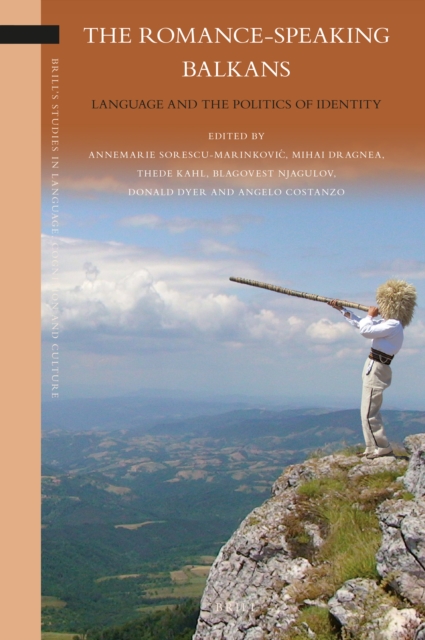
The Romance-Speaking Balkans
This volume investigates the complex relationship between language and identity of the peoples speaking Romance languages in the Balkans, offering a thorough sociolinguistic and anthropological account on this crossroads region.
eBook

Forging Identities in the Prehistory of Old Europe
Balkan prehistory conjures up images of the Exotic and the Other in comparison with the better-known prehistory of Western Europe - often written in unfamiliar languages about lesser known places. Combined with the information revolution in archaeology, these factors have meant that no new synthesis of Old Europe has been written in the last 20 years. This has left a backlog of rich settlement data and object-rich landscapes which have rarely been presented in theoretically challenging ways. This material is an important, and greatly neglected, part of European prehistory.This research monograph is a synthesis of the archaeology of South East, Central and Eastern Europe over four millennia (7000 - 3000 BC). The varied cultural development of the region is treated as a mosaic of local prehistories, in which people responded to major change and, in at least two cases - the development of farming and metallurgy - profound structural change through modifications of all the dimensions of their identities. Informed by a gendered perspective, this book seeks to structure the Mesolithic, Neolithic and the Chalcolithic periods in terms of a nested set of identities - the person, the household, the settlement and the regional network. This book is intended for all those prehistorians who seek to expand their general knowledge of Old Europe, as well as undergraduates, postgraduates and specialists in Balkan prehistory. The book will also attract social anthropologists and sociologists with an interest in the creation and maintenance of nested social identities in the past.
eBook

Medieval trade in Central Europe, Scandinavia, and the Balkans (10th-12th centuries) : a comparative study
The aim of this work is to attempt to verify the theoretical concepts associated with the idea of trade and merchants activities in the 10th - 12th century within the extensive body of written sources available. The main case study is trading within the range of the influence of the Ottonian Empire and Byzantium.
eBook
Prehistoric Figurines
Fully illustrated, Prehistoric Figurines brings a radical new approach to one of the most exciting, but poorly understood artefacts from our prehistoric past. Studying the interpretation of prehistoric figurines from Neolithic southeast Europe, Bailey introduces recent developments from the fields of visual culture studies and cultural anthropology, and investigates the ways in which representations of human bodies were used by the pre-historic people to understand their own identities, to negotiate relationships and to make subtle political points. Bailey examines four critical conditions: * figurines as miniatures * figurines as three-dimensional representations * figurines as anthropomorphs * figurines as representations. Through these conditions, the study travels beyond the traditional mechanisms of interpretation and takes the debate past the out-dated interpretations of figurines as Mother-Goddess as Bailey examines individual prehistoric figurines in their original archaeological contexts and views them in the light of modern exploitations of the human form. Students and scholars of History and Archaeology will benefit immensely from Bailey's close understanding of the material culture and pre-history of the Balkans.
Dr Douglass Bailey is Senior Lecturer at Cardiff University and a world authority on the prehistory of eastern Europe. He has conducted fieldwork in Romania and Bulgaria and written on a wide range of topics including art, architecture, and the politics of archaeology. His Balkan Prehistory (Routledge 2000) is the standard text on the southeast European Neolithic
1. Introduction 2. Miniaturism and Dimensionality 3. Hamangia 4. Anthropomorphism: Dolls, portraits and body parts 5. Cucuteni-Tripolye 6. Visual Rhetoric, Truth and the Body 7. Thessalian 8. Subverting and Manipulating Reality 9. Conclusions
‘There is certainly much of interest here, Many of the sources that Bailey brings to bear are completely novel to existing scholarship on prehistoric figurines, and they yield some real insights. The book itself is engagingly written and well illustrated. Discussions of the diverse sources make for a lively read.’ – Cambridge Archaeological Journal
'Whatever you know about prehistoric figurines, this book will open your eyes and make you think... Bailey halps the reader all the way, with a meticulously constructed tect, written in an absorbing style; it combines some closely observed descriptions of the forms of figurines with comprehensive syntheses of their archaeological contexts, critical reviews of previous studies and interpretations, accessible explanations of complex ideas about human representation, and a selection of photographs and line drawings that work actively alongside the text... this is an outstanding book, because it poses so many thought-provoking questions about the complex qualities of visual representations of human bodies in the past and their significance today. – Antiquity
'...engagingly written and well illustrated...Bailey makes a bold effort to open up interpretation of Neolithic figurines from southeastern Europe...provoking thoughts far beyond any traditional archaeological bounds.' – Richard G. Lesure, University of California
eBook

Scaling the Balkans
Maria Todorova puts in conversation several fields that have been traditionally treated as discrete: Balkans, Eastern Europe, Ottoman, Habsburg and Russian empires. Applying different perspectives and different methodological approaches, it insists on the heuristic value of scales.
eBook
Political Discourse in Central, Eastern and Balkan Europe
This edited volume offers new insights into contemporary political discourses in Slavic speaking countries by focusing on discursive and linguistic means deployed in relevant genres, such as parliamentary discourse, commemorative and presidential speeches, mediated communication, and literal and philosophical essays. The depth of the linguistic analysis reflects different levels of linkage between language and social practice constituting the discourse. The theoretical and methodological approaches discussed range from interactional pragmatics over corpus linguistics to CDA. The chapters contain original language material in Russian, Polish, Czech, Croatian, Serbian and Macedonian, and the authors address issues such as the affiliation to different political and social groups within parliamentary settings, national identity, gender and minorities, as well as cultural memory and reconciliation.
eBook