
Catalogue Search | MBRL


Are you sure you want to remove the book from the shelf?

{{itemTitle}}
1,684
result(s) for
"Ballet Costume"
Sort by:

Dance & fashion
\"Lavishly illustrated with both contemporary and historical images, the book features essays by ten fashion experts, who explore various aspects of the reciprocal relationship between dance and fashion, from the liberating effects of the tango to the influence of ballet on Japanese girl culture. Designers featured include Leon Bakst, Cristâobal Balenciaga, Comme des Garًcons, Christian Dior, John Galliano, Jean Paul Gaultier, Halston, Barbara Karinka, Isaac Mizrahi, Rodarte, Yves Saint Laurent, Riccardo Tisci of Givenchy, Valentino, and Iris Van Herpen\"--Publisher's website.
Book
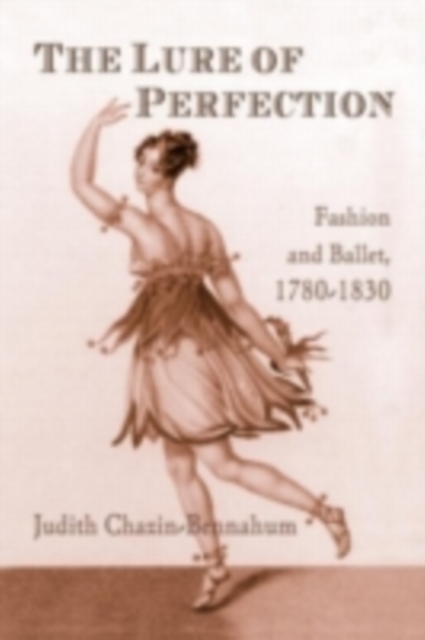
The Lure of Perfection
THE LURE OF PERFECTION: FASHION AND BALLET, 1780-1830 offers a unique look at how ballet influenced contemporary fashion and women's body image, and how street fashions in turn were reflected by the costumes worn by ballet dancers. Through years of research, the author has traced the interplay between fashion, social trends, and the development of dance. During the 18th century, women literally took up twice as much space as men; their billowing dresses ballooned out from their figures, sometimes a full 55 inches, to display costly jewelry and fine brocade work; similar costumes appeared on stage. But clothing also limited her movement; it literally disabled them, making the dances themselves little more than tableaux. Movement was further inhibited by high shoes and tight corsets; thus the image of the rigidly straight, long-lined dancer is as much a product of clothing as aesthetics. However, with changing times came new trends. An increased interest in natural movement and the common folk led to less-restrictive clothing. As viewers demanded more virtuosic dancers, women literally danced their way to freedom. THE LURE OF PERFECTION will interest students of dance and cultural history, and women's studies. It is a fascinating, well-researched look at the interplay of fashion, dance, and culture-still very much a part of our world today.
eBook

Ballerina : fashion's modern muse
\"Ballerina: Fashion's Modern Muse is a revelatory, irresistible treat for dance aficionados and fashionistas alike. Couturiers such as Balmain, Balenciaga, Chanel, Schiaparelli, Charles James, Dior, and Yves Saint Laurent designed ballet-inspired dresses and gowns, many featuring the boned bodices and voluminous tulle skirts of classical tutus. And ready-to-wear designers such as Claire McCardell found inspiration in ballet leotards and other practice clothing, creating knitted separates, bathing suits, and wrap dresses. Written by fashion and ballet experts, the book is illustrated with archival photography by such masters as Richard Avedon, Edward Steichen, Irving Penn, Man Ray, and Cecil Beaton, along with newly commissioned photography of contemporary ballerinas wearing ballet-influenced couture.\"--Amazon.com.
Book

Modernism on stage : the Ballets russes and the Parisian avant-garde
Modernism on Stage restores Serge Diaghilev's Ballets Russes to its central role in the Parisian art world of the 1910s and 1920s. During those years, the Ballets Russes' stage served as a dynamic forum for the interaction of artistic genres - dance, music and painting - in a mixed-media form inspired by Richard Wagner's Gesamtkunstwerk (total work of art). This interdisciplinary study combines a broad history of Diaghilev's troupe with close readings of four ballets designed by canonical modernist artists: Pablo Picasso, Sonia Delaunay, Henri Matisse, and Giorgio de Chirico. Experimental both in concept and form, these productions redefine our understanding of the interconnected worlds of the visual and performing arts, elite culture and mass entertainment in Paris between the two world wars. This volume traces the ways in which artists working with the Ballets Russes adapted painterly styles to the temporal, three-dimensional and corporeal medium of ballet. Analyzing interactions among sets, costumes, choreography, and musical accompaniment, the book establishes what the Ballets Russes' productions looked like and how audiences reacted to them. Juliet Bellow brings dance to bear upon modernist art history as more than a source of imagery or ornament: she spotlights a complex dialogue among art forms that did not preclude but rather enhanced artists' interrogation of the limits of medium.
eBook

Hymn to Apollo : the ancient world and the Ballets Russes
In the ancient world, dance was used to express important truths about the human condition, and this significance can still be seen today in representations of dancers in ancient art. Sculpture, relief carving, vase painting, and other visual media offer a glimpse of the function of dance in antiquity. In the modern era, the Ballets Russes, a Paris-based collective established by Sergei Diaghilev (1872-1929), revolutionized dance and revived European and American interest in ballet, in part by drawing on notions of dance from the ancient world. Ballets Russes choreographers, designers, and collaborators looked to ancient culture for subjects and themes, and for a notion of dance as an expressive art form integrated with ritual. Hymn to Apollo explores the role of dance in ancient art and culture and how artists of the Ballets Russes returned to the past as a source for modern expression. Thematic essays and lavish illustrations present a fresh perspective on ancient artifacts, and watercolors, illustrations, sketchbooks, photographs, costumes, and other archival Ballets Russes material show how artists turned to the ancient world to create something new.00Exhibition: Institute for the Study of the Ancient World, New York, USA (06.03-06.06.2019)0.
Book
The spirit of dance. The Boston Ballet production of \Sleeping Beauty\
Discussion of the Boston Ballet's production of The sleeping beauty, staged by Anna Marie Holmes.Parts of the discussion refer to Holmes's first staging of the ballet for the company in 1993. Holmes summarizes her own experience in the role of Princess Aurora, gives a synopsis of the ballet, and describes how her staging differs from Petipa's original. Philip Jordan and Amy Persky Gross describe the company's purchase and refurbishing of the scenery, costumes and wigs designed by David Walker for the Royal Ballet's 1977 production. Video excerpts recorded on location depict the Boston Ballet's costume shop ; its wig room (with Paula Kelly as guide), scenes of dancers in studio rehearsals, and performance footage.
Streaming Video

Natalia Goncharova
Natalia Goncharova (1881-1962) was the leading female artist of the Russian avant-garde and a key figure of the modernist era. She embraced with a complete openness a wide range of artistic styles, traditions and media. From sculpture and painting, printmaking and book illustration, to fashion and innovative cinema, she applied the spirit of \"everythingness\" (Toutisme) to her creative practice. After gaining fame for her early experiments with abstraction, she earned further international renown for her work for Diaghilev's Ballets Russes following her emigration to Paris in 1914. This publication will consider the entire spectrum of Goncharova's creative practice. An important focus will be her 1913 exhibition in Moscow at which she displayed over 350 paintings along with the numerous drawings, studies, prints and designs, demonstrating her prolific and prodigious talent. It will also address how Goncharova was unafraid to explore subjects in her art that were considered taboo for a gentile woman of pre-war Europe, such as the female nude, paganism and marginalised cultures. Exhibition: Tate Modern, London, UK (06.06.-08.09.2019).
Book

Madame Mariquita, Greek Dance, and French Ballet Modernism
This article seeks to correct prevailing narratives of French ballet modernism, which exclude one of its earliest and most significant choreographers, Madame Mariquita. Although long overshadowed by the Diaghilev enterprise and by dancers such as Isadora Duncan, Mariquita's experiments with creating dances that drew on ancient Greek imagery while ballet mistress at the Paris Opéra-Comique in the early 1900s were central to ballet culture in France at a pivotal moment in dance history. This article discusses Mariquita's nascent ballet modernism through her choreography of Greek dances as well as her engagement with early twentieth-century French dance and broader cultural trends.
Journal Article

New York City Ballet : choreography & couture
Celebrating the art forms of ballet and fashion, this beautiful book explores the creative collaborations between New York City Ballet and the top fashion designers of our age, including Virgil Abloh, Christopher John Rogers, Anna Sui, and Valentino, among others.
BOOK

Archiving Mexican folklórico costumes: applying a participatory approach and a post-custodial strategy
Mexican folklórico dance (also known as Mexican folkloric ballet) is a dance form and tradition that is rooted in the cultural diversity of Mexico and has a prominent presence in the USA. The dances, music, and costumes are all embedded with the historical and socio-cultural traditions of the communities from where they originate and are therefore crucial aspects of Mexican folklórico that should be included in the archives. Current holdings in Arizona include records on Mexican folklórico dance, but these are limited to audio recordings, visual materials, and written materials, nothing on costumes. As such, this paper argues for their inclusion in the archives by applying a participatory approach and a post-custodial strategy, which will accomplish the following: (1) By involving the community in the archiving process, more accurate records of the costumes can be created; and (2) By utilizing a post-custodial strategy, the archives collaborates with the records creators/owners (e.g., costume designers, dancers, or directors) so that the records are still able to be processed, with the original record returning to the creator/owner, while a copy remains in the archives so that others can access it. This process will ensure that the costumes are not de-contextualized by being completely removed from their communities and that they remain with those individuals who have years of experience taking care of them and know how to keep them in presentable conditions.
Journal Article