
Catalogue Search | MBRL


Are you sure you want to remove the book from the shelf?

{{itemTitle}}
67,051
result(s) for
"Ballet dancing."
Sort by:

Ballet bullies
Marissa has always loved dancing, but lately, she feels clumsy and awkward when she dances, and she feels bigger and taller than the other girls. She doesn't even bother trying out for the Rose Fairy ballet, but someone else thinks Marissa has what it takes to play the part.
Book

BALLET: From the First Plié to Mastery
First published in 2002. Routledge is an imprint of Taylor & Francis, an informa company.
Anna Paskevska is Chair of the Dance Department at the Chicago Academy for Arts. She previously served on the faculties of Indiana University and the University of Louisville, Kentucky. She is the author of Both Sides of the Mirror: The Science and Art of Ballet.
eBook

Little Lola saves the show
\"While exploring, Lola the cat comes across a stage with a ballet performance about to begin. Lola puts on a costume and joins right in, dancing beautiful pirouettes, arabesques, and pas de chats (the step of the cat). When she accidentally stumbles and trips, however, it is up to Lola to save the show\"-- Provided by publisher.
Book
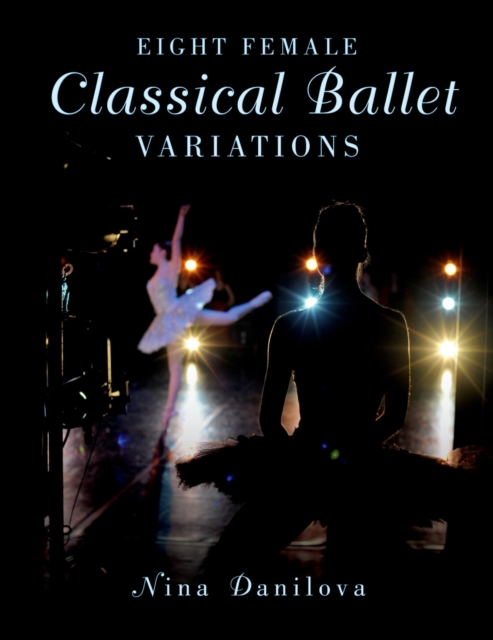
Eight Female Classical Ballet Variations
From the graceful flutter of Princess Florine at Sleeping Beauty's wedding to the playful jetées in the first act of Giselle, the variation - or short solo work - is one of the key elements of classical ballet. Eight Female Classical Ballet Variations lays out eight of the most important variations in the ballerina's repertoire, demonstrating how to perform them with excellent technique and consummate artistry.
eBook

Nina, Nina, star ballerina
Nina creates a problem for herself when she tells her friends that she will be a star in the upcoming ballet performance and they misunderstand her.
Book

Prevalence and profile of musculoskeletal injuries in ballet dancers: A systematic review and meta-analysis
To determine the prevalence of musculoskeletal disorders and anatomical regions which are most frequently injured in ballet dancers.
Published (AMED, CiNAHL, EMBASE, SPORTDiscus, psycINFO, MEDLINE, the Cochrane Library) and grey literature databases (OpenGrey, the WHO International Clinical Trials Registry Platform, Current Controlled Trials and the UK National Research Register Archive) were searched from their inception to 25th May 2015 for papers presenting data on injury prevalence in ballet dancers. Two reviewers independently identified all eligible papers, data extracted and critically appraised studies. Study appraisal was conducted using the CASP appraisal tool. Pooled prevalence data with 95% confidence intervals were estimated to determine period prevalence of musculoskeletal disorders and anatomical regions affected.
Nineteen studies were eligible, reporting 7332 injuries in 2617 ballet dancers. The evidence was moderate in quality. Period prevalence of musculoskeletal injury was 280% (95% CI: 217–343%). The most prevalent musculoskeletal disorders included: hamstring strain (51%), ankle tendinopathy (19%) and generalized low back pain (14%). No papers explored musculoskeletal disorders in retired ballet dancers.
Whilst we have identified which regions and what musculoskeletal disorders are commonly seen ballet dancers. The long-term injury impact of musculoskeletal disorders in retired ballet dancers remains unknown.
•Ballet dancers are highly trained athletes who are at significant risk of musculoskeletal injury.•The most frequent anatomical regions injured by ballet dancers are: ankle and foot, lumbar and cervical spine.•No data has reported on the prevalence of chronic musculoskeletal disorders in retired ballet dancers.
Journal Article

I want to be a ballerina
Mia's big sister teaches her that there is more to being a ballerina than just putting on the right clothes.
BOOK

Biomechanical Risks Associated with Foot and Ankle Injuries in Ballet Dancers: A Systematic Review
Professional ballet dancers can be classified as dance artists and sports performers. This systematic review aims to consider the biomechanical risk factors for foot and ankle injuries in ballet dancers, as this could potentially reduce the impact that ‘cost of injury’ may have on ballet companies. An additional outcome was to examine the effects of injury on the career of ballet dancers. This study searched articles in four electronic databases for information in peer-reviewed journals. The included articles examined the relationships between biomechanical factors and the relationship between ballet shoes and foot performance. There were 9 articles included in this review. Among these articles, two focused on the peak force of the foot using two types of pointe shoes, three focused on overuse injuries of the ballet dancer’s foot, one article focused on the loading of the foot of a dancer, and three articles focused on the function and biomechanics of the foot in dancers. This review also found that the pointe shoe condition was the most important factor contributing to a foot injury; overuse injury related to high-intensity training and affected both the ankle and the foot; and metatarsophalangeal joint injury related to the function and structure of the foot. Finally, strengthening the lower extremity muscle is also a recommendation to improve muscle coordination and reduce injuries.
Journal Article

Brontorina
Despite her size and not having the proper footwear, a determined dinosaur pursues her dream of becoming a ballerina.
Book

Effectiveness of physiotherapy interventions for injury in ballet dancers: A systematic review
The unique repetitive nature of ballet dancing, which often involves transgressing endurance limits of anatomical structures, makes dancers prone to injury. The following systematic review aims to assess the effectiveness of physiotherapy interventions in the treatment of injuries in ballet dancers. The review was performed in line with the PRISMA statement on preferred reporting items for systematic reviews and meta-analyses. Six electronic databases (PubMed, Ovid Embase, Cochrane, Medline, PEDro, Google Scholar) were queried. The study populations comprised active ballet dancers and/or ballet school attendees with acute and chronic injuries and those with persistent pain. There were no restrictions regarding age, sex, ethnicity or nationality. The Modified McMaster Critical Review Form for quantitative studies was used to assess the methodological quality of the studies reviewed in accordance with the relevant guidelines. Out of the total of 687 articles subjected to the review, 10 met the inclusion criteria. Diverse physiotherapeutic interventions were described and effectiveness was assessed using different parameters and measurements. Overall, the results indicate that physiotherapy interventions in ballet dancers exert a positive effect on a number of indices, including pain, ROM and functional status. Due to the small amount of evidence confirming the effectiveness of physiotherapeutic interventions in ballet dancers after injuries and methodological uncertainties, it is recommended to improve the quality of prospective studies.
Journal Article