
Catalogue Search | MBRL


Are you sure you want to remove the book from the shelf?

{{itemTitle}}
279
result(s) for
"Ballets Fiction."
Sort by:

The nutcracker
After rescuing her Christmas nutcracker from an army of angry toys, Marie and her brother are rewarded by the nutcracker, now a prince, with a fantastic nighttime journey to a realm of dancing fairies, beautiful palaces, and wonderful things to eat.
BOOK
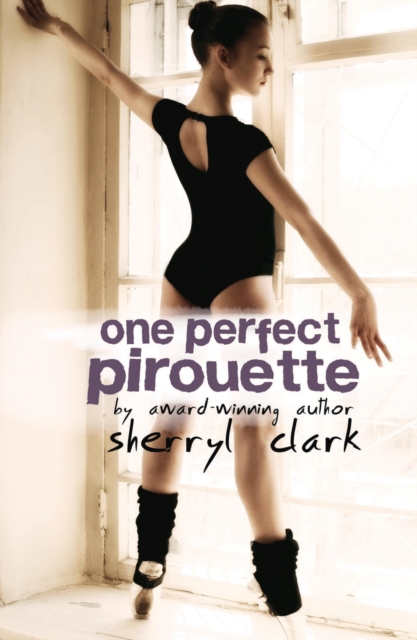
One Perfect Pirouette
From popular and award-winning author Sherryl Clark comes a story about the pressure, heartache and determination that it takes to live your dreams. Attending the National Ballet School is every aspiring dancer's dream. It's been Brynna's for as long as she can remember. When her parents move her family to Melbourne so Brynna can attend a top ballet school, it looks like her dream is about to become a reality. But why does she feel so awful about the move? Her brother Tam is angrier than she has ever seen him and her mother is working hard to keep the family afloat. Will every step towards success come at a price? For Brynna to realise her heart's desire, something has to give. But will it be her family?
eBook

Swan lake
This tale of a prince, a beautiful swan princess and an evil sorcerer begins in a woodland clearing far, far away. It is Prince Siegfried's 21st birthday. He is playing games with his friends when his mother, the Queen, arrives to tell him he needs to stop having fun and start looking after the kingdom. Prince Siegfried dreams of running away. He follows an enchanting flock of swans to a clearing by a lake, where four of the little cygnets begin to dance. The most beautiful swan transforms into the Princess Odette, who tells him that she has been cursed to turn into a swan by day and return to her natural form at night by the evil sorcerer Von Rothbart. As the prince and Odette dance, they begin to fall in love.
Book
Polina
Rigorously trained from an early age by a perfectionist instructor, Polina is a promising classical ballet dancer. She is just about to join the prestigious Bolshoi Ballet when she discovers contemporary dance, a revelation that throws everything into question on a profound level.
Streaming Video

Nutcracker night
\"The ballet The Nutcracker and New York City's David H. Koch Theater come to life in this onomatopoeic representation of a little girl's experience at the ballet.\"--From jacket flap.
Book

Whole New Worlds of Art
Judging by its absence in several studies of Lost Generation literature, the novel appears a lesser contribution-or no contribution at all-to the body of fiction about Americans in interwar Europe, especially the environment of Paris.2 Neglect of Save Me the Waltz, particularly alongside its roman a clef counterparts The Sun Also Rises and Tender Is the Night, affirms Ernest Hemingway and F. Scott Fitzgerald as the preeminent storytellers of American lives in post-World War I Europe, with the fiction of Djuna Barnes and Kay Boyle more recently recognized for this significance. [...]the relationship between Fitzgerald's experience with ballet and the novel is far richer and more historically significant. Besides being an epicenter of experimentation in literature, visual art, music, and fashion in the early twentieth century,3 Paris was also central to evolution in the world of dance, and the Ballets Russes was the most influential dance movement in the first half of the twentieth century. [...]recent scholarship asserting the connections between modernist studies and dance provides compelling reason to revisit this novel. According to Cline, Fitzgerald, who studied ballet in her formative years in Montgomery, began lessons with Lubov Egorova (also known as Princess Troubetskoy), a retired balle- rina of the Ballets Russes, in Paris in the fall of 1925 (178-79).
Journal Article


Swan Lake
A young prince falls in love with an enchanted maiden, condemned to live as a swan during the daylight hours.
Book

The Representation of Female Characters in the Music of Russian Ballet
The author of the article examines aspects of female characters in the ballets Sleeping Beauty and The Nutcracker by Tchaikovsky, Romeo and Juliet, and Cinderella by Prokofiev, and Carmen Suite, Anna Karenina, and The Lady with the Lapdog by Shchedrin. The behavioural models of the heroines are considered from the perspective of the search for happiness, which is associated with finding love. The abovementioned works are from different periods in the history of Russian ballet, and they allow the evolution of female characters to be traced from the late 19th century to the 1980s. The transition from the typical behaviour of fairy-tale heroines to the actions of individual female characters reflects not so much a plurality of tones, but rather a change in the social status of women. Autorica članka ispituje aspekte ženskih likova u baletima Trnoružica i Orašar P. I. Čajkovskog, Romeo i Julija i Pepeljuga S. Prokofjeva te Carmen Suita, Ana Karenjina i Dama s psićem R. K. Ščedrina. Modele ponašanja ovih heroína razmatra iz Perspektive potrage za srećom koja je povezana s traženjem ljubavi. Navedena djela potječu iz različitih razdoblja povijesti ruskog baleta i omogućuju praćenje razvoja ženskih likova od kraja 19. stoljeća do osamdesetih godina 20. stoljeća. Napuštanje tipičnog ponašanja bajkovitih heroina i prijelaz na individualno djelovanje ženskih likova ne odražava toliko različitost nijansi, koliko promjenu položaja žena u društvu.
Journal Article