
Catalogue Search | MBRL


Are you sure you want to remove the book from the shelf?

{{itemTitle}}
960
result(s) for
"Bamboo construction."
Sort by:


Bamboo as a Sustainable Building Material for Innovative, Low-Cost Housing Construction
Bamboo is commonly used as a construction material in low-cost housing projects located in tropical and subtropical countries. This practice is especially prevalent in rural areas where bamboo grows naturally and families have experience working with it. Bamboo can be a sustainable building material for homes, even in cases where houses need to be resistant to earthquakes or storms. The traditional bahareque technology was enhanced in Costa Rica and Colombia to make it earthquake resistant. After the year 2000, this technology was transferred to several other countries in Latin America and Asia, gaining recognition as an innovative building technique. Many successful examples of bamboo housing constructions can be found in various countries, where modern architectural solutions are combined with innovative bamboo methods. Local communities can play a crucial role in bamboo processing, allowing residents to actively participate in the construction of their homes under technical supervision. This emphasizes the social sustainability aspect associated with bamboo. Ensuring the durability of bamboo housing constructions is paramount for the longevity of the houses, highlighting the need for technical assistance for self-builders and resident groups. With proper organization, bamboo housing has the potential to become part of the social production of housing.
Journal Article

Bamboo contemporary : green houses around the globe
\"Bamboo-one of the most sustainable building materials on the planet-is deployed in ingenious ways throughout this globetrotting tour of residential designs\"-- Provided by publisher.
BOOK


Building with bamboo : design and technology of a sustainable architecture
The applications of bamboo in architecture have become significantly wider and diversified, so that today, even structures with large spans - such as bridges - are built with this renewable material. This manual provides a practical, systematic overview of the numerous potential applications and processing methods.
Book

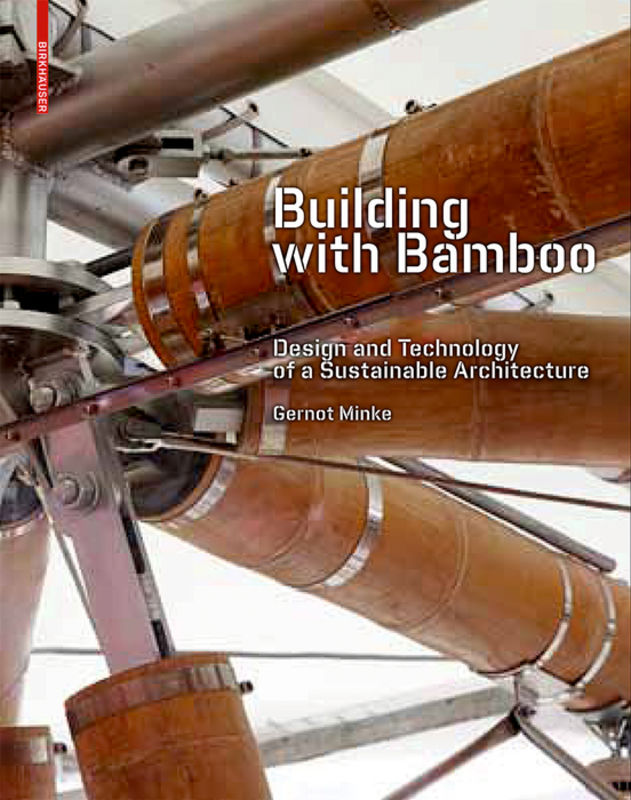
Building with Bamboo
Traditionally a building material of hot climate zones in Asia and Latin America, bamboo is increasingly discovered by architects of the Northern hemisphere as well.It is lightweight, highly elastic and ductile, and in addition offers qualities especially in demand in an era of limited resources, renewability and abundant availability.
eBook
Assessment of the Compression Properties of Different Giant Bamboo Species for Sustainable Construction
In this study, compression mechanical properties of five giant bamboo species from different continents were investigated based on the ISO 22157:2019 standard. The selected species have been used for rural construction for centuries. The chosen bamboo species for this study, which are considered strong candidates to be used in modern construction as well, are as follows: Phyllostachys edulis (Moso), Guadua angustifolia (Guadua), Gigantochloa apus (Tali), Gigantochloa atroviolacea (Black Java), and Phyllostachys bambusoides (Madake). The excellent properties of bamboo species in tension are well established. Hence, this article principally focuses on the behaviour of selected giant species in compression to be used as structural members. In this study, the mentioned bamboo species were gathered from different continents of origin to be critically assessed, analysed, and compared with one another to better understand their compression behaviour as structural columns. The compression properties of these bamboo species have not been evaluated and compared with one another in an academic study so far. The results show that all tested species were able to provide mean compressive strengths greater than 50 MPa, which makes them highly promising construction material candidates for modern construction. The Guadua test series was able to provide outstanding consistency in the presented compression behaviour and strengths among all the tested species. The specimens with the maximum sustained load belonged to the Tali species. The greatest average failure load belonged to the Moso species. The greatest mean compressive strength measured was 88.9 MPa, reported for Madake species with smaller diameters compared to the other test series. Among the specimens with larger diameters, the greatest mean ultimate strengths were for Moso, Guadua, and Tali species with 69.9 MPa, 60.7 MPa, and 59.1 MPa compressive strengths, respectively.
Journal Article

Viability of whole-culm bamboo construction in South Africa - a preliminary assessment
We describe literature-based research on the viability of whole-culm bamboo as a construction technology for South Africa. South Africa has one bamboo species considered suitable for construction, namely Bambusa balcooa, found in various par ts of the country. Quantitative production figures are not currently available; however, local repor ts indicate that South Africa can expand its bamboo growth industry to meet any possible expected demand. Although the South African bamboo plant has not yet been evaluated in terms of its material proper ties, engineering design approaches and material proper ties from the literature indicate that this species is a viable construction material. The limitations for bamboo design and construction are not unique to South Africa but are common to countries involved in bamboo construction. Their experience in overcoming these limitations can be transferred to the use of bamboo in South Africa, making bamboo construction a potentially viable construction technology in South Africa.
Journal Article
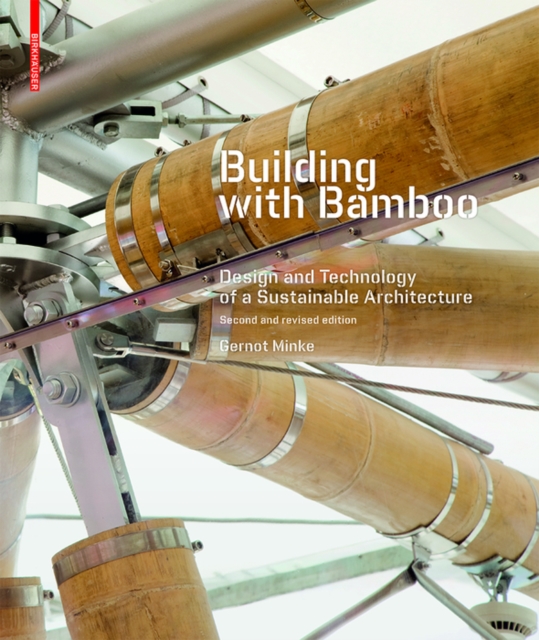
Building With Bamboo: Design and Technology of a Sustainable Architecturesecond and Revised Edition
The applications of bamboo in architecture have become significantly wider and diversified, so that today, even structures with large spans - such as bridges - are built with this renewable material. The new and revised second edition of this manual provides a practical, systematic overview of the numerous potential applications and processing methods. The presentation of groundbreaking bamboo buildings has been updated with more recent projects.
eBook