
Catalogue Search | MBRL


Are you sure you want to remove the book from the shelf?

{{itemTitle}}
1,203
result(s) for
"Bank failures History."
Sort by:

Panic in the Loop
Relying on a broad array of records used together for the first time, Panic in the Loop reveals widespread fraud and insider abuse by bankers—and the complicity of corrupt politicians—that caused the Chicago banking debacle of 1932. It provides a fresh interpretation of the role played by bankers who turned the nation’s financial crisis of the early 1930s into the decade-long Great Depression. It also calls for the abolition of secrecy that still permeates the bank regulatory system, which would have prevented the Enron fiasco and the financial meltdown of 2008. This book focuses on the recurrent failures of the financial system—the savings and loan crisis of the 1980s, the Enron debacle of the early 2000s, and finally the financial collapse of 2008. Because of regulatory secrecy, knowing what happened in Chicago in 1932 is critical to understanding the glaring problems in the regulation of American finance, in particular the lack of transparency, the abuse of financial institutions by insiders, and the capture of public institutions by insiders going through the revolving door between the private and public sectors. Eight decades later little has changed. The regulatory failures of the 1930s—especially the pervasive system of secrecy that allowed the fraud and insider abuse to flourish—were repeated during the collapse of 2008. Transparency would strike at the alliance between the executives of financial institutions and public officials, who caused the worst economic upheaval since the Great Depression.
eBook

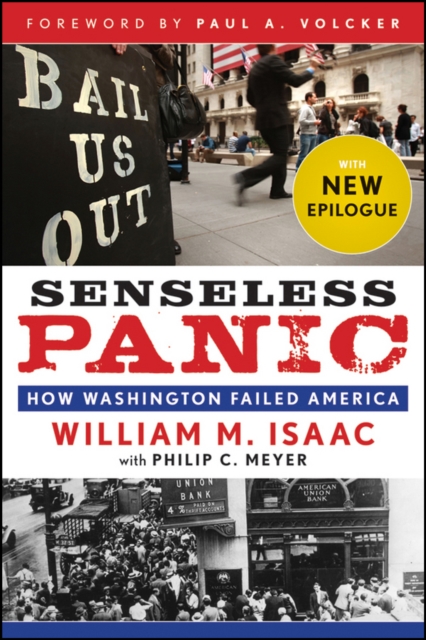
Senseless panic
The truth about the 2008 economic crisis from a Washington insider The 1980s opened with the prime interest rate at an astonishing 21.5 percent, leading to a severe recession with unemployment reaching nearly 11 percent.
eBook


Unsettled account
Commercial banks are among the oldest and most familiar financial institutions. When they work well, we hardly notice; when they do not, we rail against them. What are the historical forces that have shaped the modern banking system? In Unsettled Account, Richard Grossman takes the first truly comparative look at the development of commercial banking systems over the past two centuries in Western Europe, the United States, Canada, Japan, and Australia. Grossman focuses on four major elements that have contributed to banking evolution: crises, bailouts, mergers, and regulations. He explores where banking crises come from and why certain banking systems are more resistant to crises than others, how governments and financial systems respond to crises, why merger movements suddenly take off, and what motivates governments to regulate banks.
eBook



Pierde la banca
Bankia y el reciente rescate a España han puesto al sector bancario en boca de todos, y no precisamente para bien. Desde el profundo conocimiento del negocio, Miguel Ángel González va más allá de estos asuntos o de los ya muy conocidos errores asociados al sector inmobiliario, enumerando los fallos de gestión en los que han incurrido buena parte de nuestras entidades financieras. Pierde la banca pone de manifiesto que sus errores nacen de causas tan variadas y decisivas como una visión cortoplacista, el desenfoque del negocio, el desplazamiento del cliente como centro del mismo, los objetivos desmedidos e impuestos de forma indiscriminada a las sucursales, con las consecuencias negativas que todo ello conlleva para el usuario. Trata además de la intromisión de los políticos en las cajas de ahorros y su resultado: la ruina total o el riesgo de quiebra a la que las han llevado, o su salida airosa y bien pagada, lo que sin duda justifica la pérdida de imagen del sector. El libro deja claro, no obstante, que no todo el sector merece estar en entredicho. Muchos bancos y algunas cajas han hecho bien su trabajo.
eBook