
Catalogue Search | MBRL


Are you sure you want to remove the book from the shelf?

{{itemTitle}}
119
result(s) for
"Banks and banking History 21st century."
Sort by:

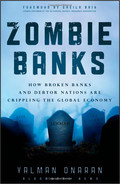
Zombie banks : how broken banks and debtor nations are crippling the global economy
An in-depth look at the problems surrounding zombie banks and their dangerous effect on the global economy \"The title is worthy of a B movie, but it's also apt.Bloomberg News reporter Yalman Onaran, supported by former U.S.Federal Deposit Insurance Corp.
eBook

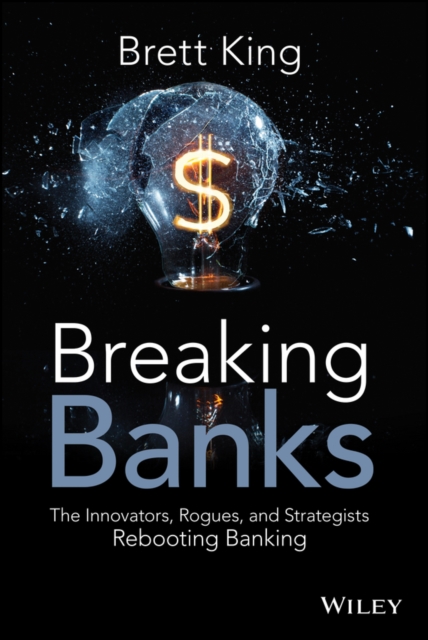
Breaking Banks
Insights from the strategists at the heart of the banking revolution Breaking Banks: The Innovators, Rogues, and Strategists Rebooting Banking provides a true insider's perspective on the massive upheaval facing the banking industry today.
eBook


Zombie Banks
An in-depth look at the problems surrounding zombie banks and their dangerous effect on the global economy \"The title is worthy of a B movie, but it's also apt. Bloomberg News reporter Yalman Onaran, supported by former U.S. Federal Deposit Insurance Corp. chief Sheila Bair - who provides a foreword and numerous interviews - urge that insolvent banks both small and too big to fail be allowed to do precisely that. Reading bank balance sheets is not everyone's idea of a good time. But Mr. Onaran, with support from Ms. Bair, does the chore and explains what it means. Mr. Onaran shows that the p
Book


Tumultuous times : central banking in an era of crisis
\"The book gathers the personal reflections about what the author learned about central bank and monetary policy during the tumultuous five years (2008-2013) during which he served as governor of the Bank of Japan. Many books have been written about the global financial crisis by academics and influential policymakers, including central bank governors. This book focuses on the experience of the Japanese, which is deeply important. The issues covered range from the financial bubble, the financial crisis, deflation, the rapid aging of the population, and the experiences of Japan on the frontier of unconventional monetary policy (QE and forward guidance). But just focusing on analytics of monetary policy is too narrow. Various activities of the central bank-financial supervision, payment and settlement services, and crisis management in the event of severe natural disaster, such as the earthquake hitting Japan in 2011-are covered. The political economy aspect and governance issue of central banks-the role of unelected officials in a democratic society-are also intensively discussed.\"
eBook

Current issues in finance, economy and politics : theoretical and empirical finance and economic researches
\"The book consists of 21 parts that discuss the developments in economy, finance and politics, theoretically and empirically. There are four main sections: Economics, Banking Sector, Stock Exchange and Financial Markets. Economics sections have six sub sections as monetary policy, economic growth, current deficit, international services trade, Eurasion economic union and public share. The second part of the book consists of six sub sections about the banking sector that is fundamental to the economic structure and the main actor of the financial sector. This main sector discusses the efficiency and performance of the banking sector and also shadow banking. In addition, the banking sector is analysed in the Islamic banking area. Furthermore, the interaction of the banking sector and technological developments are emphasized in a separate section in this part\"-- Provided by publisher.
Book

Unexpected Revolutionaries
In Unexpected
Revolutionaries , Manuela Moschella
investigates the institutional transformation of central banks from
the 1970s to the present.
Central banks are typically regarded as conservative,
politically neutral institutions that uphold conventional
macroeconomic wisdom. Yet in the wake of the 2008 global financial
crisis and the 2020 COVID-19 crisis, central banks have upended
observer expectations by implementing largely unknown and
unconventional monetary policies. Far from abiding by
well-established policy playbooks, central banks now engage in
practices such as providing liquidity support for a wide range of
financial institutions and quantitative easing. They have even
stretched the remit of monetary policy into issues such as
inequality and climate change.
Moschella argues that the political nature of central banks lies
at the heart of these transformations. While formally independent,
central banks need political support to justify their policies and
powers, and to obtain it, they carefully manage their reputation
among their audienceselected officials, market actors, and
citizens. Challenged by reputational threats brought about by
twenty-first-century recessionary and deflationary forces, central
banks such as the Federal Reserve System and the European Central
Bank strategically deviated from orthodox monetary policies to
preempt or manage political backlash and to regain public trust.
Central banks thus evolved into a new role only in coordination
with fiscal authorities and on the back of public contestation.
Eye-opening and insightful, Unexpected Revolutionaries
is necessary reading for discussions on the future of the
neoliberal macroeconomic regime, the democratic oversight of
monetary policymaking, and the role that central banks canor
cannotplay in our domestic economies.
eBook