
Catalogue Search | MBRL


Are you sure you want to remove the book from the shelf?

{{itemTitle}}
10
result(s) for
"Barnpsykoterapi."
Sort by:

What works for whom? : a critical review of treatments for children and adolescents
\"The standard reference in the field, this acclaimed work synthesizes findings from hundreds of carefully selected studies of mental health treatments for children and adolescents. Chapters on frequently encountered clinical problems systematically review the available data, identify gaps in what is known, and spell out recommendations for evidence-based practice. The authors draw on extensive clinical experience as well as research expertise. Showcasing the most effective psychosocial and pharmacological interventions for young patients, they also address challenges in translating research into real-world clinical practice. New to This Edition *Incorporates over a decade of research advances and evolving models of evidence-based care. *New chapter topic: child maltreatment. *Separate chapters on self-injurious behavior, eating disorders, and substance use disorders (previously covered in a single chapter on self-harming disorders). *Expanded chapters on depression, anxiety, and conduct disorder. *Includes reviews of the expanding range of manualized psychosocial \"treatment packages\" for children.\"-- Provided by publisher.
Book

Minding the Child
What is 'mentalization'? How can this concept be applied to clinical work with children, young people and families? What will help therapists working with children and families to 'keep the mind in mind'? Why does it matter if a parent can 'see themselves from the outside, and their child from the inside'?
Minding the Child considers the implications of the concept of mentalization for a range of therapeutic interventions with children and families. Mentalization, and the empirical research which has supported it, now plays a significant role in a range of psychotherapies for adults. In this book we see how these rich ideas about the development of the self and interpersonal relatedness can help to foster the emotional well-being of children and young people in clinical practice and a range of other settings.
With contributions from a range of international experts, the three main sections of the book explore:
the concept of mentalization from a theoretical and research perspective
the value of mentalization-based interventions within child mental health services
the application of mentalizing ideas to work in community settings.
Minding the Child will be of particular interest to clinicians and those working therapeutically with children and families, but it will also be of interest to academics and students interested in child and adolescent mental health, developmental psychology and the study of social cognition.
eBook
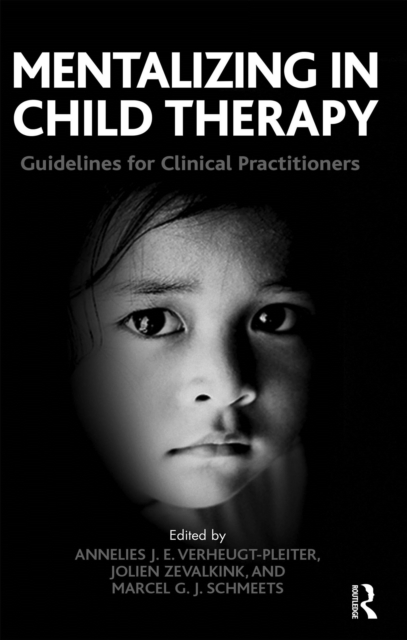
Mentalizing in Child Therapy
Mentalization-based child therapy, previously known as developmental therapy, is the latest branch on the psychoanalytic tree of knowledge. It comprises a number of techniques that address deficiencies in specific areas of psychological development. It aims to treat children whose development has come to a standstill. A combination of data from psychoanalysis, infant research, attachment research, and neurobiology was of decisive significance in reaching this point. It is becoming clear that neurobiological processes can be understood very well on the basis of psychoanalytic frameworks. These new insights into peoples mental functioning also serve to foster collaboration, resulting in an integration of the more relationship-oriented and the more competence oriented treatments. This book aims to fill a growing need in mental health care for children and young people to recieve an integrated treatment.
eBook

Evidence-Based CBT for Anxiety and Depression in Children and Adolescents
Evidence-Based CBT for Anxiety and Depression in Children and Adolescents \"This should be on the bookshelf of everyone treating anxious and depressed children and adolescents. A cornucopia of theory and clinical good sense alike. I will be making sure that my trainees read it cover to cover.\" Dr Samantha Cartwright-Hatton, Senior Clinical Research Fellow in Psychology, University of Sussex This is the first book to offer an explicitly competencies-based approach to the cognitive behavioral treatment of anxiety and depression in children and adolescents. Within it, an outstanding and influential set of experts in the field describe a comprehensive model of therapist competencies required for empirically supported cognitive behavioral treatment. They explore each of these competencies in great detail, and highlight effective ways of training them. As a result, the book not only supports the training, development, and assessment of competent clinicians who are implementing CBT, it is also invaluable for clinicians who wish to gain an understanding of the competencies they need to acquire or improve, and offers guidelines for how to achieve these, providing a benchmark against which they can assess themselves. Evidence-Based CBT for Anxiety and Depression in Children and Adolescents works to improve the quality of therapists working in this area, and, as a result, the quality of treatment that many young people receive.
eBook

Assessing Change in Psychoanalytic Psychotherapy of Children and Adolescents
This book is an important contribution to services for child and adolescent mental health. It draws together work from across Europe by leading clinical researchers who have been looking into the effectiveness of psychoanalytic psychotherapy for children and adolescents.
eBook
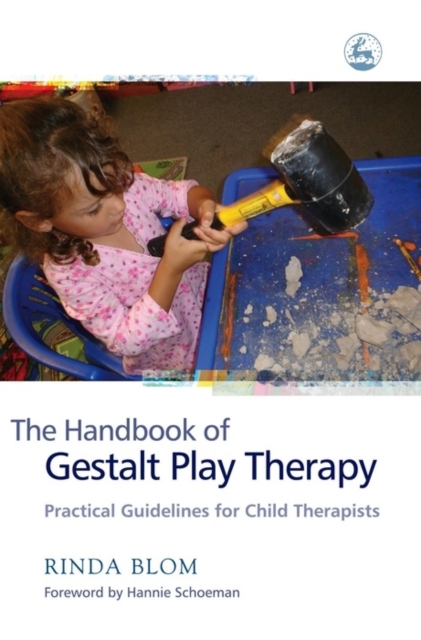
The Handbook of Gestalt Play Therapy
This book sets out a clear theoretical framework for Gestalt Play Therapy, giving examples of questions the therapists might ask the child at certain stages, and offering the whole gamut of play therapy and travelling through the therapeutic journey.' - Dramatherapy This book is an introduction to gestalt play therapy a technique which combines the principles of gestalt theory with play techniques, so that children are able to use play to address their needs and problems. Research has shown that this approach can be applied successfully in children with different types of emotional problems in order to improve their self-support and self-esteem. The Handbook of Gestalt Play Therapy provides the reader with an explanation of gestalt theory, a practical explanation of the gestalt play therapy model and also a wide range of play techniques that can be applied during each phase of the therapy process. It also features case studies throughout which illustrate how the techniques work in practice.
eBook
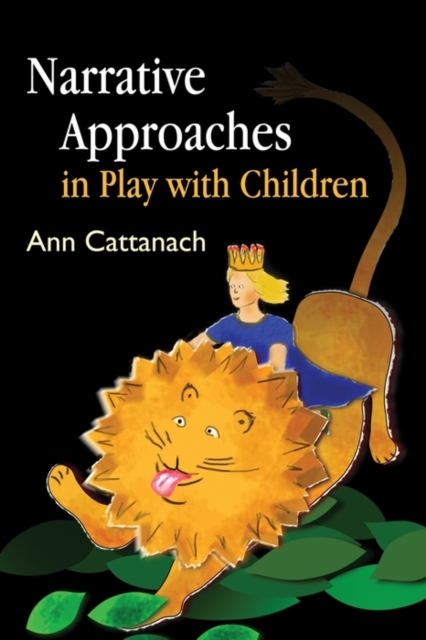
Narrative approaches in play with children
Narrative play is a way of communicating with children using imaginative stories and narratives to share and make sense of life events. This book describes using narrative play therapeutically with children who have lived in multiple families, children who have problems with social understanding and children who have learning difficulties. Ann Cattanach explains how children's stories and narratives, whether they are about real or imagined events, can be interpreted as indicators of their experiences, their ideas, and a dimension of who they are. She demonstrates this with examples of children's stories from her clinical experience, and provides narrative play techniques and sample scripts both for therapists and for parents whose circumstances require a therapeutic parenting approach. This book is essential reading for play therapists, social workers and other professionals working with children, as well as parents and carers of children who are experiencing social and/or learning difficulties.
eBook

Acceptance and Mindfulness Treatments for Children and Adolescents
The essays in Acceptance and Mindfulness Treatments for Children and Adolescents--which are edited by two luminaries in the field of third-wave behavior therapy--offer a much-needed adaptation of these revolutionary techniques for young people and their families, providing a wealth of new approaches to therapists, counselors, and other helping professionals.
eBook
Attachment theory in clinical work with children : bridging the gap between research and practice
Attachment research has tremendous potential for helping clinicians understand what happens when parent-child bonds are disrupted, and what can be done to help. Yet there remains a large gap between theory and practice in this area. This book reviews what is known about attachment and translates it into practical guidelines for therapeutic work. Leading scientist-practitioners present innovative strategies for assessing and intervening in parent-child relationship problems; helping young children recover from maltreatment or trauma; and promoting healthy development in adoptive and foster families. Detailed case material in every chapter illustrates the applications of research-based concepts and tools in real-world clinical practice.
eBook

Innovative Interventions in Child and Adolescent Mental Health
Innovative Interventions in Child and Adolescent Mental Health is a unique composite of the literature on various innovative interventions for children and adolescents, and provides a developmental and neurobiological rationale for utilizing innovative interventions with this population. Based on the latest research, this book emphasizes that children and adolescents need more than just talk therapy. These innovative interventions can be applied in a variety of practice settings including schools, juvenile justice, community-based counseling centers, and residential treatment. This book bridges the gap between theory and practice, and provides a historical, theoretical, and research-based rationale, as well as a helpful case study, for each type of intervention being discussed.
Christine Lynn Norton , Ph.D., LCSW, Assistant Professor of Social Work at Texas State University-San Marcos, earned her Ph.D. in Clinical Social Work from Loyola University Chicago in 2007. She has over fifteen years experience working with high-risk youth in a variety of settings including therapeutic wilderness programs, juvenile justice, schools, and mentoring organizations, and she is passionate about researching and utilizing innovative interventions with children and adolescents in order to promote healthy psychosocial and neurological functioning.
\"In this groundbreaking book, Dr. Christine Norton and her team of esteemed contributing authors provide the reader with a range of innovative interventions in child and adolescent mental health. This book is a must-have for those students and clinicians that desire to reach beyond traditional talk therapy.\"—David Springer, Social Work, University of Texas at Austin
\"Norton and her colleagues identify cutting-edge interventions designed to include young people in structured activities involving art, nature, music, animals, bibliotherapy, and meditation. This book is an important resource for practitioners working in child and adolescent mental health settings.\"—Jeff Jenson, Social Work, University of Denver
\"Dr. Norton's \" Innovative Interventions\" is a sorely needed and well done addition to the treatment literature. While this book focuses on younger clients, I suspect these modalities of healing would yield fruit with clients of any age.\"—Louis Cozolino, Psychology, Pepperdine University
1. Reinventing the Wheel: From Talk Therapy to Innovative Interventions 2. Art Therapy with Children and Adolescents: Inspiring Creativity and Growth 3. Wilderness Therapy: Creating a Context of Hope 4. Music Therapy with High Risk Youth: An International Perspective 5. Animal-assisted Approaches to Child and Adolescent Mental Health 6: Bibliotherapy as an Intervention Approach for Children and Adolescents with Emotional Disabilities 7. Meditation with Children and Adolescents
eBook