
Catalogue Search | MBRL


Are you sure you want to remove the book from the shelf?

{{itemTitle}}
29,796
result(s) for
"Baron"
Sort by:


Byron's War
Roderick Beaton re-examines Lord Byron's life and writing through the long trajectory of his relationship with Greece. Beginning with the poet's youthful travels in 1809–1811, Beaton traces his years of fame in London and self-imposed exile in Italy, that culminated in the decision to devote himself to the cause of Greek independence. Then comes Byron's dramatic self-transformation, while in Cephalonia, from Romantic rebel to 'new statesman', subordinating himself for the first time to a defined, political cause, in order to begin laying the foundations, during his 'hundred days' at Missolonghi, for a new kind of polity in Europe – that of the nation-state as we know it today. Byron's War draws extensively on Greek historical sources and other unpublished documents to tell an individual story that also offers a new understanding of the significance that Greece had for Byron, and of Byron's contribution to the origin of the present-day Greek state.
eBook
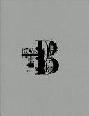
Fabien Baron : works 1983-2019
Part design manual, part manifesto, the first career retrospective of Fabien Baron, whom Vanity Fair called 'the most sought-after creative director in the world, ' is an immersive visual survey of more than 30 years of award-winning art direction, design, and image-making. Using examples taken from across the entire range of his work - including typography, packaging, product, furniture, and interior design - Baron's book communicates his aesthetic logic with clarity and style. Replete with text by acclaimed author Adam Gopnik and a foreword by worldfamous super model Kate Moss, this is an intimate insider's visit with a true fashion, photography, and design visionary.
Book

Plagiarism and Literary Property in the Romantic Period
In a series of articles published inTait's Magazinein 1834, Thomas DeQuincey catalogued four potential instances of plagiarism in the work of his friend and literary competitor Samuel Taylor Coleridge. DeQuincey's charges and the controversy they ignited have shaped readers' responses to the work of such writers as Coleridge, Lord Byron, William Wordsworth, and John Clare ever since. But what did plagiarism mean some two hundred years ago in Britain? What was at stake when early nineteenth-century authors levied such charges against each other? How would matters change if we were to evaluate these writers by the standards of their own national moment? And what does our moral investment in plagiarism tell us about ourselves and about our relationship to the Romantic myth of authorship? InPlagiarism and Literary Property in the Romantic Period, Tilar Mazzeo historicizes the discussion of late eighteenth- and early nineteenth-century plagiarism and demonstrates that it had little in common with our current understanding of the term. The book offers a major reassessment of the role of borrowing, textual appropriation, and narrative mastery in British Romantic literature and provides a new picture of the period and its central aesthetic contests. Above all, Mazzeo challenges the almost exclusive modern association of Romanticism with originality and takes a fresh look at some of the most familiar writings of the period and the controversies surrounding them.
eBook

Byron's letters and journals : a new selection : from Leslie A. Marchand's twelve-volume edition / edited by Richard Lansdown
\"His life as poet, philanderer, homosexual, and freedom fighter is legendary, and this new selection from his powerful letters and journals tells the story from the inside, in Byron's own racy and passionate style.\"-inside front cover
BOOK

Byron in Geneva
In 1816, following the scandalous collapse of his marriage, Lord Byron left England forever. His first destination was the Villa Diodati by Lake Geneva where he stayed together with Percy Bysshe Shelley, Mary Godwin, Claire Clairmont and John Polidori. Byron in Geneva focuses sharply on the poet’s life in the summer of that year, a famous time for meteorologists (for whom 1816 is the year without a summer), but also that crucial moment in the development of his writing when, urged on by Shelley, Byron tried to transform himself into a Romantic poet of the Wordsworthian variety. The book gives a vivid impression of what Byron thought and felt in these few months after the breakdown of his marriage, but also explores the different aspects of his nature that emerge in contact with a remarkable cast of supporting characters, which also included Madame de Staël, who presided over a famous salon in Coppet, across the lake from Geneva, and Matthew Lewis, author of the splendidly erotic `Gothic’ best-seller, The Monk. David Ellis sets out to challenge recent damning studies of Byron and through his meticulous exploration of the private and public life of the poet at this pivotal moment, he reasserts the value of Byron’s wit, warm-heartedness, and hatred of cant.
eBook

The Palgrave literary dictionary of Tennyson
\"This is the first comprehensive guide to Tennyson, containing concise, informative entries on his poetry, his life and the cultural context of his work. Tennyson, the major poet of the Victorian age, lived through most of the nineteenth century, addressed key issues in science, religion, philosophy, politics and aesthetics and knew most of the great Victorians. This user-friendly reference work, designed both for academics and for the general reader, addresses all aspects of his life and times\"--Provided by publisher.
BOOK

A.B. Mitford and the Birth of Japan as a Modern State
Drawing on his (unpublished) letters to his father, this new study on A.B. Mitford focuses for the first time on his life in Japan from 1866 to 1870 and examines the part he played during one of the great turning points in world history: the 1868 revolution that saw the demise of Japan’s 250-year feudal dynasty ruled over by a Shogun and its replacement by a modern state – the so-called Meiji Restoration. Why Mitford (later to become the first Lord Redesdale)? He was an urbane aristocrat, had charm, looks and excellent manners. He was always in the right place at the right time, almost drowned, could have burned to death, was shot at, and was nearly cut down by samurai swords. But ‘Bertie’, as he was known, was never fazed by events. He stood face-to-face with the new, teenage Emperor when almost everybody else, including the Shogun, could only talk to him behind a screen. He became friendly with the last Shogun and witnessed a hara-kiri, his atmospheric account of which is now a classic. An accomplished linguist and writer, Mitford was the outstanding chronicler of the Meiji Restoration, complementing the writings of his contemporary Ernest Satow. This book will be of particular interest to students and readers of Japanese history, as well as readers of nineteenth-century biography in general. It will also have special appeal to those who are familiar with the Mitford family history.
eBook

The development of Byron's philosophy of knowledge : certain in uncertainty
\"Taking a fresh approach to Byron, this book argues that he should be understood as a poet whose major works develop a carefully reasoned philosophy. Situating him with reference to the thought of the period, it argues for Byron as an active thinker, whose final philosophical stance - reader-centred scepticism - has extensive practical implications\"-- Provided by publisher.
BOOK

Byron's Ghosts
Byron is rarely thought of as a spiritual writer. However, as this bold new collection shows, this is the result of an impoverished notion of the ‘spiritual’ and a reflection of biased priorities in Romantic studies. Reflecting on the poet’s claim that ‘immaterialism’s a serious matter’, this interdisciplinary collection of essays, from British and American scholars, calls into question the prevailing ‘materialist’ consensus, and offers a fresh and theoretically inflected reading of Byron’s poetry.
Byron’s Ghosts is the first book-length examination of spectrality in Byron’s work. It is on the one hand concerned with what Mary Shelley in her essay ‘On Ghosts’ refers to as ‘the true old-fashioned, foretelling, flitting, gliding ghost’, though it is also a postmodern response to the ‘spectral turn’ in critical theory, which brings into view a range of phantom effects and ‘non-Gothic’ spectres. Focusing attention on these diverse modalities of the ghostly, the specially assembled essays complicate the popular image of Byron as a sceptical or ‘anti-Romantic’ poet and reveal a great deal about his work that could not be uncovered in any other way.
eBook