
Catalogue Search | MBRL


Are you sure you want to remove the book from the shelf?

{{itemTitle}}
13,515
result(s) for
"Baseball History."
Sort by:

What is the World Series?
Every October, millions of baseball fans around the country anxiously wait to see which team wins baseball's biggest championship. But the original games of the 1900s hardly look like they do today. Take a look back over one hundred years and discover the history of baseball's greatest series. With triumphs, heartbreak, and superstitious curses, this action-packed book brings America's Pastime to life.
Book
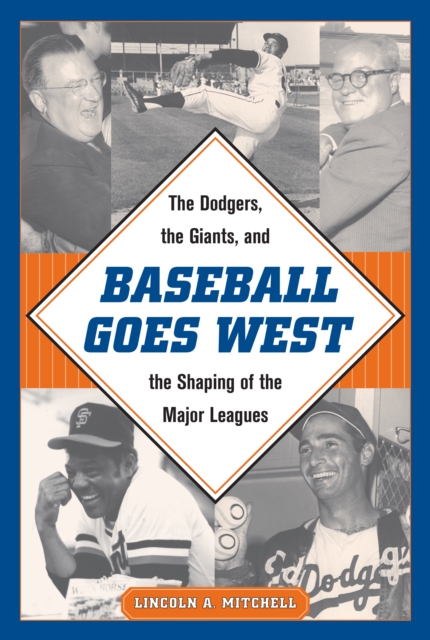
Baseball goes west : the Dodgers, the Giants, and the shaping of the major leagues
Following the 1957 season, two of baseball's most famous teams, the Brooklyn Dodgers and the New York Giants,left the city they had called home since the 19th century and headed west.The Dodgers went to Los Angeles andthe Giants to San Francisco.
eBook

Hey batta batta swing! : the wild old days of baseball
A look at baseball from its beginnings to today.
Book

Colonial project, national game
In this engrossing cultural history of baseball in Taiwan, Andrew D. Morris traces the game’s social, ethnic, political, and cultural significance since its introduction on the island more than one hundred years ago. Introduced by the Japanese colonial government at the turn of the century, baseball was expected to “civilize” and modernize Taiwan’s Han Chinese and Austronesian Aborigine populations. After World War II, the game was tolerated as a remnant of Japanese culture and then strategically employed by the ruling Chinese Nationalist Party (KMT) Even as it was also enthroned by Taiwanese politicians, cultural producers, and citizens as their national game. In considering baseball’s cultural and historical implications, Morris deftly addresses a number of societal themes crucial to understanding modern Taiwan, the question of Chinese “reunification,” and East Asia as a whole.
eBook


Work, fight, or play ball : how Bethlehem Steel helped baseball's stars avoid World War I
In 1918, Bethlehem Steel started the world's greatest industrial baseball league.Appealing to Major League Baseball players looking to avoid service in the Great War, teams employed \"ringers\" like Babe Ruth, Rogers Hornsby, and Shoeless Joe Jackson in what became scornfully known as \"safe shelter\" leagues.
eBook

What were the Negro Leagues?
\"In America during the early twentieth century, no part was safe from segregation, not even the country's national pastime, baseball. Despite their exodus from the Major Leagues because of the color of their skin, African American men still found a way to participate in the sport they loved. Author Varian Johnson shines a spotlight on the players, coaches, owners, and teams that dominated the Negro Leagues during the 1930s and 40s. Readers will learn about how phenomenal players like Satchel Paige, Josh Gibson, and of course, Jackie Robinson greatly changed the sport of baseball\"-- Provided by publisher.
Book

Playing America's game
Although largely ignored by historians of both baseball in general and the Negro leagues in particular, Latinos have been a significant presence in organized baseball from the beginning. In this benchmark study on Latinos and professional baseball from the 1880s to the present, Adrian Burgos tells a compelling story of the men who negotiated the color line at every turn—passing as “Spanish” in the major leagues or seeking respect and acceptance in the Negro leagues.
eBook

A Negro league scrapbook
Featuring verse, facts, and archival black-and-white photographs, this volume is a celebration of the Negro Leagues and the great players who went unrecognized in their time.
Book

Baseball Rebels
In Baseball Rebels Peter Dreier and Robert Elias examine
the key social challenges-racism, sexism and homophobia-that shaped
society and worked their way into baseball's culture, economics,
and politics. Since baseball emerged in the mid-1800s to become
America's pastime, the nation's battles over race, gender, and
sexuality have been reflected on the playing field, in the
executive suites, in the press box, and in the community. Some of
baseball's rebels are widely recognized, but most of them are
either little known or known primarily for their baseball
achievements-not their political views and activism. Everyone knows
the story of Jackie Robinson breaking baseball's color line, but
less known is Sam Nahem, who opposed the racial divide in the U.S.
military and organized an integrated military team that won a
championship in 1945. Or Toni Stone, the first of three women who
played for the Indianapolis Clowns in the previously all-male Negro
Leagues. Or Dave Pallone, MLB's first gay umpire. Many players,
owners, reporters, and other activists challenged both the baseball
establishment and society's status quo. Baseball Rebels
tells stories of baseball's reformers and radicals who were
influenced by, and in turn influenced, America's broader political
and social protest movements, making the game-and society-better
along the way.
eBook