
Catalogue Search | MBRL


Are you sure you want to remove the book from the shelf?

{{itemTitle}}
104
result(s) for
"Bastille."
Sort by:

Légendes et archives de la Bastille
Extrait: \"« La Bastille, écrivait Sainte-Foix, est un château qui, sans être fort, est un des plus redoutables de l'Europe, et dont je ne dirai rien. » — « Il est plus sûr, répétait-on dans Paris, de s'en taire que d'en parler. » A l'extrémité de la rue Saint-Antoine, à l'entrée du faubourg, apparaissaient les huit tours hautes, sombres, massives, plongeant leurs pieds moussus dans des flaques d'eau boueuse.\" À PROPOS DES ÉDITIONS LIGARAN: Les éditions LIGARAN proposent des versions numériques de grands classiques de la littérature ainsi que des livres rares, dans les domaines suivants: • Fiction: roman, poésie, théâtre, jeunesse, policier, libertin. • Non fiction: histoire, essais, biographies, pratiques.
eBook

The People's Revolution of 1789
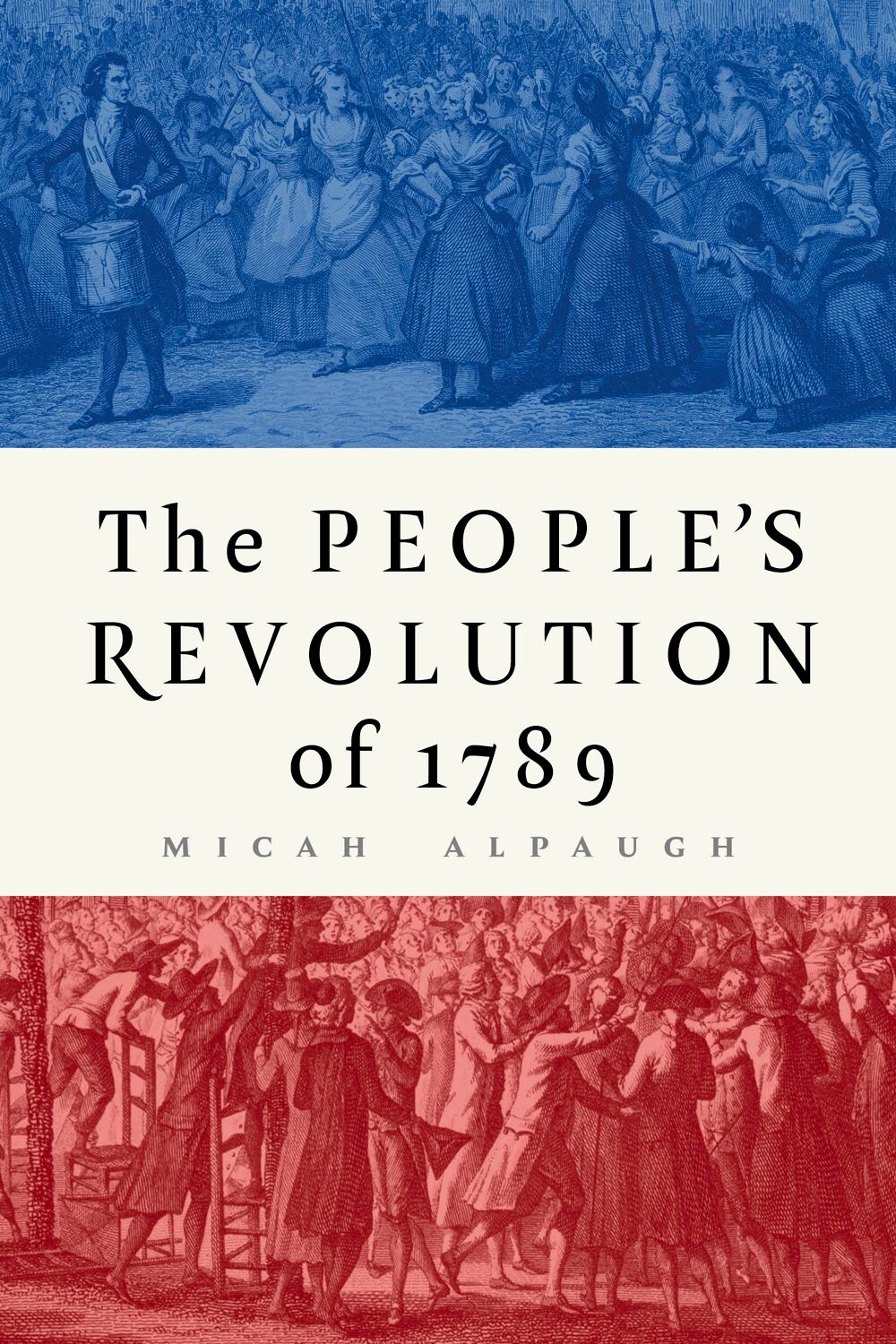
The People's Revolution of 1789
analyzes the historic events that unleashed a vast panoply
of anarchic, destructive, and creative disorders that demolished
France's Old Regime and founded a new revolutionary order.
It captures the complex and dynamic interplay of uprisings,
elections, meetings, and revolutionary moments that helped create
modern freedom.
The People's Revolution of 1789 is the first book to
chronicle the Parisian, provincial, and colonial movements of 1789
together. In doing so, Micah Alpaugh builds from hundreds of local
and regional studies and sources on the French Revolution to
provide a new interpretation of the powerful contestations that
created the modern revolutionary tradition. He explores the
multiplicity of movements-anarchistically operating without a
common leader and usually in only loose coordination-that gave the
revolutionary dynamic its power, without which the legislators'
revolution at Versailles would have failed or been severely
curtailed. The rapid onslaught of protests across the First Year of
Liberty compounded their effects, overpowering authorities' efforts
to maintain a degenerating order and forcing the establishment of a
more open system.
The People's Revolution of 1789 reveals in new ways how
the French revolutionaries ended feudalism, established human
rights, abolished the police, and instituted new elected
governments. By returning emphasis to the people's revolution, we
can better understand how world history's most consequential
revolution developed, as millions of French people embraced direct
action in hopes of fundamental change. Through the movements of
millions, the French created the most powerful revolution the world
had yet experienced.
eBook
DK timelines. Season 1, episode 22, The storming of the Bastille
This is a timeline of the storming of the Bastille prison in Paris during a summer of unrest in France in July 1789 - and how the events that followed led to revolution and the end of an era.
Streaming Video
DK timelines. Season 1, episode 33, French Revolution
This is a timeline of the French Revolution and its aftermath, from 1789 to 1799. It saw ordinary working people rise up against corrupt rulers in the name of liberty, equality and fraternity. After one-thousand years of royal rule, a new republic was formed – but how long would it last?
Streaming Video


Putative type 1 thymidylate synthase and dihydrofolate reductase as signature genes of a novel bastille-like group of phages in the subfamily Spounavirinae
Background
Spounavirinae
viruses have received an increasing interest as tools for the control of harmful bacteria due to their relatively broad host range and strictly virulent phenotype.
Results
In this study, we collected and analyzed the complete genome sequences of 61 published phages, either ICTV-classified or candidate members of the
Spounavirinae
subfamily of the
Myoviridae.
A set of comparative analyses identified a distinct, recently proposed Bastille-like phage group within the
Spounavirinae
. More importantly, type 1 thymidylate synthase (TS1) and dihydrofolate reductase (DHFR) genes were shown to be unique for the members of the proposed Bastille-like phage group, and are suitable as molecular markers. We also show that the members of this group encode beta-lactamase and/or sporulation-related SpoIIIE homologs, possibly questioning their suitability as biocontrol agents.
Conclusions
We confirm the creation of a new genus—the “Bastille-like group”—in
Spounavirinae,
and propose that the presence of TS1- and DHFR-encoding genes could serve as signatures for the new Bastille-like group. In addition, the presence of metallo-beta-lactamase and/or SpoIIIE homologs in all members of Bastille-like group phages makes questionable their suitability for use in biocontrol.
Journal Article
Bastille Day: France's Big Parade!
\"French people took a stand in 1789. On July 14, they attacked the Bastille. That was a prison in Paris, France. It was a symbol of the king and his power. The group destroyed the building. This was the start of the French Revolution. That war changed the country. The fighting went on for 10 years. People battled to make their lives better. They fought to take power from the rich. Today, French citizens celebrate the start. Every July 14 is Bastille Day. There are parties, parades, and fireworks!\" (News-O-Matic) Learn more about Bastille Day.
Web Resource

The French Revolution in Global Perspective
Situating the French Revolution in the context of early modern globalization for the first time, this book offers a new approach to understanding its international origins and worldwide effects. A distinguished group of contributors shows that the political culture of the Revolution emerged out of a long history of global commerce, imperial competition, and the movement of people and ideas in places as far flung as India, Egypt, Guiana, and the Caribbean. This international approach helps to explain how the Revolution fused immense idealism with territorial ambition and combined the drive for human rights with various forms of exclusion. The essays examine topics including the role of smuggling and free trade in the origins of the French Revolution, the entwined nature of feminism and abolitionism, and the influence of the French revolutionary wars on the shape of American empire.
The French Revolution in Global Perspectiveilluminates the dense connections among the cultural, social, and economic aspects of the French Revolution, revealing how new political forms-at once democratic and imperial, anticolonial and centralizing-were generated in and through continual transnational exchanges and dialogues.
Contributors:Rafe Blaufarb, Florida State University; Ian Coller, La Trobe University; Denise Davidson, Georgia State University; Suzanne Desan, University of Wisconsin-Madison; Lynn Hunt, University of California, Los Angeles; Andrew Jainchill, Queen's University; Michael Kwass, The Johns Hopkins University; William Max Nelson, University of Toronto; Pierre Serna, Université Paris I Panthéon-Sorbonne; Miranda Spieler, University of Arizona; Charles Walton, Yale University
eBook