
Catalogue Search | MBRL


Are you sure you want to remove the book from the shelf?

{{itemTitle}}
176
result(s) for
"Beamter"
Sort by:

House of green cards: statistical or preference-based inequality in the employment of foreign nationals
This study contributes to the labor market inequality and organizations literature by investigating the role that government agents play in shaping the employment of immigrants. Using unique data on applications for immigrant permanent labor certification evaluated by U.S. Department of Labor agents, we assess to what extent immigrants of select citizenship groups experience disparities in the labor certification process—one critical stage of the work authorization system leading to the granting of most employment-based green cards. Despite current U.S. laws that forbid discrimination on the basis of nationality, we find that labor certification approvals differ significantly depending on immigrants' foreign citizenship, even after controlling for key factors. Additionally, because of the U.S. government's unique process of auditing applications, we are in a rare position to empirically distinguish between statistical and preference-based accounts of labor market discrimination in the labor certification process. In support of the statistical account, we find that certification approvals are equally likely for immigrant workers from the vast majority of citizenship groups when agents review audited applications with detailed employment information. This article concludes by discussing the implications of our results for addressing disparities in the employment of foreign nationals.
Journal Article

Ji'an Literati and the Local in Song-Yuan-Ming China
Drawing on largely local sources, including local gazetteers and literati inscriptions for religious sites, this book offers a comprehensive examination of what it means to be 'local' during the Southern Song, Yuan and Ming dynasties in Ji'an prefecture (Jiangxi).
eBook

Genealogy and Status
By shedding light on a long-forgotten epigraphic genre that flourished in North China during the Mongol Empire, or Yuan Dynasty (1271-1368), Genealogy and Status explores the ways the conquered Chinese people understood and represented the alien Mongol ruling principles through their own cultural tradition. This epigraphic genre, which this book collectively calls \"genealogical steles,\" was quite unique in the history of Chinese epigraphy.Northern Chinese officials commissioned these steles exclusively to record a family's extensive genealogy, rather than the biography or achievements of an individual. Tomoyasu Iiyama shows how the rise of these steles demonstrates that Mongol rule fundamentally affected how northern Chinese families defined, organized, and commemorated their kinship. Because most of these inscriptions are in Classical Chinese, they appear to be part of Chinese tradition. In fact, they reflect a massive social change in Chinese society that occurred because of Mongol rule in China.The evolution of genealogical steles delineates how local elites, while thinking of themselves as the heirs of traditional Chinese culture, fully accommodated to Mongol imperial rule and became instead one of its cornerstones in eastern Eurasia.
eBook

‘Removing Barriers’ and ‘Creating Distance’: Exploring the Logics of Efficiency and Trust in Civic Technology
Oriented around efficiency, civic technology primarily aims to remove barriers by automating and streamlining processes of government. While removing barriers is vital in many matters of governance, should it always be the aim of civic technology? In our ongoing ethnographic research to understand the work of community engagement performed by public officials in local government, we have observed how this orientation around efficiency in civic technology can inadvertently create distance in the relationships between citizens and governments. In this article, we discuss how an orientation around trust could open a space for civic technology that primarily aims to close distance in the relationships between citizens and public officials. We do so by first providing an account of how trust functions in the work of public officials performing community engagement, calling attention to where and when efficiency is at odds with the importance of relationship building between public officials and citizens. We build on ethnographic findings and a series of co-design activities with public officials to develop three strategies that operate under the logic of trust: historicizing engagement, focusing on experience, and mediating expectations. In all, by focusing on trust and the relational work of closing distance, civic technology can move towards addressing the growing crisis in confidence being faced in democracies.
Journal Article

EU Border Officials and Critical Complicity: The Politics of Location and Ethnographic Knowledge as Additions
Based on research conducted among EU border enforcement officials, this article embarks on a discussion about complicity and critical analysis within border and migration studies. The study of borders and migration in the context of the EU is a highly politicized issue, and several scholars have pointed out that critical research easily comes to serve into a “knowledge loop” (Hess, 2010), or play part in the proliferation of a “migration business” (Andersson, 2014). In this article, I will argue that in order to not reproduce the vocabulary or object-making of that which we study, we need to study processes of scale-making (Tsing, 2000) and emphasise the multiplicity of borders (Andersen & Sandberg, 2012). In the article, I therefore present three strategies for critical analysis: First, I suggest critically assessing the locations of fieldwork, and the ways in which these either mirror or distort dominant narratives about the borders of Europe. Secondly, I probe into the differences and similarities between the interlocutors’ and researchers’ objects of inquiry. Finally, I discuss the purpose of ‘being there’, in the field, in relation to ethnographic knowledge production. I ask whether we might leave behind the idea of ethnography as evidence or revelations, and rather focus on ethnography as additions. In conclusion, I argue that instead of critical distance, we as scholars should nurture the capacity of critical complicity.
Journal Article

Immunity of Heads of State and State Officials for International Crimes
Ramona Pedretti offers a comprehensive assessment of customary law rules on immunity of Heads of State and other State officials in the context of crimes pursuant to international law and their relationship with core principles of international law.
eBook
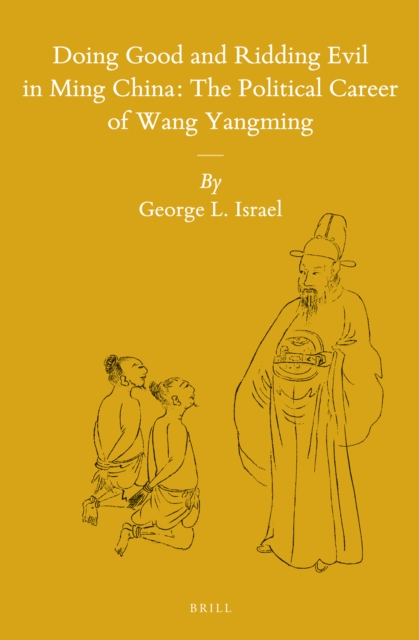
Doing Good and Ridding Evil in Ming China: The Political Career of Wang Yangming
In this work, George L. Israel offers a detailed study of the influential Neo-Confucian philosopher Wang Yangming. The book looks at Yangming's career and military campaigns.
eBook

Are public sector workers different?
We investigate whether public and private sector employees differ in terms of public service motivation using a representative sample of elderly workers from 12 European countries. We find that public sector workers, both those currently employed and those already retired, are significantly more prosocial; however, the difference in prosociality is explained by differences in the composition of the workforce across the two sectors, in terms of (former) workers' education and occupation. Subsample analysis reveals that public sector former workers in education are more prosocial even after controlling for a rich set of characteristics.
Journal Article

The Imperfect Union
In the mid-summer of 1989 the German Democratic Republic-- known as the GDR or East Germany--was an autocratic state led by an entrenched Communist Party. A loyal member of the Warsaw Pact, it was a counterpart of the Federal Republic of Germany (West Germany), which it confronted with a mixture of hostility and grudging accommodation across the divide created by the Cold War. Over the following year and a half, dramatic changes occurred in the political system of East Germany and culminated in the GDR's \"accession\" to the Federal Republic itself. Yet the end of Germany's division evoked its own new and very bitter constitutional problems.The Imperfect Uniondiscusses these issues and shows that they are at the core of a great event of political, economic, and social history.
Part I analyzes the constitutional history of eastern Germany from 1945 through the constitutional changes of 1989-1990 and beyond to the constitutions of the re-created east German states. Part II analyzes the Unification Treaty and the numerous problems arising from it: the fate of expropriated property on unification; the unification of the disparate eastern and western abortion regimes; the transformation of East German institutions, such as the civil service, the universities, and the judiciary; prosecution of former GDR leaders and officials; the \"rehabilitation\" and compensation of GDR victims; and the issues raised by the fateful legacy of the files of the East German secret police. Part III examines the external aspects of unification.
eBook

Organizational Justice and Social Workers' Intentions to Leave Agency Positions
The authors investigated the impact of organizational justice on social workers' intention to leave Korean social service agencies. Specifically, this study concentrated on the moderating effect of organizational justice on the relationship between burnout and intention to leave. The authors surveyed 218 front-line social workers from 51 social welfare service centers in Korea. Data were collected from a sample of social workers indentified through a multistage cluster sampling process. The authors used a linear mixed model to analyze the multilevel data structure. This study had three major findings. First, higher levels of burnout of individual social workers corresponded to increased intention to leave. Second, higher levels of organizational justice of social welfare service centers corresponded to decreased intention to leave. Finally, and most important, the organizational justice of social welfare service centers moderated the impact of burnout on individual social workers' intention to leave. On the basis of these results, the authors discuss the importance of organizational justice to social service agencies.
Journal Article