
Catalogue Search | MBRL


Are you sure you want to remove the book from the shelf?

{{itemTitle}}
270
result(s) for
"Beckett, Samuel, 1906-1989 -- Criticism and interpretation"
Sort by:


Samuel Beckett and trauma
Samuel Beckett and trauma is the first book that specifically addresses the question of trauma in Beckett, taking into account the recent rise of trauma studies in literature. Beckett is an author whose works are strongly related to the psychological and historical trauma of our age. His works not only explore the multifarious aspects of trauma but also radically challenge our conception of trauma itself by the unique syntax of language, aesthetics of fragmentation, bodily malfunctions and the creation of void. Instead of simply applying current trauma theories to Beckett, this book provides new perspectives that will expand and alter them by employing other theoretical frameworks in literature, theatre, art, philosophy and psychoanalysis. It will inspire anybody interested in literature and trauma, including specialists and students working on twentieth-century world literature, comparative studies, trauma studies and theatre /art.
eBook

Beckett in conversation, \yet again\ = Recontres avec Beckett, \encore\
Collected here are conversations with the author recalled by translators, scholars, artists, and theatre and media practitioners drawing on unpublished notes of meetings and uncollected (mostly) correspondence with him. Through the varied lenses of their reminiscences, readers will appreciate Beckett's remarkable art of letter writing, his conversation punctuated by pregnant pauses, his exceptional humor and talent for friendship, and his punctilious concern for the translations, interpretations, and performance of his works. The readers of this volume will come to share the exhilaration the encounters with Beckett produced in the writers of these memoirs.
BOOK


\Beginning of the murmur\ : archival pre-texts and other sources
This book collects a range of essays reflecting the diversity of Beckett Studies, many of which were presented at the conference in Reading to celebrate the 25th Anniversary of the Beckett International Foundation.
BOOK

The Imperative to Write: Destitutions of the Sublime in Kafka, Blanchot and Beckett
Is writing haunted by a categorical imperative? Does the Kantian sublime continue to shape the writer's vocation, even for twentieth-century authors? What precise shape, form, or figure does this residue of sublimity take in the fictions that follow from itand that leave it in ruins? This book explores these questions through readings of three authors who bear witness to an ambiguous exigency: writing as a demanding and exclusive task, at odds with life, but also a mere compulsion, a drive without end or reason, even a kind of torture. If Kafka, Blanchot, and Beckett mimic a sublime vocation in their extreme devotion to writing, they do so in full awareness that the trajectory it dictates leads not to metaphysical redemption but rather downward, into the uncanny element of fiction. As this book argues, the sublime has always been a deeply melancholy affair, even in its classical Kantian form, but it is in the attenuated speech of narrative voices progressively stripped of their resources and rewards that the true nature of this melancholy is revealed.
eBook

Beckett's thing : painting and theatre
Throughout his writing career, Beckett was deeply engaged with the visual arts and with individual painters, including Jack B. Yeats, Bram van Velde, and Avigdor Arikha. In this monograph, David Lloyd, explores what Beckett actually saw in the paintings of the painters he wrote most about and, in each case, befriended. He explains what Beckett found in the visual resources of their work rather than in the surrealism of Masson or the abstraction of Kandinsky or Mondrian, all of whose work he mentions. And he traces the common elements and developments in Beckett?s visual imagination, not only in his critical statements, but by actually looking with sustained attention at the paintings he is known to have viewed.
BOOK

Think, Pig!: Beckett at the Limit of the Human
This book examines Samuel Beckett's unique lesson in courage in the wake of humanism's postwar crisis--the courage to go on living even after experiencing life as a series of catastrophes. Rabate, a former president of the Samuel Beckett Society and a leading scholar of modernism, explores the whole range of Beckett's plays, novels, and essays. He places Beckett in a vital philosophical conversation that runs from Bataille to Adorno, from Kant and Sade to Badiou. At the same time, he stresses Beckett's inimitable sense of metaphysical comedy. Foregrounding Beckett's decision to write in French, Rabate inscribes him in a continental context marked by a \"writing degree zero\" while showing the prescience and ethical import of Beckett's tendency to subvert the \"human\" through the theme of the animal. Beckett's \"declaration of inhuman rights,\" he argues, offers the funniest mode of expression available to us today.
eBook

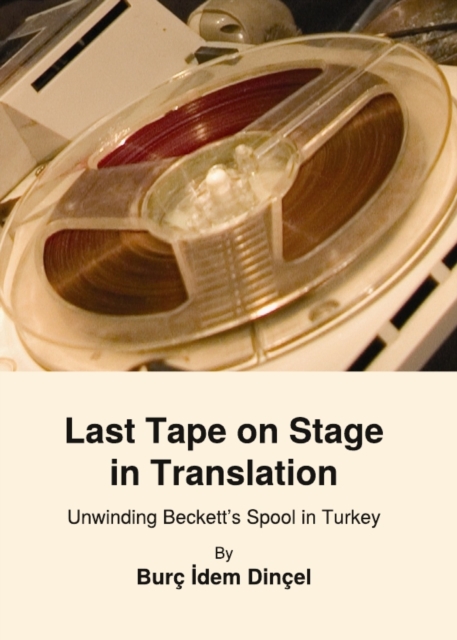
Last Tape on Stage in Translation
Samuel Becketts theatrical works maintain a prominent position within contemporary theatre. His plays provide a prodigious potential to study several forms of acting, staging, and dramaturgy, as well as language and translation, thereby setting a fertile ground to tackle the problematic issue of the relationship between theatre criticism and theatre-translation criticism. That is precisely what this study aims at by drawing attention to the fundamental characteristics of translated theatre.
eBook