
Catalogue Search | MBRL


Are you sure you want to remove the book from the shelf?

{{itemTitle}}
63
result(s) for
"Bedouin dialects"
Sort by:

Mahdia Dialect: An Urban Vernacular in the Tunisian Sahel Context
This paper aims to present some preliminary results of the linguistic analysis of the dialect of the Wilāya of Mahdia on which few studies exist, focused mainly on phonology. My analysis, here extended to the morpho-syntactic level, is based on a corpus of interviews taken from some social media pages. The sample will be composed of respondents of different geographical origin (from Mahdia and some nearby towns), gender, age and social background. A deeper knowledge of the Arabic of Mahdia region, which is a bundle of urban, Bedouin and “villageois” varieties, would contribute to throw new light on the features of the Saḥlī dialects and would add a small piece to the complex mosaic of Tunisian and Maghrebi dialects, whose traditional categories of classification should be reconsidered.
Journal Article
The Southern Moroccan Dialects and the Hilāli Category
The aim of this paper is to review the classification of the southern Moroccan dialects, advancing on the general description of these varieties. Recent descriptive studies provided us with new sources on the linguistic reality of southern Morocco, shedding light on the status of dialects commonly classified as Bedouin or ‘Hilāli’ within the Maghrebi context. To do so, the paper highlights conservative and innovative features which characterize the dialects of the area, focusing mainly—but not exclusively—on the updated data for two distant localities in southern Morocco: Essaouira and its rural outskirts—the Chiadma territory (Aquermoud and Sīdi Īsḥāq)—and Tafilalt, in south-eastern Morocco. The southern dialects have been situated in an intermediary zone between pre-Hilāli and Hilāli categories for a long time. Discussing their situation may contribute to understanding what distinguishes them as a dialectal group and also the validity of the ‘Hilāli’ category in the Moroccan context.
Journal Article

A Grammar of the Bedouin Dialects of Central and Southern Sinai
This book complements A Grammar of the Bedouin Dialects of the Northern Sinai Littoral: Bridging the Linguistic Gap between the Eastern and Western Arab World (Brill: 2000) thus completing the author's description of Bedouin dialects of Sinai. Earlier and new data are synthesized in a dialectometrical approach for a subdivision into eight groups.
eBook

Understanding Safaitic inscriptions in their topographical context
The first aim of this paper is to determine whether there is a relationship between the locations in which Safaitic inscriptions are found and the interpretation of the inscriptions themselves. The second aim is to use the results of the Badia Surveys of the OCIANA project to focus on the different shapes of the cairns (rujūm) on which Safaitic inscriptions are very often found and the different names used to describe them in the Arabic dialect of the local Jordanian Bedouin.
Journal Article

Listening beyond words: cultural safety in nurse–patient communication with Bedouin patients in rural Saudi hospitals
Background
Listening beyond words is central to culturally safe nursing care, particularly in rural hospital settings where communication with Bedouin patients is shaped by dialect, silence, gesture, and deeply embedded social and spiritual meanings. In rural Saudi hospitals, however, nurse–patient interactions are often conducted in standardized Arabic and organized around biomedical routines, creating cultural–linguistic gaps that may undermine trust, engagement, and perceived safety in care.
Aim
To explore how cultural safety is experienced, threatened, and co-constructed through spoken and unspoken language between Bedouin patients and nurses in rural hospitals in Al-Ahsa, Saudi Arabia, and to identify nurse-led strategies that make care feel culturally congruent.
Methods
An interpretive phenomenological design informed by critical cultural safety was used. Semi-structured interviews were conducted in Arabic with 20 participants (10 Bedouin patients and 10 registered nurses) from two rural hospitals in Al-Ahsa. Interviews were audio-recorded, transcribed verbatim, selectively translated for publication purposes, and analyzed using Braun and Clarke’s six-phase thematic analysis supported by NVivo.
Results
Four interrelated themes described the cultural–linguistic work of care: (1) Speaking without words—patients used silence, indirectness, and kin-based framing that nurses had to learn to “listen for”; (2) Clinical space as cultural distance—hospital rules, gendered assignments, and rapid tasking were experienced as unfamiliar and sometimes unsafe; (3) Trust is earned, not assumed—historic and institutional marginality meant nurses had to demonstrate respect through repeated relational encounters; and (4) Navigating toward connection—nurses used local dialects, religious invocations, and family mediators to repair distance and legitimise communication.
Conclusions
Cultural safety for Bedouin patients cannot be achieved through translation alone. It requires relational listening, time, and organizational permission to use culturally grounded communication. Rural services should embed dialectal and cultural resources, support gender-sensitive assignments, and normalize family-inclusive encounters. Nursing education and continuing professional development should strengthen linguistic humility.
Clinical trial number
Not applicable.
Journal Article

Regional and Sociolinguistic Variation of Personal Pronouns in Dialects of Najdi Arabic
This study examines the regional and sociolinguistic variation in the paradigms of personal pronouns, independent and dependent, in Najdi dialects. The regional dialects are Central, Qassim, and Northern. The social dialects are sub-varieties of the Central dialect: Hamadan, Hawazin, and Sedentary. The data was collected using the sociolinguistic interview of 25 speakers. It was found that there were more variations in the personal pronoun forms than what have been reported in the literature. When comparing forms with Standard Arabic, the Central dialects are more conservative in the number of changes to the forms. However, Qassim and Northern have retained gender distinction in plural forms while Central dialects did not. This study introduced forms of personal pronouns that were never mentioned in the literature.
Journal Article
The Classification of Bedouin Arabic: Insights from Northern Jordan
The goal of the present paper is to provide a revaluation of the classification of the Bedouin dialects of Northern Arabia and the Southern Levant, based on published or publicly available data and on first-hand data recently collected amongst some Bedouin tribes in Northern Jordan. We suggest extending previous classifications that identify three types of dialects, namely A (ʿnizi), B (šammari), and C (šāwi). Although intermediary or mixed types combining šammari features with šāwi features were already noted, our data suggest that further combinations are possible, either because they had so far been unnoticed or because recent levelling and dialect mixing have blurred the boundaries between some of the varieties.
Journal Article

The social stratification of the Syro-Potamian dialect of Deir Ez-Zor: exploring linguistic prestige and identity in a diasporic dialect
As many sociolinguistic works of literature adopt the norms of non-standard dialects as being of a low-profile or non-prestigious subset of the standard, this paper delves into the social factors that affect language behaviour along with the features that would be eliminated—code-switching/mixing—due to the stigmas imposed by society. Therewithal, this paper investigates the socio-diffused status of the Deiri dialect by examining the significance of distinct social factors—gender, social class, religion, urban/rural status—and the prestigious notion attributed to a standard dialect of a nation. I argue in this paper that the attitude towards the Deiri dialect would instead define the mutual intelligibility and social status of the Deiri speakers by stratifying the community into three registers: urban, rural, and Christian. Using the findings of the collected data on the Deiri dialect, conferring that females are more prestige-conscious than males, with a consequential tendency towards the dominant dialect of the capital.
Journal Article
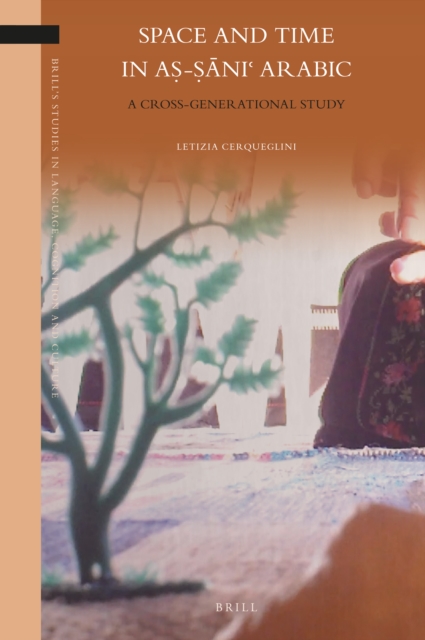
Space and Time in aṣ-Ṣāniʿ Arabic
This work contributes to the discussion on the relationship between space and time in language and cognition and the role of culture in this relationship from the perspective of the dialect of aṣ-Ṣāniʿ, a Bedouin Arab tribe of the Negev (Israel).
eBook

Effects of Social Power and Distance on the Realization of Requests in Jordanian Bedouin Arabic
This study aims to determine the request strategies employed by Jordanian Bedouin Arabic (JBA) native speakers in their interactions in diverse social situations by examining how they realize requests in speech. The study also explores the effect of social power (high, equal, low) and social distance (familiar and unfamiliar) on the realization patterns of requests by highlighting young JBA male speakers’ linguistic choices. Data from 25 young male speakers of JBA were gathered using an Oral Discourse Completion Test (ODCT). The collected data were analyzed based on Brown’s and Levinson’s (1987) politeness theory and following the Cross-Cultural Speech Act Research Project (CCSARP) request strategy coding scheme. The results showed that the participants employed various request strategies according to their occurrences in different contexts. Furthermore, it was found that there is a correlation between perceptions of (im)politeness and social power and distance controlled by the context. The results also showed that the participants employed different sequences of strategies and demonstrated different preferences for context-dependent strategies in their requests.
Journal Article