Catalogue Search | MBRL


Are you sure you want to remove the book from the shelf?

{{itemTitle}}
11
result(s) for
"Bedouins Arabian Peninsula Social life and customs."
Sort by:

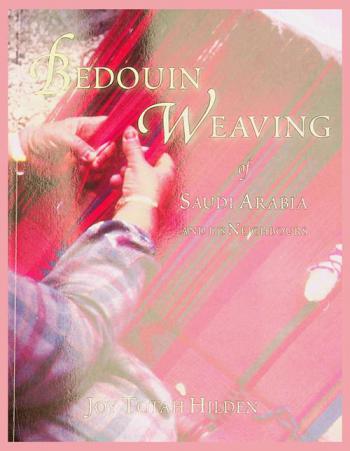
Bedouin Ethnobotany
A Bedouin asking a fellow tribesman about grazing conditions in other parts of the country says first simply, \"Fih hayah?\" or \"Is there life?\" A desert Arab's knowledge of the sparse vegetation is tied directly to his life and livelihood.
eBook


Revisiting Consanguineous Marriage in the Greater Middle East: Milk, Blood, and Bedouins
Although exogamy is the worldwide marriage norm, many Middle Eastern populations regularly practice consanguineous marriage. Scholars have posited a number of explanations for this phenomenon, but these theories have not identified a concrete advantage to these marriages sufficient to counterbalance the inbreeding depression and other genetic risks inherent to kin marriages. Drawing on genetic studies and mathematical models, as well as both historical and ethnographic sources, I argue in this article that the Arabian Peninsula's camel Bedouin's dependency on the lactose tolerance allele exerted a selective pressure on marriage strategies that strongly favored consanguineous marriage. For milk-dependent camel Bedouins of the Arabian Peninsula, the advantages of consanguineous marriage did indeed outweigh its risks. In addition, I posit that another common Arabian Peninsula marriage practice, the strong prohibition of marriages between higher-status and lower-status groups, was favored by the same environmental and genetic factors that favored consanguineous marriage. Mientras la exogamia es la norma mundial de matrimonios, muchas poblaciones del Medio Oriente regularmente practican matrimonio consanguíneo. Investigadores han planteado un número de explicaciones por este fenómeno, pero estas teorías no han identificado una ventaja concreta en estos matrimonios, suficiente para compensar la depresión endogámica y otros riesgos genéticos inherentes a matrimonios entre familiares. Con base en estudios genéticos y modelos matemáticos, así como fuentes históricas y etnográficas, argumento en este artículo que la dependencia beduina de camellos en la Península Arábiga en el alelo para la tolerancia a la lactosa ejerció una presión selectiva en las estrategias matrimoniales que fuertemente favorecieron matrimonio consanguíneo. Para los beduinos de la Península Arábiga dependientes de la leche de los camellos, las ventajas de matrimonio consanguíneo ciertamente superaron sus riesgos. Además, planteo que otra práctica común de matrimonios en la Península Arábiga, la fuerte prohibición de matrimonios entre grupos de más alta y más baja posición social, fue favorecida por los mismos factores genéticos y ambientales que favorecieron matrimonios consanguíneos.
Journal Article


Egypt
This is a sweeping, colorful, and concise narrative history of Egypt from the beginning of human settlement in the Nile River valley 5000 years ago to the present day. Accessible, authoritative, and richly illustrated, this is an ideal introduction and guide to Egypt's long, brilliant, and complex history for general readers, tourists, and anyone else who wants a better understanding of this vibrant and fascinating country, one that has played a central role in world history for millennia--and that continues to do so today.
Respected historian Robert Tignor, who has lived in Egypt at different times over the course of five decades, covers all the major eras of the country's ancient, modern, and recent history. A cradle of civilization, ancient Egypt developed a unique and influential culture that featured a centralized monarchy, sophisticated art and technology, and monumental architecture in the form of pyramids and temples. But the great age of the pharaohs is just the beginning of the story andEgypt: A Short Historyalso gives a rich account of the tumultuous history that followed--from Greek and Roman conquests, the rise of Christianity, Arab-Muslim triumph, and Egypt's incorporation into powerful Islamic empires to Napoleon's 1798 invasion, the country's absorption into the British Empire, and modern, postcolonial Egypt under Nasser, Sadat, and Mubarak.
This book provides an indispensable key to Egypt in all its layers--ancient and modern, Greek and Roman, and Christian and Islamic. In a new afterword the author analyzes the recent unrest in Egypt and weighs in on what the country might look like after Mubarak.
eBook