
Catalogue Search | MBRL


Are you sure you want to remove the book from the shelf?

{{itemTitle}}
832
result(s) for
"Bees Identification."
Sort by:

Bees of the world : a guide to every family
\"When many people think of bees, they are likely to picture the western domesticated honey bee, insects that live in large, socially complex societies inside a hive with a single queen and thousands of workers. But this familiar bee is just one of more than 20,000 species of bees--and almost none of the others is anything like it. In Bees of the World, Laurence Packer, one of the world's foremost experts on wild bees, celebrates the amazing diversity of bees--from size and appearance to nests and social organization. Providing clear, accurate accounts of the seven bee families, Bees of the World presents all the key information on generic characteristics, habits, and habitat, illustrated with incredible and often rare photographs that show bees in their natural habitats--foraging, nesting, raising their young, and more. The book reveals the secrets of these extraordinary insects as well as their importance in the global ecosystem and the ways humans can help protect them.\"--Publisher's website.
Book
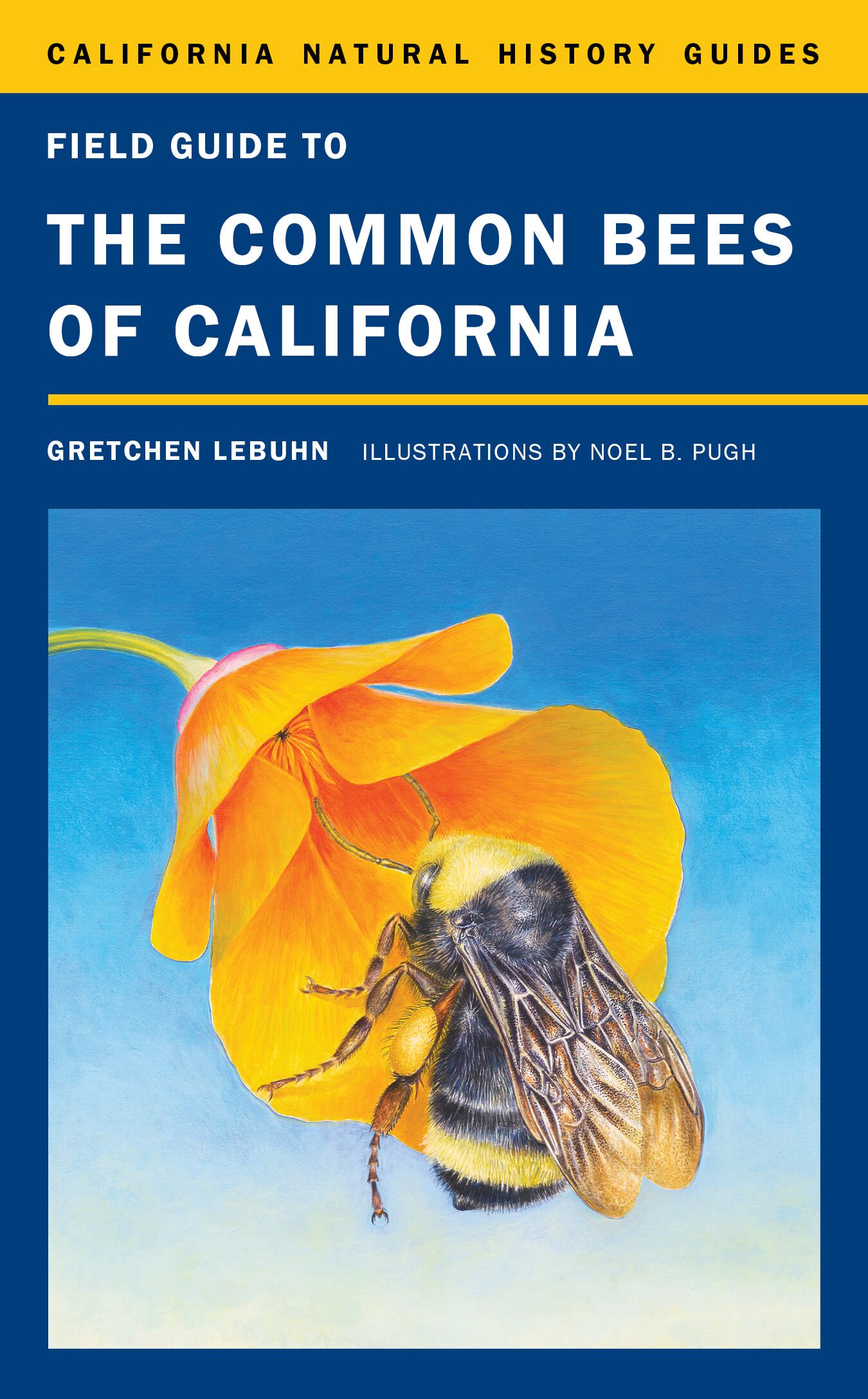
Field guide to the common bees of California
This engaging and easy-to-use natural history guidebook provides a thorough overview of native and honey bee biology and offers tools for identifying the most common bees of California and the Western United States. Full-color illustrations introduce readers to more than 30 genera of native bees, noting each one's needs and habits and placing them in their wider context. The author highlights bees’ ties to our own lives, the food we eat, and the habitat we provide, and suggests ways to support bees in our own backyards. In addition to helping readers understand and distinguish among major groups of bees, this guide reveals how bees are an essential part of healthy ecosystem and how many plants, including important crop plants, depend on the pollination they provide. As growing evidence points to declining bee populations, this book offers critical information about the bond between plants and pollinators, and between humans and nature. Thoroughly researched and full of new insights into the ancient process of pollination, Field Guide to the Common Bees of California; Including Bees of the Western United States is invaluable for the window it opens onto the biodiversity, adaptive range, and complexity of invertebrate communities.
eBook

Buzzing through Data: Advancing Bee Species Identification with Machine Learning
Given the vast diversity of bee species and the limited availability of taxonomy experts, bee species identification has become increasingly important, especially with the rise of apiculture practice. This review systematically explores the application of machine learning (ML) techniques in bee species determination, shedding light on the transformative potential of ML in entomology. Conducting a keyword-based search in the Scopus and Web of Science databases with manual screening resulted in 26 relevant publications. Focusing on shallow and deep learning studies, our analysis reveals a significant inclination towards deep learning, particularly post-2020, underscoring its ability to handle complex, high-dimensional data for accurate species identification. Most studies have utilized images of stationary bees for the determination task, despite the high computational demands from image processing, with fewer studies utilizing the sound and movement of the bees. This emerging field faces challenges in terms of dataset scarcity with limited geographical coverage. Additionally, research predominantly focuses on honeybees, with stingless bees receiving less attention, despite their economic potential. This review encapsulates the state of ML applications in bee species determination. It also emphasizes the growing research interest and technological advancements, aiming to inspire future explorations that bridge the gap between computational science and biodiversity conservation.
Journal Article

A Common Pesticide Decreases Foraging Success and Survival in Honey Bees
Nonlethal exposure of honey bees to thiamethoxam (neonicotinoid systemic pesticide) causes high mortality due to homing failure at levels that could put a colony at risk of collapse. Simulated exposure events on free-ranging foragers labeled with a radio-frequency identification tag suggest that homing is impaired by thiamethoxam intoxication. These experiments offer new insights into the consequences of common neonicotinoid pesticides used worldwide.
Journal Article
Metagenomic Survey of Microbes in Honey Bee Colony Collapse Disorder
In colony collapse disorder (CCD), honey bee colonies inexplicably lose their workers. CCD has resulted in a loss of 50 to 90% of colonies in beekeeping operations across the United States. The observation that irradiated combs from affected colonies can be repopulated with naive bees suggests that infection may contribute to CCD. We used an unbiased metagenomic approach to survey microflora in CCD hives, normal hives, and imported royal jelly. Candidate pathogens were screened for significance of association with CCD by the examination of samples collected from several sites over a period of 3 years. One organism, Israeli acute paralysis virus of bees, was strongly correlated with CCD.
Journal Article

The relative performance of sampling methods for native bees: an empirical test and review of the literature
Many bee species are declining globally, but to detect trends and monitor bee assemblages, robust sampling methods are required. Numerous sampling methods are used, but a critical review of their relative effectiveness is lacking. Moreover, evidence suggests the relative effectiveness of sampling methods depends on habitat, yet efficacy in urban areas has yet to be evaluated. This study compared the bee community documented using observational records, targeted netting, mobile gardens, pan traps (blue and yellow), vane traps (blue and yellow), and trap‐nests. The comparative surveys of native bees and honeybees were undertaken in an urbanized region of the southwest Australian biodiversity hot spot. The outcomes of the study were then compared to a synthesis based on a comprehensive literature review of studies where two or more bee sampling methods were conducted. Observational records far exceeded all other methods in terms of abundance of bees recorded, but were unable to distinguish finer taxonomic levels. Of methods that captured individuals, thereby permitting taxonomic identification, targeted sweep netting vastly outperformed the passive sampling methods, yielding a total of 1324 individuals, representing 131 taxonomic units—even when deployed over a shorter duration. The relative effectiveness of each method differed according to taxon. From the analysis of the literature, there was high variability in relative effectiveness of methods, but targeted sweep netting and blue vane traps tended to be most effective, in accordance with results from this study. However, results from the present study differed from most previous studies in the extremely low catch rates in pan traps. Species using trap‐nests represented only a subset of all potential cavity‐nesters, and their relative abundances in the trap‐nests differed from those in the field. Mobile gardens were relatively ineffective at attracting bees. For urbanized habitat within this biodiversity hot spot, targeted sweep netting is indispensable for obtaining a comprehensive indication of native bee assemblages; passive sampling methods alone recorded only a small fraction of the native bee community. Overall, a combination of methods should be used for sampling bee communities, as each has their own biases, and certain taxa were well represented in some methods, but poorly represented in others.
Journal Article

Honey bees of Ethiopia : their lineages and subspecies based on morphometrics, mitochondrial DNA, and mandibular gland pheromone analyses
Apiculture is a vital economic sector in Ethiopia, providing income and employment for over two million people. However, the classification of the honey bee subspecies in Ethiopia remains debatable. To shed light on this, we analysed wing geometric and classical morphometrics, mandibular gland pheromones, and COI–COII mitochondrial DNA sequences from worker honey bees collected across high, mid and low elevation gradients within Oromia, Amhara, and Southern Nations Nationalities and Peoples’ (SNNP) regions. Our results revealed significant regional morphological and pheromonal variation driven by elevation. Wing size increased with altitude, suggesting adaptive responses to elevation. Classical morphometrics supported this trend, with bees at higher elevation exhibiting larger flight structures. Regional differences in mandibular gland pheromone secretion were also observed, with workers from Amhara secreting the least quantities of these compounds, including the queen substance 9-oxo-2(E)-decenoic acid (9-ODA) and its precursor 9-hydroxy-2(E)-decenoic acid (9-HDA), as well as the worker component 10-hydroxy-2 (E)-decenoic acid (10-HDA) and its precursor 10-hydroxy-decanoic acid (10-HDAA). Furthermore, the secretion of 9-HDA and the total amount of mandibular gland pheromone significantly and negatively correlated with elevation. For mtDNA analysis, all samples from Ethiopia clustered with the Y lineage (Apis mellifera simensis) and separated from neighbouring honey bee populations of the A lineage (A. m. scutellata and A. m. monticala). Overall, our results reveal the significant influence of elevation on adaptive traits of Ethiopian honey bees, which are of the same subspecies.
Journal Article

Covert deformed wing virus infections have long-term deleterious effects on honeybee foraging and survival
Several studies have suggested that covert stressors can contribute to bee colony declines. Here we provide a novel case study and show using radiofrequency identification tracking technology that covert deformed wing virus (DWV) infections in adult honeybee workers seriously impact long-term foraging and survival under natural foraging conditions. In particular, our experiments show that adult workers injected with low doses of DWV experienced increased mortality rates, that DWV caused workers to start foraging at a premature age, and that the virus reduced the workers' total activity span as foragers. Altogether, these results demonstrate that covert DWV infections have strongly deleterious effects on honeybee foraging and survival. These results are consistent with previous studies that suggested DWV to be an important contributor to the ongoing bee declines in Europe and the USA. Overall, our study underlines the strong impact that covert pathogen infections can have on individual and group-level performance in bees.
Journal Article
Visual recognition of honeybee behavior patterns at the hive entrance
This study presents a novel method for automatically recognizing honeybee behavior patterns at the hive entrance, significantly contributing to beekeeping and hive management. Utilizing advanced YOLOv8 models for detection and segmentation, our approach analyzes various aspects of bee behavior, including location, direction, path trajectory, and movement speed within a designated area on the hive’s landing board. The system effectively detects multiple bee activities such as foraging, fanning, washboarding, and defense, achieving a mean detection accuracy of 98% and operating at speeds of up to 36 fps, surpassing state-of-the-art methods in both speed and accuracy. Key contributions include the development of a comprehensive dataset with 7200 frames from eight beehives, the introduction of the first known research focused on recognizing bee behavior patterns through visual analysis at the hive entrance, and a comparative evaluation of various object detection and tracking algorithms tailored for bee detection and behavior recognition. Our findings indicate that this method enhances monitoring capabilities for beekeepers while reducing the need for manual inspections, thereby minimizing disturbances to the bees. By analyzing spatial trajectories and occurrence density maps, the proposed framework provides robust identification of overlapping behaviors, facilitating timely interventions when necessary. This work lays the groundwork for future automated monitoring systems aimed at improving hive health and productivity.
Journal Article

Field realistic doses of pesticide imidacloprid reduce bumblebee pollen foraging efficiency
Bumblebees and other pollinators provide a vital ecosystem service for the agricultural sector. Recent studies however have suggested that exposure to systemic neonicotinoid insecticides in flowering crops has sub-lethal effects on the bumblebee workforce, and hence in reducing queen production. The mechanism behind reduced nest performance, however, remains unclear. Here we use Radio Frequency Identification (RFID) technology to test whether exposure to a low, field realistic dose (0.7 ppb in sugar water and 6 ppb in pollen) of the neonicotinoid imidacloprid, reduces worker foraging efficiency. Whilst the nectar foraging efficiency of bees treated with imidacloprid was not significantly different than that of control bees, treated bees brought back pollen less often than control bees (40 % of trips vs 63 % trips, respectively) and, where pollen was collected, treated bees brought back 31 % less pollen per hour than controls. This study demonstrates that field-realistic doses of these pesticides substantially impacts on foraging ability of bumblebee workers when collecting pollen, and we suggest that this provides a causal mechanism behind reduced queen production in imidacloprid exposed colonies.
Journal Article