
Catalogue Search | MBRL


Are you sure you want to remove the book from the shelf?

{{itemTitle}}
57,212
result(s) for
"Behavior modification"
Sort by:


The Routledge international companion to emotional and behavioural difficulties
\"Responding to disruptive or troubled pupils with emotional and behavioural difficulties (EBD) remains a highly topical issue. The challenges these children present relate to wider issues of continuing political concern: the perceived declining discipline in schools; school and social exclusion; the limits to inclusion for children with special needs; increasing mental health difficulties in children; youth crime and parenting skills. This topical and exhaustively-researched Companion examines the difficulties of defining EBD, and the dangers of allocating this imprecise label to children. Bringing together the work of contributors from fifteen countries and across four continents, this book features the research of leading experts in the global field of EBD, who discuss and debate educators' key concerns by: - looking at the overlaps between EBD, ADHD and mental health difficulties; - outlining the types of appropriate schooling for children with EBD; - urging readers to look beyond pupils' challenging behaviour in order to understand and respond to the social, biological and psychological causation; - considering the key areas of assessment, whole-school and targeted approaches that help pupils with EBD in mainstream and in special settings; - outlining helpful work with families, the crucial contribution of effective multi-agency working and the importance of supporting and developing teachers who work with challenging pupils. Containing contrasting views on controversial topics, this Companion's approachable style makes it an essential reference book for academics, policy makers, practitioners, educators and students who are working towards a higher degree in education\"-- Provided by publisher.
eBook

Behavioral interventions in schools : evidence-based positive strategies
\"As rates of Autism Spectrum Disorder (ASD) diagnoses continue to rise, the need for evidence-based classroom interventions has never been greater. This fully updated text shows psychologists how to assess and implement interventions that target students with ASD and other mental health disorders. Contributors also describe how to use cognitive behavior therapy to treat a variety of symptoms and behaviors. This book provides school psychologists, counselors, social workers, administrators, and teachers with the tools they need to succeed in today's classroom\"-- Provided by publisher.
Book


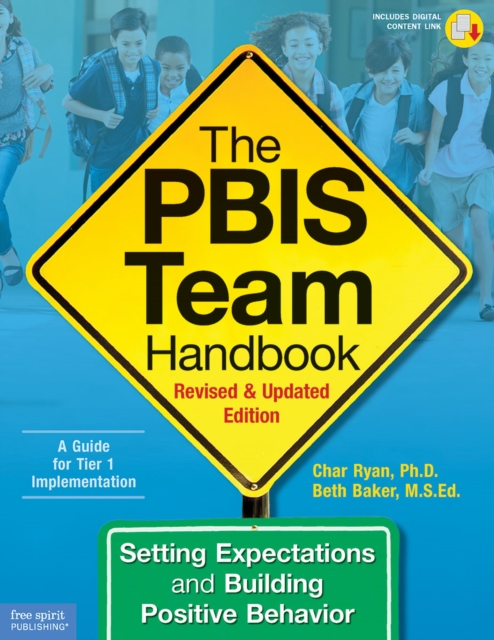
The PBIS Team Handbook
A revised and updated edition of the best-selling guide for schools implementing PBIS Tier 1 PBIS (positive behavior interventions and supports) is the most important tool educators have to deal with disruptive student behaviors. This revised and updated handbook provides detailed guidelines for implementing and sustaining PBIS for schools and teams. New in this edition is a chapter addressing inequity and bias in behavior referrals and discipline; a tiered fidelity inventory (TFI) to evaluate adherence to PBIS practices; different methods of data collection; and new research on sustainability. Positive school climates are not achieved through expulsions, suspensions, or detentions, but instead through collective analysis and data-driven decision-making. Downloadable digital content offers a PDF presentation to aid staff buy-in and customizable forms to help manage data and assess progress with ease.
eBook

Getting the buggers to behave
Show the students the can of dog food, open it up and then eat from it. Offer it round the class to see if anyone else will have a taste ... * This is just one of Sue Cowley's infamous ways of captivating your students, seizing control and getting those buggers to behave! *(Warning: Make sure you read the crucial preparation advice before putting this idea into practice!) Now in its fifth edition, Getting the Buggers to Behave remains a firm favourite with trainees, newly qualified teachers and experienced staff alike. The advice ranges from the basics of behaviour management to 'how to deal with the class from hell' and is applicable whether you are working in the early years, primary, secondary or further education with level specific examples in every chapter. The book covers preparing for your first meeting with a new group of students, developing your individual teaching style, creating a positive learning environment and working in really challenging schools. Sue is famed for the practical, honest and realistic nature of her advice, and all her ideas include case studies and anecdotes based on her years of experience working as a teacher and the stories and problems she has advised on 'agony aunt' style, for teachers of all levels. In this brand new edition, Sue takes a detailed look at the use of incentives for managing behaviour, how to implement a restorative justice approach in order to change children's behaviour and also identifies the ten most common forms of misbehaviour and how to deal with them.
Book
Positive behaviour strategies to support children and young people with autism
Teachers in mainstream schools are increasingly accommodating pupils on the autistic spectrum in their classrooms, and this book offers advice on one of the most difficult aspects of teaching children and young adults with autism - understanding and managing their often challenging behaviour. The book: o explores issues surrounding behaviour support o supplies INSET materials for developing practice in behaviour management o contains self-audit tools for practitioners o gives practical advice on developing an appropriate learning environment o provides guidance on how to promote positive behaviour o contains tried and tested photocopiable material and practical resources.
eBook


Good reasons to vaccinate: mandatory or payment for risk?
Mandatory vaccination, including for COVID-19, can be ethically justified if the threat to public health is grave, the confidence in safety and effectiveness is high, the expected utility of mandatory vaccination is greater than the alternatives, and the penalties or costs for non-compliance are proportionate. I describe an algorithm for justified mandatory vaccination. Penalties or costs could include withholding of benefits, imposition of fines, provision of community service or loss of freedoms. I argue that under conditions of risk or perceived risk of a novel vaccination, a system of payment for risk in vaccination may be superior. I defend a payment model against various objections, including that it constitutes coercion and undermines solidarity. I argue that payment can be in cash or in kind, and opportunity for altruistic vaccinations can be preserved by offering people who have been vaccinated the opportunity to donate any cash payment back to the health service.
Journal Article