
Catalogue Search | MBRL


Are you sure you want to remove the book from the shelf?

{{itemTitle}}
3
result(s) for
"Behavior-oriented prevention"
Sort by:

Current guidelines for obesity prevention in childhood and adolescence
Objective: Current guidelines for prevention of obesity in childhood and adolescence are discussed. Methods: A literature search was performed in Medline via PubMed, and appropriate studies were analyzed. Results: Programs to prevent childhood obesity have so far remained mainly school-based and effects have been limited. Analyses by age group show that prevention programs have the best results in younger children ((12 years). Evidence-based recommendations for pre-school- and early school-aged children indicate the need for interventions that address parents and teachers alike. During adolescence, school-based interventions proved most effective when adolescents were addressed directly. To date, obesity prevention programs have mainly focused on behavior-oriented prevention. Recommendations for community- or environment-based prevention have been suggested by the German Alliance of Noncommunicable Diseases and include a minimum of 1 h of physical activity at school, promotion of healthy food choices by taxing unhealthy foods, mandatory standards for meals at kindergartens and schools as well as a ban on unhealthy food advertisement aimed at children. Conclusion: Behavior-oriented prevention programs showed only limited long-term effects. Certain groups at risk for the development of obesity are not reached effectively by current programs. Although universally valid conclusions cannot be drawn given the heterogeneity of available studies, clearly combining behavior-based programs with community-based prevention to counteract an 'obesogenic environment' is crucial for sustainable success of future obesity prevention programs. (Autor).
Journal Article
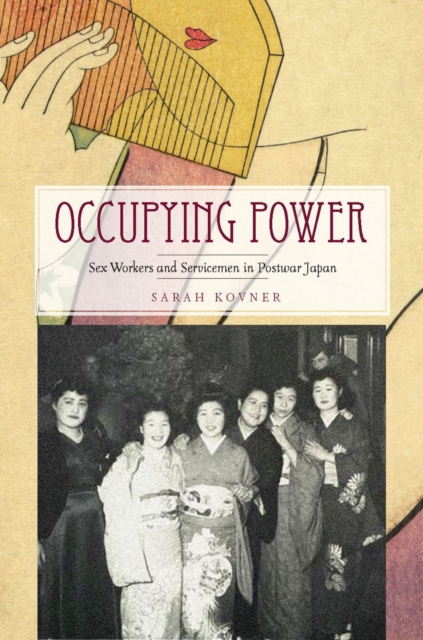
Occupying Power
The year was 1945. Hundreds of thousands of Allied troops poured into war-torn Japan and spread throughout the country. The effect of this influx on the local population did not lessen in the years following the war's end. In fact, the presence of foreign servicemen also heightened the visibility of certain others, particularlypanpan-streetwalkers-who were objects of their desire.
Occupying Power shows how intimate histories and international relations are interconnected in ways scholars have only begun to explore. Sex workers who catered to servicemen were integral to the postwar economic recovery, yet they were nonetheless blamed for increases in venereal disease and charged with diluting the Japanese race by producing mixed-race offspring. In 1956, Japan passed its first national law against prostitution, which produced an unanticipated effect. By ending a centuries-old tradition of sex work regulation, it made sex workers less visible and more vulnerable. This probing history reveals an important but underexplored aspect of the Japanese occupation and its effect on gender and society. It shifts the terms of debate on a number of controversies, including Japan's history of forced sexual slavery, rape accusations against U.S. servicemen, opposition to U.S. overseas bases, and sexual trafficking.
eBook

Analyzing crime patterns : frontiers of practice
This volume shows how state-of-the-art geographic information systems (GIS), used to display patterns of crime to stimulate effective strategies and decision-making, are revolutionizing urban law enforcement. The contributors present expert information for understanding and successfully employing the latest technologies in this field.
eBook