
Catalogue Search | MBRL


Are you sure you want to remove the book from the shelf?

{{itemTitle}}
4
result(s) for
"Beidao, 1949-"
Sort by:

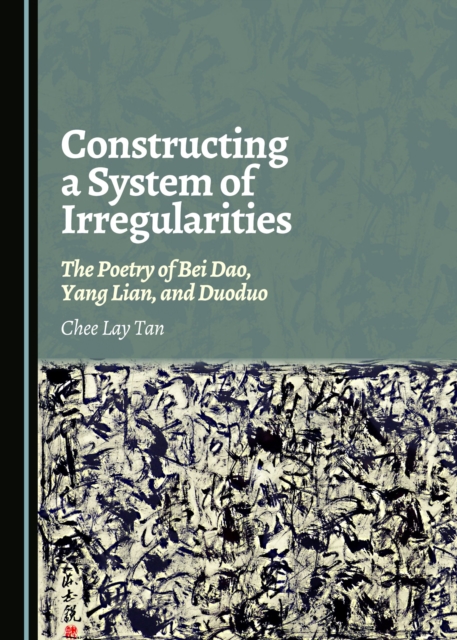
Constructing a System of Irregularities
This book investigates the poetics of three of the most internationally renowned contemporary Chinese poets - Bei Dao, Yang Lian and Duoduo - who were all exiled from China after the 1989 Tiananmen student movement. Their poetry was later to be labelled 'Misty poetry' (Menglongshi). Emphasising polyvalent imagery and irregular syntax, Misty poetry engenders a multiplicity of meanings, often leading to interpretational indeterminacy. This book examines three aspects of the 'Mistiness' of the poets' oeuvre: the socio-historic background where Misty poets live and write; imagery; and linguistic elements. After first identifying the roots of Mistiness, this book identifies imagistic and linguistic clues in order to construct a hermeneutical system that examines the irregularities of the Misty poetics and appreciates the polysemy of the poets' works. Stylometry is used to analyse image frequency and its significance in a stylistic manner, and a semiotic approach is then systematically applied to analyse the poets' highly irregular images, syntax and the different effects of their poems' obscurity. Through these approaches that unveil the poems' evocativeness, the irregularity of the poetry's Mistiness is established as its most powerful linguistic and imagistic aspect. The book then places the three poets' different misty characteristics into contrast: Bei Dao's twisted imagery and elliptical syntax, Yang's imagery in a classically-inspired syntax, and Duoduo's integration of images into a rhythmic syntax. While the poets' progressions from pre- to post-exile poetics suggest the potential of a non-nationally specific, or borderless poetics, their seemingly irregular poetic Mistiness is the most powerful trait of Misty poetry for evoking its system of multifaceted significations and alternative aesthetics.
eBook

City gate, open up
\"A magical, impressionistic autobiography by China's legendary poet, Bei Dao. In 2001, to visit his sick father, exiled poet Bei Dao returned to his homeland for the first time in over twenty years. He had been in exile since the Tianenmen Square uprising. The city of his birth, however, was totally unrecognizable. \"I was a foreigner in my hometown,\" he writes: \"my \"city that once was has vanished.\" In this lyrical autobiography of growing up in Beijing--from the birth of the People's Republic, through the chaotic three years of the Great Leap Forward, and on into the Cultural Revolution--Bei Dao uses his extraordinary gifts as a poet and storyteller to create another map of the city, a beautiful memory palace of endless alleyways and corridors that mixes personal narrative and geography with the momentous history he lived through. At the center of the book is his family of five--and their everyday life together through famine and festival. City Gate, Open Up is told in an episodic, fluid style that moves back and forth through the poet's childhood, recreating the smells and sounds, the laughter and danger, of a boy's coming of age during a time of great change and upheaval.\"-- Provided by publisher
Book

Poemas de Bei Dao
Traducción del chino: Ding ZixiongVersión en español: Mariela ÁlvarezIntroducción: Romer Cornejo
Journal Article