
Catalogue Search | MBRL


Are you sure you want to remove the book from the shelf?

{{itemTitle}}
306
result(s) for
"Bengali literature"
Sort by:

Family, school and nation
This seminal work examines the concurrence of childhood rebellion and conformity in Bengali literary texts (including adult texts), a pertinent yet unexplored area, making it a first of its kind. It is a study of the voice of child protagonists across children's and adult literature in Bengali vis-à-vis the institutions of family, the education system, and the nationalist movement in the ninenteenth and twentieth centuries.
eBook

Periodicals, readers and the making of a modern literary culture : Bengal at the turn of the twentieth century
In Periodicals, Readers and the Making of a Modern Literary Culture: Bengal at the Turn of the Twentieth Century Samarpita Mitra studies literary periodicals as a particular print form, and reveals how their production and circulation were critical to the formation of a Bengali public sphere during the turn of the twentieth century. Given its polyphonic nature, capacity for sustaining debates and adaptability by readers with diverse reading competencies, periodicals became the preferred means for dispensing modern education and entertainment through the vernacular. The book interrogates some of the defining debates that shaped readers' perspectives on critical social issues and explains how literary culture was envisioned as an indicator of the emergent nation. Finally it looks at the Bengali-Muslim and women's periodicals and their readerships and argues that the presence of multiple literary voices make it impossible to speak of Bengali literary culture in any singular terms.
eBook
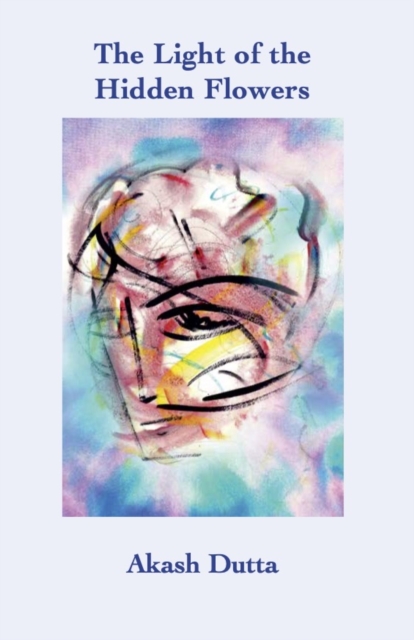
The Light of the Hidden Flowers
Light blooms as our grass-birth arises from the infinite depth of our memories. Some immigrant dreams, however, roam around the courtyards of the illusive past in the darkness. These poems by Akash are intense in their unique sensitivities, eager in their search of the submerged consciousness and incomparably deft in turning words into hymns.
eBook
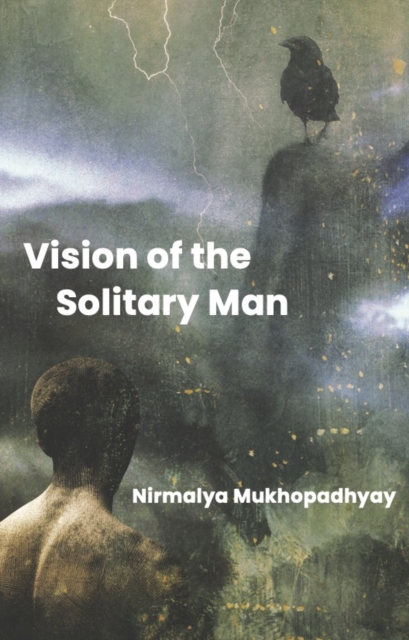
The Vision of the Solitary Man
The poems of Nirmalya are noteworthy for their grave, serious tone, for their architectonic beauty and harmony, for their love for the meditative solitariness of nature bordering on a pagan religiosity. The poem \"Nature\", a gem, a rare spark of Oriental genius; Nirmalya has absorbed almost the entire history of Bengali devotional literature into this masterpiece of linguistic art.
eBook

New bilingual visual dictionary : English-Bengali
\"Over 1,000 useful, everyday words with highly realistic pictures, which help learners to easily identify the words and practice saying them in [English and Bengali] languages. A wide range of essential and popular subjects, such as: animals, arts, house, shapes, nature, school, technology and many more\"--Back cover.
Book

World Literature Decentered
What would world literature look like, if we stopped referring to the “West”? Starting with the provocative premise that the “‘West’ is ten percent of the planet”, World Literature Decentered is the first book to decenter Eurocentric discourses of global literature and global history – not just by deconstructing or historicizing them, but by actively providing an alternative. Looking at a series of themes across three literatures (Mexico, Turkey and Bengal), the book examines hotels, melancholy, orientalism, femicide and the ghost story in a series of literary traditions outside the “West”. The non-West, the book argues, is no fringe group or token minority in need of attention – on the contrary, it constitutes the overwhelming majority of this world.
eBook