
Catalogue Search | MBRL


Are you sure you want to remove the book from the shelf?

{{itemTitle}}
1,118
result(s) for
"Berber"
Sort by:


Amazigh Politics in the Wake of the Arab Spring
On television, the Arab Spring took place in Cairo, Tunis, and
the city-states of the Persian Gulf. Yet the drama of 2010, and the
decade of subsequent activism, extended beyond the cities-indeed,
beyond Arabs. Bruce Maddy-Weitzman brings to light the sustained
post-Arab Spring political movement of North Africa's Amazigh
people.
The Amazigh movement did not begin with the Arab Spring, but it
has changed significantly since then. Amazigh Politics in the
Wake of the Arab Spring details the increasingly material
goals of Amazigh activism, as protest has shifted from the arena of
ethnocultural recognition to that of legal and socioeconomic
equality. Amazigh communities responded to the struggles for
freedom around them by pressing territorial and constitutional
claims while rejecting official discrimination and neglect. Arab
activists, steeped in postcolonial nationalism and protective of
their hegemonic position, largely refused their support, yet
flailing regimes were forced to respond to sharpening Amazigh
demands or else jeopardize their threadbare legitimacy. Today the
Amazigh question looms larger than ever, as North African
governments find they can no longer ignore the movement's
interests.
eBook
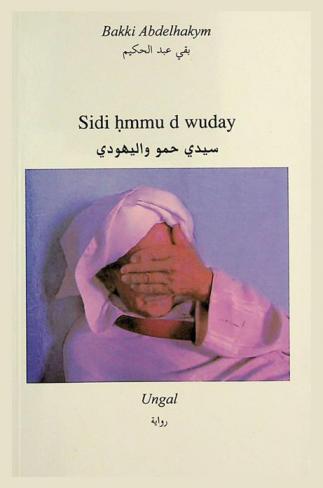

We share walls
We Share Walls: Language, Land, and Gender in Berber Morocco explores how political economic shifts over the last century have reshaped the language practices and ideologies of women (and men) in the plains and mountains of rural Morocco.
Offers a unique and richly textured ethnography of language maintenance and shift as well as language and place-making among an overlooked Muslim group Examines how Moroccan Berbers use language to integrate into the Arab-speaking world and retain their own distinct identity Illuminates the intriguing semiotic and gender issues embedded in the culture Part of the Blackwell Studies in Discourse and Culture Series
eBook


Interpreting the Self
Autobiography is a literary genre which Western scholarship has
ascribed mostly to Europe and the West. Countering this assessment
and presenting many little-known texts, this comprehensive work
demonstrates the existence of a flourishing tradition in Arabic
autobiography. Interpreting the Self discusses nearly one
hundred Arabic autobiographical texts and presents thirteen
selections in translation. The authors of these autobiographies
represent an astonishing variety of geographical areas,
occupations, and religious affiliations. This pioneering study
explores the origins, historical development, and distinctive
characteristics of autobiography in the Arabic tradition, drawing
from texts written between the ninth and nineteenth centuries c.e.
This volume consists of two parts: a general study rethinking the
place of autobiography in the Arabic tradition, and the translated
texts. Part one demonstrates that there are far more Arabic
autobiographical texts than previously recognized by modern
scholars and shows that these texts represent an established
and-especially in the Middle Ages-well-known category of literary
production. The thirteen translated texts in part two are drawn
from the full one-thousand-year period covered by this survey and
represent a variety of styles. Each text is preceded by a brief
introduction guiding the reader to specific features in the text
and providing general background information about the author. The
volume also contains an annotated bibliography of 130 premodern
Arabic autobiographical texts. In addition to presenting much
little-known material, this volume revisits current understandings
of autobiographical writing and helps create an important
cross-cultural comparative framework for studying the genre.
eBook
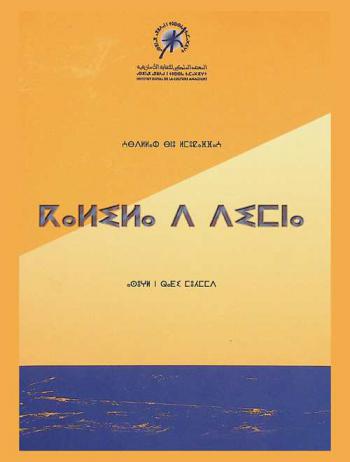

The representation of the Amazigh in the Spanish press: between the exotic and the Arab-Islamic
This study examines the thematic and terminological agenda of the Amazigh, or Berber, heritage with the aim of deciphering the rhetoric in the Spanish press and the recognition given to this culture. Specifically, 454 articles from eight newspapers collected between January 2018 and June 2019 were quantitatively and qualitatively analysed. The results show the preponderance of the term ‘Berber’ over ‘Amazigh’ or ‘Imazighen’, as well as the relevance of historical or international political topics when these terms are mentioned. Broadly speaking, it is concluded that perspectives on the Amazigh gravitate between invisibility, superficiality, exoticism, and conceptual dependence on the Arab-Islamic.
Journal Article


The Berbero-Semitic adjective
It has long been recognized that the Semitic suffix conjugation and the Berber adjectival perfective suffix conjugation have striking similarities in their morphology, which has been correctly attributed to be the result of a shared inheritance from Proto-Afro-Asiatic. Nevertheless, the function of these conjugations in the respective language families is quite distinct. This article argues that ultimately this suffix conjugation is a predicative suffix in the common ancestor of Berber and Semitic, and moreover shows that Semitic and Berber have significant overlap in the stem formations of adjectives. It is argued that these formations must likewise be reconstructed for their common ancestor.
Journal Article