
Catalogue Search | MBRL


Are you sure you want to remove the book from the shelf?

{{itemTitle}}
17
result(s) for
"Bergman, Ingmar, 1918-2007 Criticism and interpretation."
Sort by:


The demons of modernity
Ingmar Bergman's films had a very broad and rich relationship with the rest of European cinema, contrary to the myth that Bergman was a peripheral figure, culturally and aesthetically isolated from the rest of Europe. This book contends that he should be put at the very center of European film history by chronologically comparing Bergman's relationship to key European directors such as Carl Theodor Dreyer, Jean-Luc Godard, Michelangelo Antonioni, and Andrei Tarkovsky, and also looks at Bergman's critical relationship to key movements in film history such as the French New Wave. In so doing, it demonstrates how Ingmar Bergman's films illustrate the demonic struggle in modernity between faith and secularity through \"his intense preoccupation with the malaise of intimacy.\"
eBook

Klein, Sartre and imagination in the films of Ingmar Bergman
\"The author brings together ideas from film studies, psychoanalysis and philosophy for a study of key films in the career of Ingmar Bergman. Drawing on ideas from Melanie Klein and Jean-Paul Sartre, films ranging from Summer with Monika to Hour of the Wolf are examined in detail. The book argues that Bergman, Klein and Sartre are connected through their central focus on imagination, and that this shared preoccupation represents a challenging alternative to dominant theories in the analysis of film and culture. \"-- Provided by publisher.
Book
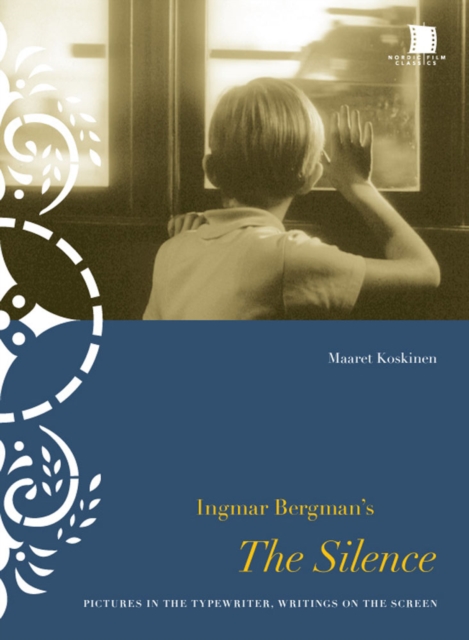
Ingmar Bergman's The Silence
Ingmar Bergman's 1963 film The Silence was made at a point in his career when his stature as one of the great art-film directors allowed him to push beyond the boundaries of what was acceptable to censorship boards in Sweden and the United States. The film's depiction of sexuality was, as Judith Crist wrote at the time in the New York Herald-Tribune, \"not for the prudish.\" Yet Bergman's notebooks and screenplays reveal his tendency for self-censorship, both to dampen the literary quality of his screenwriting and to alter portions of the script that Bergman ultimately deemed too provocative.
Maaret Koskinen, a professor of cinema studies and film critic for Sweden's largest national daily newspaper, was the first scholar given access to Bergman's private papers during the last years of his life. Bergman's notebooks reveal the difficulties he experienced in writing for the medium of moving images and his meditations on the relationship (or its lack) between moving images and the spoken or written word. Koskinen's attention to this intermedial framework is anchored in a close reading of the film, focusing on the many-faceted relationships between images and dialogue, music, sound, and silence.
The Silence offers filmgoers an entryway into the cinematic, cultural, and sociopolitical issues of its time, but remains a classic - rich enough for scrutiny from a variety of perspectives and methodologies. Koskinen draws a picture of Bergman that challenges the traditional view of him as an auteur, revealing his attempts to overcome his own image as a creator of serious art films by making his work relevant to a new generation of filmgoers. Her exploration of the film touches on issues of censorship and the cinema of small nations, while shedding new light on the shifting views of Bergman and auteurist film, high art, and popular culture.
eBook

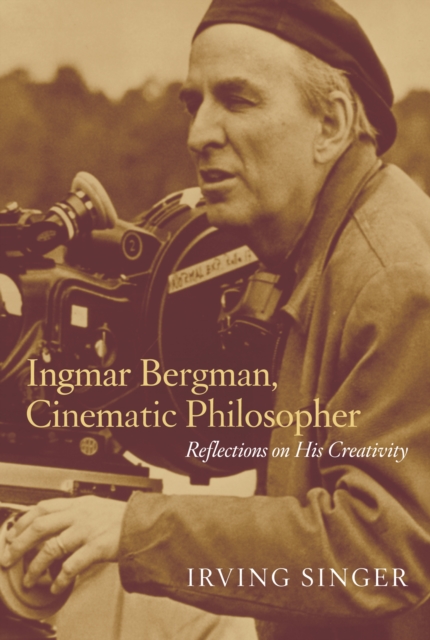
Ingmar Bergman, cinematic philosopher : reflections on his creativity
Known for their repeating motifs and signature tropes, the films of Ingmar Bergman also contain extensive variation and development. In these reflections on Bergman's artistry and thought, Irving Singer discerns distinctive themes in Bergman's filmmaking, from first intimations in the early work to consummate resolutions in the later movies. Singer demonstrates that while Bergman's output is not philosophy on celluloid, it attains an expressive and purely aesthetic truthfulness that can be considered philosophical in a broader sense. Through analysis of both narrative and filmic effects, Singer probes Bergman's mythmaking and his reliance upon the magic inherent in his cinematic techniques. Singer traces throughout the evolution of Bergman's ideas about life and death, and about the possibility of happiness and interpersonal love. In the overtly self-referential films that he wrote or directed (The Best Intentions, Fanny and Alexander, Sunday's Children) as well as the less obviously autobiographical ones (including Wild Strawberries, The Seventh Seal, and the triad that begins with Through a Glass Darkly) Bergman investigates problems in his existence and frequently reverts to childhood memories. In such movies as Smiles of a Summer Night, Scenes from a Marriage, and Saraband, Bergman draws upon his mature experience and depicts the troubled relationships between men who are often weak and women who are made to suffer by the damaged men with whom they live. In Persona, Cries and Whispers, and other works, his experiments with the camera are uniquely masterful. Inspecting the panorama of Bergman's art, Singer shows how the endless search for human contact motivates the content of his films and reflects Bergman's profound perspective on the world.
eBook

Queer Bergman
One of the twentieth century's most important filmmakers-indeed one of its most important and influential artists-Ingmar Bergman and his films have been examined from almost every possible perspective, including their remarkable portrayals of women and their searing dramatizations of gender dynamics. Curiously however, especially considering the Swedish filmmaker's numerous and intriguing comments on the subject, no study has focused on the undeniably queer characteristics present throughout this nominally straight auteur's body of work; indeed, they have barely been noted.
Queer Bergmanmakes a bold and convincing argument that Ingmar Bergman's work can best be thought of as profoundly queer in nature. Using persuasive historical evidence, including Bergman's own on-the-record (though stubbornly ignored) remarks alluding to his own homosexual identifications, as well as the discourse of queer theory, Daniel Humphrey brings into focus the director's radical denunciation of heteronormative values, his savage and darkly humorous deconstructions of gender roles, and his work's trenchant, if also deeply conflicted, attacks on homophobically constructed forms of patriarchic authority. Adding an important chapter to the current discourse on GLBT/queer historiography, Humphrey also explores the unaddressed historical connections between post-World War II American queer culture and a concurrently vibrant European art cinema, proving that particular interrelationship to be as profound as the better documented associations between gay men and Hollywood musicals, queer spectators and the horror film, lesbians and gothic fiction, and others.
eBook

Ingmar Bergman
In analyzing a selection of Bergman's films, Wood makes a compelling case for the logic of the filmmaker's development while still respecting and indicating the distinctiveness of his individual films.
eBook

Ingmar Bergman
Gervais shows also how Bergman's work resonates in a much broader sphere than the personal. His films, which are without equal in the history of cinema in quality, consistency, and relevance, are crucial moments in an ongoing conversation with western culture in its frenetic evolution since World War II.
eBook