
Catalogue Search | MBRL


Are you sure you want to remove the book from the shelf?

{{itemTitle}}
170,967
result(s) for
"Berries."
Sort by:


MYBA and MYBPA transcription factors co-regulate anthocyanin biosynthesis in blue-coloured berries
We used blue berries of bilberry (Vaccinium myrtillus) to comprehensively characterise flavonoid-regulating R2R3 MYBs, which revealed a new type of co-regulation in anthocyanin biosynthesis between members of MYBA-, MYBPA1- and MYBPA2-subgroups. VmMYBA1, VmMYBPA1.1 and VmMYBPA2.2 expression was elevated at berry ripening and by abscisic acid treatment. Additionally, VmMYBA1 and VmMYBPA1.1 expression was strongly downregulated in a white berry mutant. Complementation and transient overexpression assays confirmed VmMYBA1 and VmMYBA2 to induce anthocyanin accumulation. Promoter activation assays showed that VmMYBA1, VmMYBPA1.1 and VmMYBPA2.2 had similar activity towards dihydroflavonol 4-reductase (DFR) and anthocyanidin synthase (ANS), but differential regulation activity for UDP-glucose flavonoid 3-O-glucosyltransferase (UFGT) and flavonoid 3′5′-hydroxylase (F3′5′H) promoters. Silencing of VmMYBPA1.1 in berries led to the downregulation of key anthocyanin and delphinidin biosynthesis genes. Functional analyses of other MYBPA regulators, and a member of novel MYBPA3 subgroup, associated them with proanthocyanidin biosynthesis and F3′5′H expression. The existence of 18 flavonoid-regulating MYBs indicated gene duplication, which may have enabled functional diversification among MYBA, MYBPA1 and MYBPA2 subgroups. Our results provide new insights into the intricate regulation of the complex anthocyanin profile found in blue-coloured berries involving regulation of both cyanidin and delphinidin branches.
Journal Article
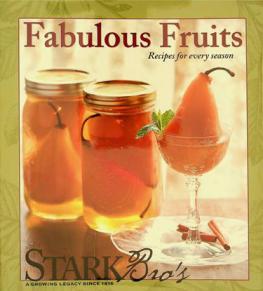
Fabulous fruits : recipes for every season
\"Delicious fruits that tantalize the palate all summer long and that can be canned, dried or frozen to remind us of those hot summer days are the object of this book. All the recipes can be accomplished by the home cook with minimal cooking knowledge. The range of recipes go from more upscale cuisine to good country cooking that our grandmothers and mothers (and even grandfathers and fathers) placed on our family table for generations.\"--Jacket.
Book


Lemons are a girl's best friend
\"[This book] is a handy, pocket-sized guide to thirty superfoods, each with two simple recipes--one to eat and one to use as a beauty treatment, complete with notes about each food's benefits and best uses\"--Amazon.com.
Book


50 Years Ago/100 Years Ago
Collecting the pigment from raw, reddish berries in sufficient amounts for identification was found to be too laborious a task.
Journal Article

Wild berries = Pikaci-m هinisa
Clarence and his grandmother pick wild blueberries and meet ant, spider, and fox in a beautiful woodland landscape.
Book

Evaluation of Polyphenol Anthocyanin-Enriched Extracts of Blackberry, Black Raspberry, Blueberry, Cranberry, Red Raspberry, and Strawberry for Free Radical Scavenging, Reactive Carbonyl Species Trapping, Anti-Glycation, Anti-β-Amyloid Aggregation, and Microglial Neuroprotective Effects
Glycation is associated with several neurodegenerative disorders, including Alzheimer’s disease (AD), where it potentiates the aggregation and toxicity of proteins such as β-amyloid (Aβ). Published studies support the anti-glycation and neuroprotective effects of several polyphenol-rich fruits, including berries, which are rich in anthocyanins. Herein, blackberry, black raspberry, blueberry, cranberry, red raspberry, and strawberry extracts were evaluated for: (1) total phenolic and anthocyanins contents, (2) free radical (DPPH) scavenging and reactive carbonyl species (methylglyoxal; MGO) trapping, (3) anti-glycation (using BSA-fructose and BSA-MGO models), (4) anti-Aβ aggregation (using thermal- and MGO-induced fibrillation models), and, (5) murine microglia (BV-2) neuroprotective properties. Berry crude extracts (CE) were fractionated to yield anthocyanins-free (ACF) and anthocyanins-enriched (ACE) extracts. The berry ACEs (at 100 μg/mL) showed superior free radical scavenging, reactive carbonyl species trapping, and anti-glycation effects compared to their respective ACFs. The berry ACEs (at 100 μg/mL) inhibited both thermal- and MGO-induced Aβ fibrillation. In addition, the berry ACEs (at 20 μg/mL) reduced H2O2-induced reactive oxygen species production, and lipopolysaccharide-induced nitric oxide species in BV-2 microglia as well as decreased H2O2-induced cytotoxicity and caspase-3/7 activity in BV-2 microglia. The free radical scavenging, reactive carbonyl trapping, anti-glycation, anti-Aβ fibrillation, and microglial neuroprotective effects of these berry extracts warrant further in vivo studies to evaluate their potential neuroprotective effects against AD.
Journal Article