
Catalogue Search | MBRL


Are you sure you want to remove the book from the shelf?

{{itemTitle}}
456
result(s) for
"Beuys, Joseph"
Sort by:


Who Should Wake Coyote?
Abstract This article explores Lucy Wright and Joseph Beuys’ creative engagements with folklore and traditional knowledge. It considers the degree to which these European artists’ work might mitigate or promote resilience to the impacts of climate change globally. If there is potential to be gained from engaging creatively with folklore to support more sustainable life ways, who has the right to do this and what are the potential challenges around this kind of work? While recognising that intangible cultural heritage traditions often display vital human interconnections with local landscapes, such that their protection may also constitute a form of environmental protection, it asks whether supporting, or perhaps rather shifting European reactions to climate change need always be achieved with reference to European folklore, or whether trans-continental work may also be valuable. Reflecting on the Anthropocene, the article asks how it frames, supports, elides or limits action on climate change. It then turns to indigenous stories of coyote as exemplary stories, pedagogical narratives which initiate creative processes of personal and collective interpretation and guide people to a sustainable relationship with their environment. Finally, it draws on Randazzo and Richter's recent work to consider how such traditions might be turned to in ethical ways to critique the Anthropocene thesis, opening up other possible ways to support ongoing life on earth.
Journal Article

Joseph Beuys
Joseph Beuys is one of the most important and controversial German artists of the late twentieth century, an artist whose persona and art is so tightly interwoven with Germany's fascist past that he has been a problematic figure for postwar and post-reunification Germany. In illuminating the centrality of trauma and the sustained investigation of the notion of art as the two defining threads in Beuys's life and art, this book offers a critical biography that deepens our understanding of his many works and their contribution.
Book

Art Together, Prayer Together: Relational and Revelatory Practices of Joseph Beuys, Dietrich Bonhoeffer and Leslie Iwai
This paper investigates a theology of prayer embedded within social and artistic practice. It considers how conceptual art broadened social possibilities for art, and how for Joseph Beuys and later Leslie Iwai, these possibilities probe spiritual realities. Beuys’ democratic methodologies, considering everyone as performing the world-shaping work of the artist, were central to his practice and described by Beuys as representations of Christ. In Life Together, the artist’s contemporary, Dietrich Bonhoeffer offers his own approach to Christ’s presence within sociality. The book reflects on his time directing a seminary where communal life was not only shaped by spiritual exercises like prayer, but also enriched by the arts. Consequently, one may read Life Together as grounding for socially and spiritually attuned artistic endeavours. This has been the case in Leslie Iwai’s conceptually and communally motivated artistic practice, which has developed alongside prayer practices and her own readings of Life Together. Social-spiritual features of Beuys’ conceptual art—seeing Christ and one another concurrently—are extended in Bonhoeffer’s articulation of prayer—not only revealing God and each other but also a means of presenting one another to God. Affinities between conceptual art and prayer emerge: both may be disclosive, holding together seen and unseen realities. Iwai can be seen to work from a conceptual mode of social-spiritual disclosure, and from consonant revelatory and intercessory practices of prayer echoing those of Bonhoeffer’s Life Together.
Journal Article

The Neglected Place of “Totems” in Contemporary Art
The religious nature of Joseph Beuys’ works was ignored or intentionally avoided by mainstream criticism since his artistic practice was ridiculed for its potential spirituality. It is argued that Beuys’ works are work meditations on the issues of potential ego in totemic art, which are frequent topics of theological concern. For example, what is the nature of our consciousness after death, and how does it relate to the consciousness of others? Beuys’ conceptual artworks reveal his engagement with the “witchcraft etiquette” of totemic art and his exploration of theological questions such as the relation between human consciousness and divinity, the role of sacrifice and resurrection, and the meaning of self-awareness. In other words, we can draw inspiration from the theological theories of Alfred North Whitehead and Georg Wilhelm Friedrich Hegel to examine Beuys’ choice of conceptual art through the lens of his deep self-consciousness of totem worship. In general, Beuys’ works pose an important question: how can we awaken our chaotic consciousness to new or forgotten sprouts which may rejuvenate our existence in the world?
Journal Article
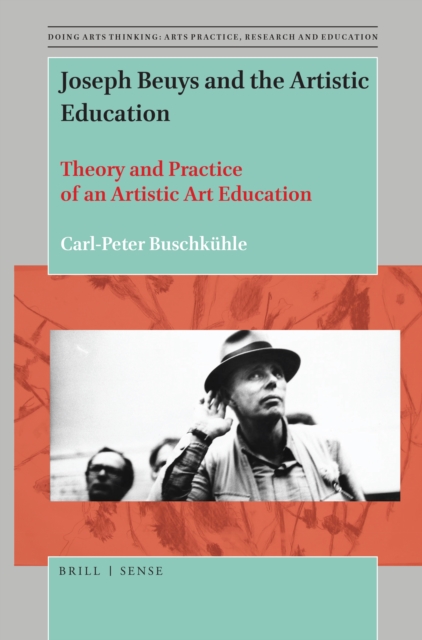
Joseph Beuys and the artistic education : theory and practice of an artistic art education
This book examines significant aspects of the art and theory of Joseph Beuys and the challenges they raise for contemporary artistic education. A model for artistic education is developed through foundational theories and a variety of examples from pedagogical practice.
eBook

Joseph Beuys
Part of the 'Phaidon Focus' series, this is the perfect introduction to the life and art of Joseph Beuys.
Book

Beim Wort Genommen
Zum 100.Geburtstag von Joseph Beuys begegnet Ron Manheim dem Künstler kritisch und wirft in Beim Wort genommen einen genaueren Blick auf seine Äußerungen zur Zeit des Nationalsozialismus.In diesen hat Beuys nicht nur die eigene, persönliche Geschichte einem Idealbild 'angepasst'.
eBook