
Catalogue Search | MBRL


Are you sure you want to remove the book from the shelf?

{{itemTitle}}
1,323
result(s) for
"Bewusstsein."
Sort by:

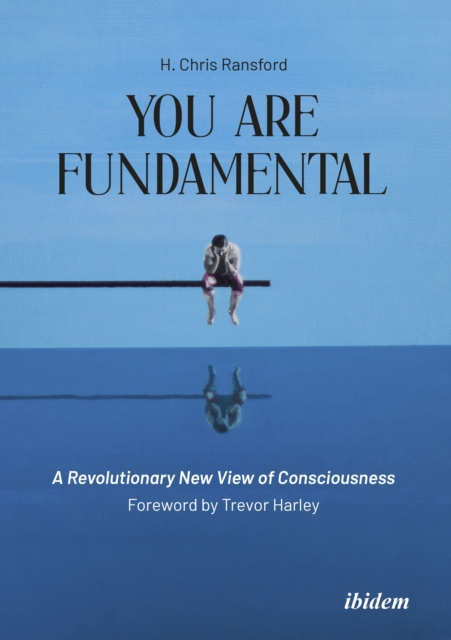
You Are Fundamental: A Revolutionary New View of Consciousness
Most studies of consciousness proceed from a standpoint where external reality already pre-exists. As such, these studies would be inherently unable to recognize it if consciousness in fact arose at the same level where reality itself takes its source—at the level where wave functions collapse and thereby generate the fabric of material reality.At the same time, a number of compelling contemporary interpretations of physics strongly hint that consciousness must most likely be a fundamental constituent of reality, that it cannot be emergent, and that the role of the brain is limited to the harnessing, optimization, and deployment of consciousness within material reality—aka the realm of collapsed wave functions. This view seems to be also supported by a range of credible observations made by a number of credible professionals who operate at the margins of studies of consciousness, such as psychiatrists, who occasionally observe puzzling cases involving unusual phenomena related to consciousness. If we back-engineer the inevitable macroscopic consequences of a consciousness born at the same level as the building blocks of physical reality itself, we discover that such marginal phenomena become then fully explainable. The book offers readers new insights into interpretations of current research in physics and enables readers without a background in physics to understand the implications and their relevance to our understanding of consciousness.
eBook


What is consciousness, and could machines have it?
The controversial question of whether machines may ever be conscious must be based on a careful consideration of how consciousness arises in the only physical system that undoubtedly possesses it: the human brain. We suggest that the word “consciousness” conflates two different types of information-processing computations in the brain: the selection of information for global broadcasting, thus making it flexibly available for computation and report (C1, consciousness in the first sense), and the self-monitoring of those computations, leading to a subjective sense of certainty or error (C2, consciousness in the second sense). We argue that despite their recent successes, current machines are still mostly implementing computations that reflect unconscious processing (C0) in the human brain. We review the psychological and neural science of unconscious (C0) and conscious computations (C1 and C2) and outline how they may inspire novel machine architectures.
Journal Article

RELIGIOUS IDENTITY AND ECONOMIC BEHAVIOR
We find using laboratory experiments that primes that make religion salient cause subjects to identify more with their religion and affect their economic choices. The effect on choices varies by religion. For example, priming causes Protestants to increase contributions to public goods, whereas Catholics decrease contributions to public goods, expect others to contribute less to public goods, and become less risk averse. A simple model implies that priming effects reveal the sign of the marginal impact of religious norms on preferences. We find no evidence of religious priming effects on disutility of work effort, discount rates, or dictator game generosity.
Journal Article

Queer women and religious individualism
Melissa M. Wilcox explores the complex spiritual lives of queer women in
the Los Angeles area. She takes the reader on a tour of a colorful array of
religious and secular groups that serve as spiritual resources for these women --
from the well-known Metropolitan Community Churches to Wiccan covens, from the Gay
and Lesbian Sierrans to the Sisters of Perpetual Indulgence. Arguing that these
women's stories are exemplary cases of postmodern patterns of religious identity,
belief, and practice, Wilcox offers a nuanced analysis of contemporary Western
spirituality and selfhood, and a detailed exploration of the history of queer
religious organizing in Los Angeles. Queer Women and Religious Individualism is
important reading for scholars in religious studies, sociology, women's studies, and
LGBT studies.
eBook

IDEOLOGICAL SEGREGATION ONLINE AND OFFLINE
We use individual and aggregate data to ask how the Internet is changing the ideological segregation of the American electorate. Focusing on online news consumption, offline news consumption, and face-to-face social interactions, we define ideological segregation in each domain using standard indices from the literature on racial segregation. We find that ideological segregation of online news consumption is low in absolute terms, higher than the segregation of most offline news consumption, and significantly lower than the segregation of face-to-face interactions with neighbors, co-workers, or family members. We find no evidence that the Internet is becoming more segregated over time.
Journal Article

Emotional priming for sustainable consumption? The effects of social media content on the valuation of chocolate
Abstract
Current consumption patterns in the Global North are unsustainable across environmental, social, and economic dimensions. To promote more sustainable consumer behavior, emotional priming on social media has become an increasingly popular tool. In this paper, we mimic social media content to test the effectiveness of emotional priming in incentivizing sustainable consumption. Specifically, we examine whether emotionally primed information about sustainability aspects in cocoa production increases consumers’ valuation for sustainably produced products in the short and medium term. To achieve this, we conducted an online panel survey of 2,161 German consumers with random assignment to one of four different treatments (unprimed information or information with emotional prime) designed as social media posts (videos). We differentiate between environmental sustainability and social responsibility, and separate the products into sustainability certification, uncertified claims, and conventional chocolate. We find statistically significant positive effects of the emotional primes on consumers’ willingness-to-pay (WTP) for products with sustainability certifications and noncertified sustainability claims in the short term. These effects can be attributed to negative emotions triggered by the primes. Two weeks after the treatments, the WTP decreases for all groups. The difference in WTP between the primed and unprimed groups diminishes in the medium term. Primed participants value sustainability certifications and claims less than those who received unprimed information.
Journal Article
LAST-PLACE AVERSION
We present evidence from laboratory experiments showing that individuals are “last-place averse.” Participants choose gambles with the potential to move them out of last place that they reject when randomly placed in other parts of the distribution. In modified dictator games, participants randomly placed in second-to-last place are the most likely to give money to the person one rank above them instead of the person one rank below. Last-place aversion suggests that low-income individuals might oppose redistribution because it could differentially help the group just beneath them. Using survey data, we show that individuals making just above the minimum wage are the most likely to oppose its increase. Similarly, in the General Social Survey, those above poverty but below median income support redistribution significantly less than their background characteristics would predict.
Journal Article
