
Catalogue Search | MBRL


Are you sure you want to remove the book from the shelf?

{{itemTitle}}
1,531
result(s) for
"Bhagat Singh"
Sort by:

Inquilab
Puts forward the revolutionary freedom fighter Bhagat Singh's vision for independent India through some of his most relevant writings for our times.
eBook

India's revolutionary inheritance : politics and the promise of Bhagat Singh
\"What do anti-colonial histories mean for politics in contemporary India? How can we understand a political terrain that appears crowded with the dead, heroic figures from past struggles who call the living to account and demand action? What role do these 'afterlives' play in the inauguration of new politics and the fashioning of possible futures? In this engaging and innovative analysis of anti-colonial afterlives in modern South Asia, Chris Moffat crafts a framework that takes the dead seriously - not as passive entities, ceremonially invoked, but as active interlocutors and instigators in the present. Focusing on the iconic revolutionary martyr Bhagat Singh (1907-1931), Moffat establishes the problem of inheritance as central to the forms and futures of democracy in this postcolonial polity. Tracing Bhagat Singh's revenant presence in India today, he demonstrates how living communities are animated by a sense of obligation, duty or debt to the dead\"-- Provided by publisher.
BOOK

Xenophobia in Oregon History: Mark O. Hatfield Lecture Series Post-Lecture Discussion
On Tuesday, September 8, 2020, Professor Erika Lee spoke about her book, America For Americans: A History of Xenophobia in the United States, as part of the Oregon Historical Society’s (OHS) annual Mark O. Hatfield This is a special event that is part of our annual Mark O. Hatfield Lecture Series. Due to the COVID-19 global pandemic, Lee’s talk was held virtually, and OHS hosted a follow-up virtual public history roundtable conversation on Thursday, September 10, 2020, which is transcribed here as a record of the event. The conversation between Oregon Historical Quarterly editor Eliza E. Canty-Jones; Jennifer Fang, Director of Education at the Japanese American Museum of Oregon and an adjunct professor at the University of Portland; Johnanna Ogden, an independent historian; and Sankar Raman, founder and board president of the volunteer-run nonprofit The Immigrant Story, reflects on Lee’s book and makes connections to xenophobia in Oregon.
Journal Article

Politics and the Work of the Dead in Modern India
This article provides a framework for understanding the continuing political potential of the anticolonial dead in twenty-first-century India. It demonstrates how scholars might move beyond histories of reception to interrogate the force of inheritance in contemporary political life. Rather than the willful conjuring of the dead by the living, for a politics in the present, it considers the more provocative possibility that the dead might themselves conjure politics—calling the living to account, inciting them to action. To explicate the prospects for such an approach, the article traces the contested afterlives of martyred Indian revolutionary Bhagat Singh (1907–1931), comparing three divergent political projects in which this iconic anticolonial hero is greeted as interlocutor in a struggle caught “halfway.” It is this temporal experience of “unfinished business”—of a revolution left incomplete, a freedom not yet perfected—that conditions Bhagat Singh's appearance as a contemporary in the political disputes of the present, whether they are on the Hindu nationalist right, the Maoist student left, or amidst the smoldering remains of Khalistani separatism in twenty-first-century Punjab. Exploring these three variant instances in which living communities affirm Bhagat Singh's stake in the struggles of the present, the article provides insight into the long-term legacies of revolutionary violence in India and the relationship between politics and the public life of history in the postcolonial world more generally.
Journal Article

The Importance of Sardar Udham
[...]through the voice of Udham Singh himself and his friend, the Sikh revolutionary, Bhagat Singh, leader of the Hindustan Socialist Republican Association (HSRA), the film also lays bare the logic of colonial commercial exploitation through which colonies like India were impoverished to ensure the prosperity of the United Kingdom—a process that continues to be reproduced through the contemporary networks of global finance capital. When divisions of caste, creed, and class have become more blatant than ever, when caste- and gender-based acts of violence continue to rise, and when billionaires thrive even as a pandemic pushes millions into poverty, such articulations are essential to contest the dominant discourses and their impact on the popular psyche. Today, when we see Kashmiri leaders under house arrest, or the attacks launched against students of institutions such as Jawaharlal Nehru University, Jamia Millia Islamia, or Jadavpur University by the supporters of the ruling regime, often accompanied by the conspicuous indifference of the police, the continuation of colonial practices becomes clear.
Journal Article

Modernity and Caste in Khatri and High-Caste Men’s Auto/Biographies
This paper studies the auto/biographies of high-caste middle-class Punjabi Khatri men, and those of cognate castes like Arora and Baniya, written in the first half of the twentieth century: men who were born in the second half of the nineteenth century or early twentieth century. While the discourse on caste under the colonial regime exploded, there was also an embarrassment about caste, or re-thinking its place in society among the upper-caste groups who invested in ideas of progress, improvement and scientism. It is argued that caste was referenced in the memoirs, life stories and self-reflexive writing when these men spoke of their familial backgrounds and admired the deep religiosity and devotionalism of their fathers even though some paternal practices were incongruent with the reformism of the sons. Caste is also in play when one traces the advantages of literacy, education, professional accomplishments, mobility, and reformist activities of men who came to have an important presence in public life. A number of these men had similar life trajectories, indicative of how some aspects of colonial educational and administrative structures could be utilized by them.
Journal Article

The Portrait's Journey: The Image, Social Communication and Martyr-Making in Colonial India
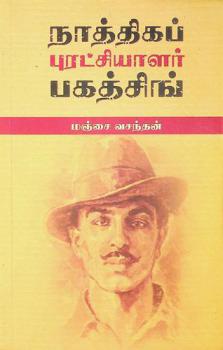
Bhagat Singh, the revolutionary nationalist executed by the British in 1931, continues to be an enormously popular figure in contemporary India, immediately recognizable in ubiquitous posters, stickers and placards by his distinctive hat. This article uncovers the story behind Bhagat Singh's original ‘hat photograph’ by tracing the portrait's journey from the time it was taken, in 1929, to the early 1930s. The portrait was devised as a tactic of political subversion and intended as revolutionary propaganda, although it became more widely interpreted as an icon of defiant nationalism and a symbol of imperial injustice. The image quickly morphed from its original format, and rapidly circulated in the form of reproductions, paintings and drawings, travelling well beyond the confines of the literate domain, making a decisive impact on the charged political landscape of the early 1930s.
Journal Article