
Catalogue Search | MBRL


Are you sure you want to remove the book from the shelf?

{{itemTitle}}
1,122
result(s) for
"Bible Influence."
Sort by:

Tropologies : ethics and invention in England, c. 1350-1600
\"Tropologies is the first book-length study to elaborate the medieval and early modern theory of the tropological, or moral, sense of scripture. Ryan McDermott argues that tropology is not only a way to interpret the Bible but also a theory of literary and ethical invention. The \"tropological imperative\" demands that words be turned into works--books as well as deeds. Beginning with Augustine, Jerome, and Gregory the Great, then treating monuments of exegesis such as the Glossa ordinaria and Nicholas of Lyra, as well as theorists including Thomas Aquinas, Erasmus, Martin Luther, and others, Tropologies reveals the unwritten history of a major hermeneutical theory and inventive practice. Late medieval and early Reformation writers adapted tropological theory to invent new biblical poetry and drama that would invite readers to participate in salvation history by inventing their own new works. Tropologies reinterprets a wide range of medieval and early modern texts and performances--including the Patience-Poet, Piers Plowman, Chaucer, the York and Coventry cycle plays, and the literary circles of the reformist King Edward VI--to argue that \"tropological invention\" provided a robust alternative to rhetorical theories of literary production. In this groundbreaking revision of literary history, the Bible and biblical hermeneutics, commonly understood as sources of tumultuous discord, turn out to provide principles of continuity and mutuality across the Reformation's temporal and confessional rifts. Each chapter pursues an argument about poetic and dramatic form, linking questions of style and aesthetics to exegetical theory and theology. Because Tropologies attends to the flux of exegetical theory and practice across a watershed period of intellectual history, it is able to register subtle shifts in literary production, fine-tuning our sense of how literature and religion mutually and dynamically informed and reformed each other. \"This is an original book. It draws confidently on a wide range of medieval critical and scholarly work, as well as on a cogent body of contemporary theory and theology. It not only moves easily and eloquently between the fourteenth and the sixteenth centuries but also delves back into the 'tropological' Christian thought of the previous thousand years.\" --Nicolette Zeeman, University of Cambridge\"-- Provided by publisher.
BOOK

The Blackwell Companion to the Bible in English Literature
This Companion explores the Bible's role and influence on individual writers, whilst tracing the key developments of Biblical themes and literary theory through the ages.An ambitious overview of the Bible's impact on English literature - as arguably the most powerful work of literature in history - from the medieval period through.
eBook

Erasmus and Calvin on the foolishness of God : reason and emotion in the Christian philosophy
\"What did Paul mean when he wrote that the foolishness of God is wiser than human wisdom? Through close analysis of the sixteenth-century reception of Paul's discourses of folly, this book examines the role of the New Testament in the development of what Erasmus and John Calvin refer to as the \"Christian philosophy.\" Erasmus and Calvin on the Foolishness of God reveals the importance of Pauline rhetoric in the development of humanist critiques of scholasticism while charting the formation of a specifically affective approach to religious epistemology and theological method. As the first book-length examination of Calvin's indebtedness to Erasmus, which also considers the participation of Bullinger, Pellikan, and Melanchthon in an Erasmian exegetical milieu, it is a case-study in the complicated cross-confessional exchange of ideas in the sixteenth century. Kirk Essary examines assumptions about the very nature of theology in the sixteenth century, how it was understood by leading humanist reformers, and how ideas about philosophy and rhetoric were received, appropriated, and shared in a complex intellectual and religious context.\"-- Provided by publisher.
BOOK

The Social Life of Scriptures
What do Christians do with the Bible? How do theyùindividually and collectivelyùinteract with the sacred texts? Why does this engagement shift so drastically among and between social, historical, religious, and institutional contexts? Such questions are addressed in a most enlightening, engaging, and original way inThe Social Life of Scriptures.
Contributors offer a collection of closely analyzed and carefully conducted ethnographic and historical case studies, covering a range of geographic, theological, and cultural territory, including: American evangelicals and charismatics; Jamaican Rastafarians; evangelical and Catholic Mayans; Northern Irish charismatics; Nigerian Anglicans; and Chinese evangelicals in the United States.
The Social Life of Scripturesis the first book to present an eclectic, cross-cultural, and comparative investigation of Bible use. Moreover, it models an important movement to outline a framework for how scriptures are implicated in organizing social structures and meanings, with specific foci on gender, ethnicity, agency, and power.
eBook

Christian doctrines in Islamic theology
By the tenth century, Islamic scholars were making use of Christian doctrines as examples of misguided thinking that showed the correctness of Islam. This volume explores key writings in this tradition, including those of al-Nashi' al-Akbar, al-Maturidi, al-Baqillani and 'Abd al-Jabbar.
Book

The King James Bible and the world it made
The King James translation of the Bible ushered in a new eloquence that until 1611 had not existed in the English language. Four centuries later, the literary and historical power of this Bible continues to awe. Originally conceived to help unify Protestants during the English Reformation, many of the Bible's phrases still saturate popular prose--as evidenced by sayings such as \"an eye for an eye\" and Abraham Lincoln's famous \"a house divided against itself,\" and even in the intonations of Martin Luther King, Jr., and the music of Johnny Cash. The King James Bible and the World It Made brings into conversation leading contemporary scholars who articulate how this celebrated translation repeatedly influenced the language of politics, statecraft, and English literature while offering Christians a unique resource for living the faith. Including Mark Noll, Alister McGrath, Lamin Sanneh, David Bebbington, Robert Alter, Philip Jenkins, and Laura Knoppers, this collection highlights the most notable facets of the King James Bible and the history it created, and astutely reflects on its relevance to the modern world.
eBook
The unchained Bible : cultural appropriations of Biblical texts
This volume explores a number of instances of unexpected but influential readings of the Bible in popular culture, literature, film, music and politics.The argument in all of them is that the effects of the Bible continues to have an effect on contemporary culture in ways that may surprise and sometimes dismay both religious and secular groups.
eBook
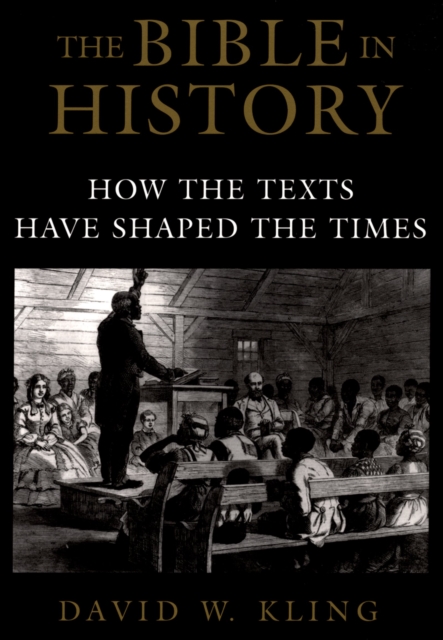
The Bible in history : how the texts have shaped the times
This book examines the dynamic interplay between scripture and society. Kling traces the story of how specific biblical texts have at different times emerged to be the inspiration of movements that have changed the course of history. He selects eight specific texts (sometimes a single verse, other times a selection of verses or chapters, even books) and demonstrates how each shaped the direction of Christian history. These texts include the story of the rich young ruler (Matthew 19: 16–22) as an inspiration for Anthony and the beginnings of monasticism; the “Petrine text” (Matthew 16:18) as the basis for the papacy; the centrality of the Song of Songs in medieval Christendom, particularly as interpreted through the mystical leanings of Bernard of Clairvaux; Romans 1:17 and its influence upon Martin Luther and the Protestant Reformation; Jesus’ teachings in the Sermon on the Mount, embraced by Anabaptists as a call to radical discipleship, including pacifism; the varied applications of the exodus motif and Moses figures in African-American history, from slavery to Martin Luther King to liberation theology; the Book of Acts with its references to the outpouring of the Spirit and speaking in tongues as the basis for the rise of modern Pentecostalism; and Galatians 3:28, which has been adopted by feminists as a rallying cry for women’s ordination. Kling’s study demonstrates that scripture has functioned in a dialectical interplay of influences; texts have shaped history and history has shaped the interpretation of texts. Specifically, texts have functioned in at least five ways: (1) as transforming agents to another way of thinking and acting, believing and behaving; (2) as recreated meaning, undergoing multiple interpretations and applications; (3) as comprehending sources, drawing other biblical texts into their thematic orbit; (4) as hermeneutical keys unlocking the essential meaning in or resolving tensions within scripture; and (5) as secondary justifications, legitimizing after the fact to support existing historical realities.
eBook

The Bible in the Public Square
Explore perceptions and interpretations of scripture in American politics, identity, popular culture, and public education
Essays from the perspectives of American history, the history of ideas, film studies, visual studies, cultural studies, education, and church-state studies provide essential research for those interested in the intersection of the Bible and American culture.
Features:
Ten essays and an introduction present research from professors of biblical studies, Judaism, English, and historyArticles relevant to scholars, students, and the general publicAnalysis of the tensions in American society regarding the Bible and its role in public life.
eBook
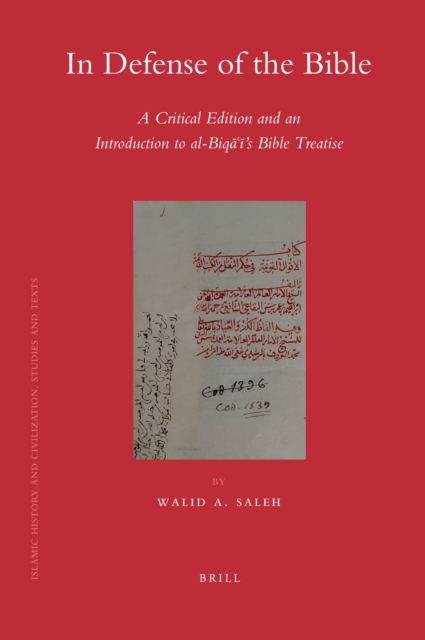
In Defense of the Bible
This is a critical edition of a very important document from the history of the Islamic interaction with the Bible. The edition is based on four copies of the document. The introduction places the document in its historical context and offers an analysis of its significance.
eBook