
Catalogue Search | MBRL


Are you sure you want to remove the book from the shelf?

{{itemTitle}}
404
result(s) for
"Bible Old Testament -- Criticism, Textual"
Sort by:
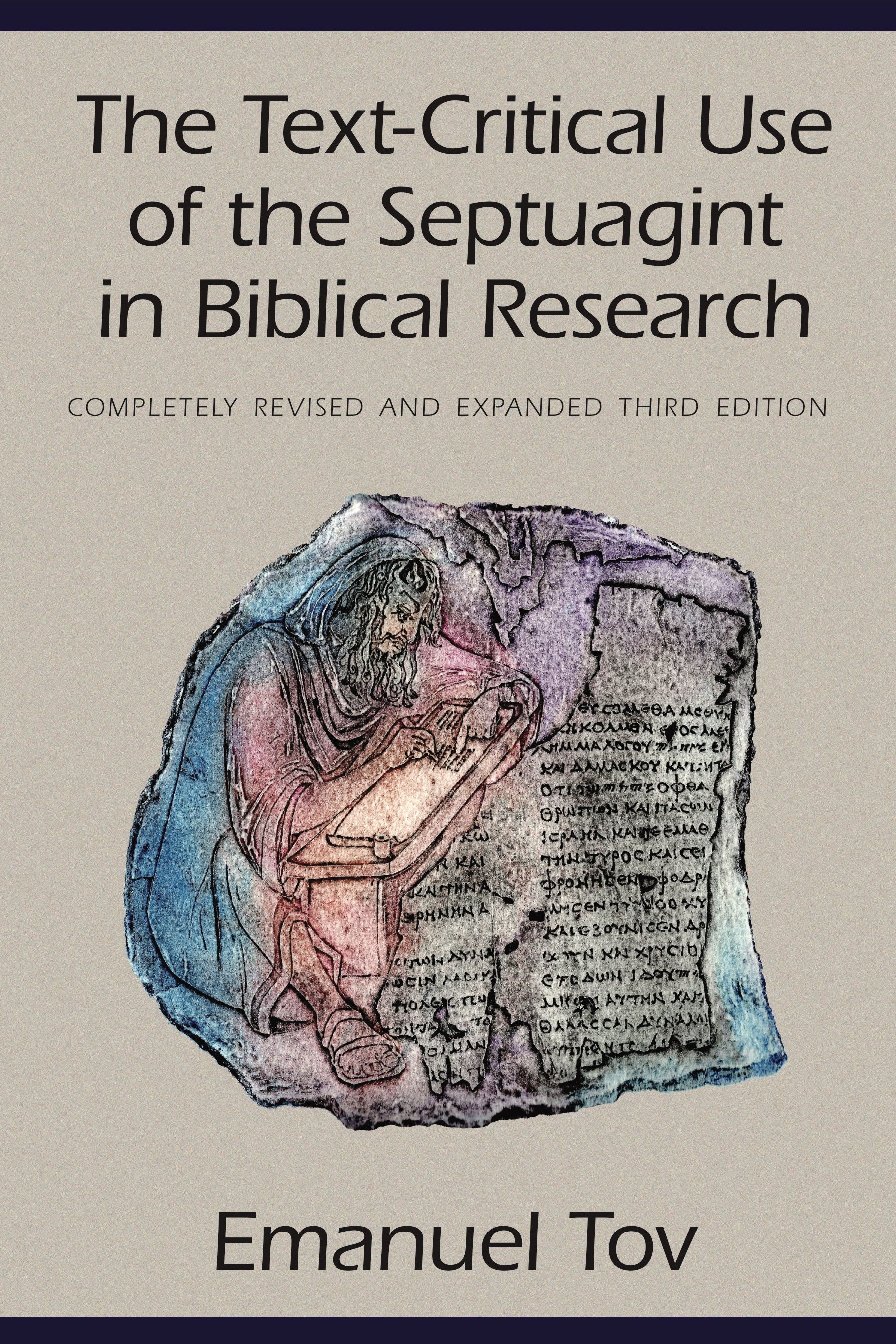
The text-critical use of the Septuagint in biblical research
This handbook provides a practical guide for the student and scholar alike who wishes to use the Septuagint (LXX) in the text-critical analysis of the Hebrew Bible. It does not serve as another theoretical introduction to the LXX, but it provides all the practical background information needed for the integration of the LXX in biblical studies. The LXX, together with the Masoretic Text and several Qumran scrolls, remains the most significant source of information for the study of ancient Scripture, but it is written in Greek, and many technical details need to be taken into consideration when using this tool. Therefore, a practical handbook such as this is needed for the integration of the Greek translation in the study of the Hebrew Bible. The Text-Critical Use of the Septuagint in Biblical Research is based on much background information, intuition and experience, clear thinking, and a solid description of the procedures followed. The author presents his handbook after half a century of study of the Septuagint, four decades of specialized teaching experience, and involvement in several research projects focusing on the relation between the Hebrew and Greek Bibles. The first two editions of this handbook, published by Simor of Jerusalem (Jerusalem Biblical Studies 3 [1981] and 8 [1997]), received much praise but have been out of print for a considerable period. This, the third, edition presents a completely revised version of the previous editions based on the many developments that took place in the analysis of the Septuagint, the Hebrew Bible and the Qumran Scrolls. Much new information has also been added. Eisenbrauns has been involved in the marketing of the previous two editions and is proud to offer now its own completely novel edition. A must for students of the Hebrew Bible, textual criticism, the Septuagint and the other ancient translations, Dead Sea Scrolls, and Jewish Hellenism.
eBook

Scribal Memory and Word Selection
What were ancient scribes doing when they copied a manuscript of
a literary work? This question is especially problematic when we
realize that ancient scribes preserved different versions of the
same literary texts. In Scribal Memory and Word Selection: Text
Criticism of the Hebrew Bible , Raymond F. Person Jr. draws
from studies of how words are selected in everyday conversation to
illustrate that the same word-selection mechanisms were at work in
scribal memory. Using examples from manuscripts of the Hebrew
Bible, Person provides new ways of understanding the
cognitive-linguistic mechanisms at work during the
composition/transmission of texts. Person reveals that, while our
modern perspective may consider textual variants to be different
literary texts, from the perspective of the ancient scribes and
their audiences, these variants could still be understood as the
same literary text.
eBook

The SBL Commentary on the Septuagint
Explore the groundwork for a new commentary series from SBL Press
This book contains verse by verse commentary on selections from the Greek text of the Hebrew Bible known as the Septuagint. Each chapter is from a different bible book, for which there will eventually be a full commentary published in the Society of Biblical Literature Commentary on the Septuagint. The commentary series focuses on the actual process of translation, so its authors try to describe and explain the kinds of decisions the ancient Alexandrian translators made about how to render Hebrew into Greek.
Features
Translations from and commentary on Genesis, Exodus, Leviticus, Numbers, Esther, Job, and PsalmsContributions from eight experts on the SeptuagintGuidelines and procedures used in the production of the translations in the series
eBook

Steps to a New Edition of the Hebrew Bible
Understand the purpose and background of the new The Hebrew Bible: A Critical Edition project
Our understanding of the textual history of the Hebrew Bible has been transformed in the wake of the discovery of the Dead Sea Scrolls. Hendel explores and refines this new knowledge and formulates a rationale for a new edition of the Hebrew Bible. The chapters situate The Hebrew Bible; A Critical Edition project in a broad historical context, from the beginnings of textual criticism in late antiquity and the Renaissance to the controversies in contemporary theory and practice. This book combines close analysis with broad synthesis, yielding new perspectives on the text of the Hebrew Bible.
FeaturesTheory and practice of textual criticismTextual history of the Hebrew BibleHistory of text-critical scholarship
eBook

Early Biblical Hebrew, late Biblical Hebrew, and linguistic variability : a sociolinguistic evaluation of the linguistic dating of Biblical texts
In Early Biblical Hebrew, Late Biblical Hebrew, and Linguistic Variability, Dong-Hyuk Kim offers a sociolinguistic evaluation of the issue of the linguistic dating of biblical texts.
eBook

The Text-Critical Use of the Septuagint in Biblical Research
This handbook provides a practical guide for the student and
scholar alike who wishes to use the Septuagint (LXX) in the
text-critical analysis of the Hebrew Bible. It does not serve as
another theoretical introduction to the LXX, but it provides all
the practical background information needed for the integration of
the LXX in biblical studies. The LXX, together with the Masoretic
Text and several Qumran scrolls, remains the most significant
source of information for the study of ancient Scripture, but it is
written in Greek, and many technical details need to be taken into
consideration when using this tool. Therefore, a practical handbook
such as this is needed for the integration of the Greek translation
in the study of the Hebrew Bible.
The Text-Critical Use of the Septuagint in Biblical
Research is based on much background information, intuition
and experience, clear thinking, and a solid description of the
procedures followed. The author presents his handbook after half a
century of study of the Septuagint, four decades of specialized
teaching experience, and involvement in several research projects
focusing on the relation between the Hebrew and Greek Bibles.
The first two editions of this handbook, published by Simor of
Jerusalem (Jerusalem Biblical Studies 3 [1981] and 8 [1997]),
received much praise but have been out of print for a considerable
period. This, the third, edition presents a completely revised
version of the previous editions based on the many developments
that took place in the analysis of the Septuagint, the Hebrew Bible
and the Qumran Scrolls. Much new information has also been
added.
Eisenbrauns has been involved in the marketing of the previous
two editions and is proud to offer now its own completely novel
edition. A must for students of the Hebrew Bible, textual
criticism, the Septuagint and the other ancient translations, Dead
Sea Scrolls, and Jewish Hellenism.
eBook

Studies in the text of the Old Testament : an introduction to the Hebrew Old Testament text project
No detailed description available for \"Studies in the Text of the Old Testament\".
eBook
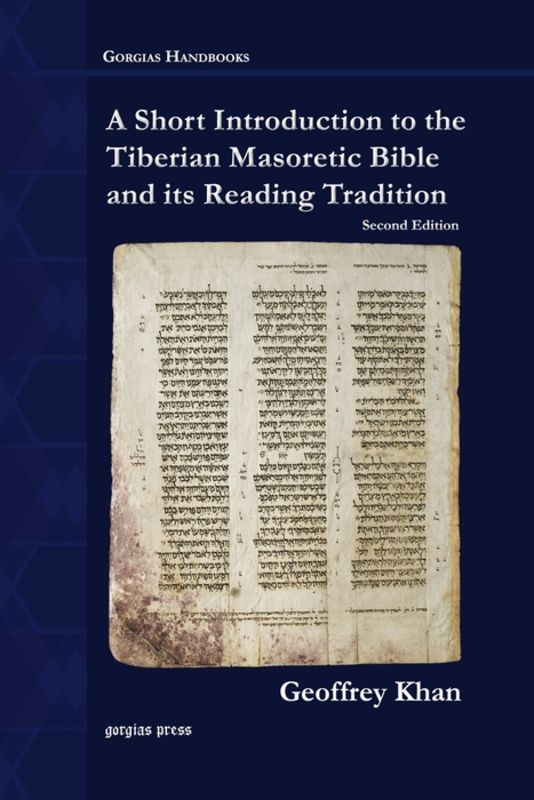
A Short Introduction to the Tiberian Masoretic Bible and its Reading Tradition
This book is intended to provide a quick introductory overview of the Tiberian Masoretic tradition of the Hebrew Bible and its background.It was this tradition that produced the great Masoretic codices of the Middle Ages, which form the basis of modern printed editions of the Hebrew Bible.
eBook
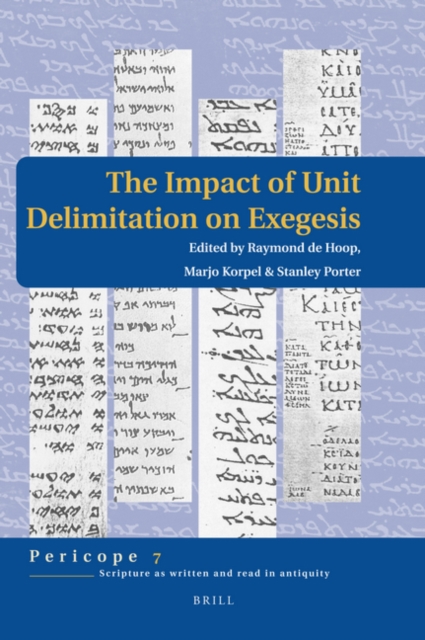
The Impact of Unit Delimitation on Exegesis
This volume contains papers dealing with the impact of unit delimitation on exegesis. Included are contributions on the Books of Genesis, Isaiah, Jeremiah, Daniel, Hosea, Nahum, Habakkuk, Romans and Mark.
eBook
Sôfer mahîr : essays in honour of Adrian Schenker offered by editors of Biblia Hebraica quinta
This volume contains essays in the textual criticism of the Hebrew Bible, contributed by editors of the Biblia Hebraica Quinta. The studies range in scope from assessments of a book's textual situation to investigations of details in the Leningrad Codex.
eBook